
James Vane in The Picture of Dorian Gray
Minor character
Sibyl Vane’s fiercely protective, blunt working-class brother who vows vengeance on the man he blames for her ruin.
Who is James Vane?
James Vane is Sibyl Vane’s older brother: a rough, straightforward sailor preparing to sail for Australia. From his first appearance he is consumed by loyalty and a rigid sense of justice; he openly distrusts Sibyl’s mysterious “Prince Charming” and vows to protect her honor. After Sibyl’s disastrous theatrical decline and death, James becomes a looming, accusatory presence in the streets and alleys of London, driven to find and punish the man he believes is responsible. He confronts and nearly executes Dorian in a foggy quay before recognizing his mistake; this near-murder shakes him profoundly. Haunted and determined, James continues to stalk the city as a possible agent of retribution until he is himself found dead after a shooting-party accident. Throughout the episodes in which he appears, James functions as a harsh, physical counterweight to the novel’s cultivated, decadent world—persistent, literal, and uncompromising in ways that the polished protagonists are not.
In the book: James Vane is Sibyl Vane’s fiercely protective brother, a blunt, working-class sailor who distrusts Dorian from the start. His loyalty to his sister and his rigid sense of justice make him a looming presence in the story, embodying the threat of consequence that shadows Dorian’s glittering world, and heightening the novel’s tension without the refinements of high society.
Personality
- Protective
- In Chapter 5 he vows to kill any man who wrongs Sibyl and forces his mother to answer about their family before he sails.
- Hot-tempered
- On seeing Dorian’s carriage in the park (Chapter 5) he becomes enraged and threatens violence without hesitation.
- Resolute
- In Chapter 16 he seizes Dorian in an archway with a revolver, determined to execute the justice he believes Sibyl deserves.
- Haunted
- After nearly killing the wrong man in Chapter 16, James is left trembling and haunted by what almost occurred.
- Plainspoken
- His blunt, working-class speech and refusal to adopt polite refinements mark every scene in which he appears, contrasting with high society.
Character arc
James’s trajectory is steady and single-minded: he opens as a devoted, protective brother preparing to leave for Australia, declaring a willingness to kill anyone who harms Sibyl. That vow becomes the engine of his actions after Sibyl’s death—he returns to the city determined to find her destroyer. In Chapter 16 this determination culminates in a violent confrontation: he seizes a man with a revolver and is ready to execute him, only to discover he has nearly killed the wrong person. The shock of the mistake leaves him shaken and self-aware, yet he continues to prowl the city as a potential agent of retribution. His arc does not become one of philosophical reflection or reform; instead, it ends abruptly and tragically when he himself is fatally shot during the shooting-party accident recounted in Chapter 18. The ending preserves his moral clarity—he never becomes corrupted like the novel’s aristocrats—but it also renders his commitment futile and his promised vengeance unrealized.
Relationships
- Sibyl Vane Younger sister; James is fiercely protective and vows to avenge any wrongs against her.
- Mrs. Vane Mother; James interrogates her about the family’s legitimacy and pressures her before he departs.
- Dorian Gray Object of James’s hatred and suspicion; James hunts him for Sibyl’s death and nearly kills him in Chapter 16.
- Mr. Isaacs Acquaintance of the Vane household mentioned during family preparations; James shares the household’s precarious social world.
- Adrian Singleton Encountered indirectly—Adrian appears in the opium den episode where James seizes Dorian; no direct personal tie is recorded.
Quotes by James Vane
“for as sure as there is a God in heaven, if he ever does you any wrong, I shall kill him.”
Chapter 5James's violent oath reveals his fierce protective instinct and introduces a note of potential danger and melodramatic intensity.
“You wrecked the life of Sibyl Vane," was the answer, "and Sibyl Vane was my sister. She killed herself.”
Chapter 16James confronts Dorian in the archway, accusing him of destroying his sister and threatening to kill him in revenge.
Why James Vane matters
James Vane represents the tangible force of consequence and moral earnestness that the novel’s cultivated decadents try to ignore. His working-class bluntness and vow of vengeance provide a stark contrast to Dorian’s elegant, philosophizing society, reminding readers that destructive actions have real human victims who demand accountability. James’s failure to carry out retribution—his near-mistake and subsequent accidental death—underlines the novel’s ironies: the threat of natural justice appears but is evaded, leaving the corrupt aristocrat temporarily unpunished and emphasizing themes of moral evasion, chance, and the uneven workings of fate.
Chapters with James Vane
More The Picture of Dorian Gray characters
 Dorian GrayProtagonist
 Lord Henry WottonMajor character
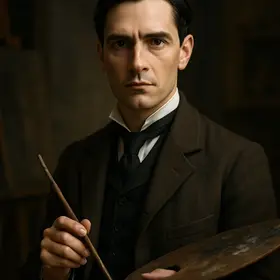 Basil HallwardMajor character
 Sibyl VaneMajor character
 Alan CampbellMinor character
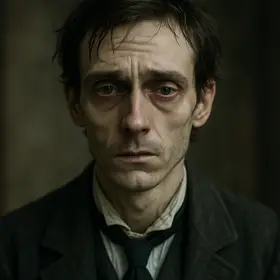 Adrian SingletonMinor character
- FFrancisMinor character
 Duchess of MonmouthMinor character
All chapter summaries ›Characters ›
Read The Picture of Dorian Gray illustrated
Every scene in these notes comes from the Book2Life reader, where the full public-domain text is illustrated as you read, with character portraits and narration. Free in your browser and on iPhone.
Read The Picture of Dorian Gray free
