
Sibyl Vane in The Picture of Dorian Gray
Major character
A young, talented actress whose beauty and devotion become the focal point of Dorian Gray’s romantic idealism.
Who is Sibyl Vane?
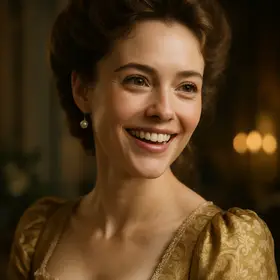
Sibyl Vane is a teenage stage actress of remarkable promise who captivates Dorian Gray with the intensity of her performances and her flowerlike beauty. She lives in a cramped theatrical household with her mother and brother and performs in a shabby company where, despite poor surroundings, her presence transforms the stage. When Dorian discovers her, she responds with ecstatic devotion, calling him her “Prince Charming” and imagining an escape from her precarious life. Her discovery of real love leads her to experience life outside the theatre’s illusions; she tells Dorian that his love has made life truer than acting. This shift in Sibyl’s inner life and her close family ties—her mother’s pragmatism and James’s fierce protective streak—shape how the novel explores the clash between art and lived feeling. News of her fate shocks Dorian and becomes a decisive emotional event that forces him to confront the consequences of his conduct and the uncanny change in Basil’s portrait.
In the book: Sibyl Vane is a teenage actress of extraordinary promise whose beauty and talent captivate Dorian Gray, becoming the living embodiment of his romantic ideals. Through her, the novel explores the tension between art and life, performance and sincerity, and her relationship with Dorian becomes a turning point that reveals and intensifies the moral conflicts at the heart of the story, without detailing specific plot outcomes.
Personality
- Devoted
- She greets Dorian as her “Prince Charming,” bursting into her sitting-room with rapturous joy at the thought of him (Chapter 5).
- Artistic
- Her stage presence transforms a shabby production and moves Dorian deeply when he first sees her perform Romeo and Juliet (Chapter 4).
- Innocent
- She tells Dorian that love has made life truer than theatre and can no longer perform as before because her feelings are real (Chapter 7).
- Idealistic
- She disregards her mother’s practical warnings about money and revels in romantic exaltation after meeting her mysterious admirer (Chapter 5).
Character arc
Sibyl first appears as an entrancing stage presence whose acting elevates even a poor company; she embodies the romantic ideal that enthralls Dorian. Her life is rooted in a theatrical household where performances supply both livelihood and identity. When she meets Dorian, she moves from a life of stage illusion into the immediacy of lived affection: she becomes convinced that love has rendered acting unnecessary because life itself is now rich with meaning. This inner shift causes her to abandon the mannered art that made her famous in Dorian’s eyes and to experience simple domestic hope with her family. Her arc is brief but pivotal: she transitions from star performer to someone who prioritizes lived sincerity over performance, and that transformation ripples outward—provoking intense reactions in the men around her and precipitating events that force other characters to face moral consequences and psychic change.
Relationships
- Dorian Gray Her secret, enthralling lover whom she calls “Prince Charming” and who inspires her devotion and belief that life has become real.
- Mrs. Vane Her mother, a pragmatic woman who worries about money and the realities of stage life while sharing theatrical affectation.
- James Vane Her brother, a rough but devoted protector who threatens any man who would wrong her and leaves for Australia with anxiety about her suitor.
- Mr. Isaacs The persistent manager at the shabby theatre who represents the commercial, coercive side of her professional life.
- Basil Hallward An observer of her performance whose concern for Dorian deepens after witnessing the engagement and the strain it brings.
- Lord Henry Wotton An amused, analytical influence in Dorian’s circle who treats Dorian’s passion for Sibyl as an interesting experiment rather than a moral matter.
Quotes by Sibyl Vane
“Mother, Mother, I am so happy!”
Chapter 5Sibyl's opening exclamation establishes her rapture and sets the chapter's contrast between romantic joy and the household's precarious reality.
“He is called Prince Charming.”
Chapter 5Sibyl's naming of her lover as 'Prince Charming' shows her idealizing imagination and refusal to face ordinary particulars like a real name.
““Dorian, Dorian,” she cried, “before I knew you, acting was the one reality of my life. It was only in the theatre that I lived.””
Chapter 7Backstage, Sibyl explains that meeting Dorian revealed a higher reality to her, which now makes performance feel false and meaningless.
Why Sibyl Vane matters
Sibyl Vane crystallizes the novel’s tension between art and life: her excellence onstage and subsequent renunciation of performance illuminate the difference between theatrical illusion and authentic feeling. As an object of romantic idealization, she exposes how aesthetic longing can both elevate and destroy; her devotion reveals the dangers of treating persons as embodiments of ideals. Through her family ties and the reactions she provokes, the text examines social precariousness, protective masculinity, and the moral costs of aestheticism. Sibyl’s presence forces other characters to confront the ethical consequences of pleasure-seeking and the hollowing effect of turning people into merely beautiful images.
Chapters with Sibyl Vane
More The Picture of Dorian Gray characters
 Dorian GrayProtagonist
 Lord Henry WottonMajor character
 Basil HallwardMajor character
 James VaneMinor character
 Alan CampbellMinor character
 Adrian SingletonMinor character
- FFrancisMinor character
 Duchess of MonmouthMinor character
All chapter summaries ›Characters ›
Read The Picture of Dorian Gray illustrated
Every scene in these notes comes from the Book2Life reader, where the full public-domain text is illustrated as you read, with character portraits and narration. Free in your browser and on iPhone.
Read The Picture of Dorian Gray free
