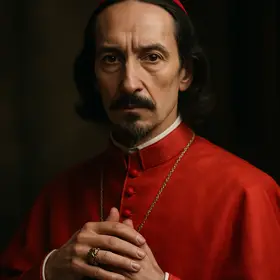
Cardinal Mazarin in Twenty Years After
Antagonist
The shrewd Italian-born First Minister who steers France through the Fronde by calculation, persuasion, and secrecy.
Who is Cardinal Mazarin?
Cardinal Mazarin is the queen’s chief minister and the effective power behind the throne during Louis XIV’s minority. From the opening chapters he perceives himself as a beleaguered foreign favorite, hated by pamphlets and the mob, and devotes himself to preserving the monarchy’s authority and the queen’s regency. He alternately uses diplomacy, bribery, and covert operations: flattering and recruiting the musketeers (presenting a diamond and coin to secure d'Artagnan’s aid), arranging delicate escapes (planning his own flight and then slipping away from Paris), ordering arrests and imprisonments when necessary (detaining opponents and later holding Athos and d'Artagnan at Rueil), and negotiating with foreign agents (receiving Cromwell’s envoy and handling Henrietta Maria’s plea). Throughout the unrest and shifting fortunes of the Fronde, Mazarin balances public concession with private firmness, ready to sacrifice reputation or offer his retirement as political theatre but ultimately choosing to stay and maintain his influence. His actions drive the political crises the protagonists navigate and test loyalties among old friends.
In the book: Cardinal Mazarin is the cunning First Minister of France and successor to Richelieu, steering the kingdom during Queen Anne of Austria’s regency. Politically shrewd, charming when needed, and intensely calculating, he maneuvers through the unrest of the Fronde, alternately employing and opposing the famed former musketeers. His ambitions and intrigues shape the novel’s central conflicts and test the loyalty and ideals of the heroes.
Personality
- Calculating
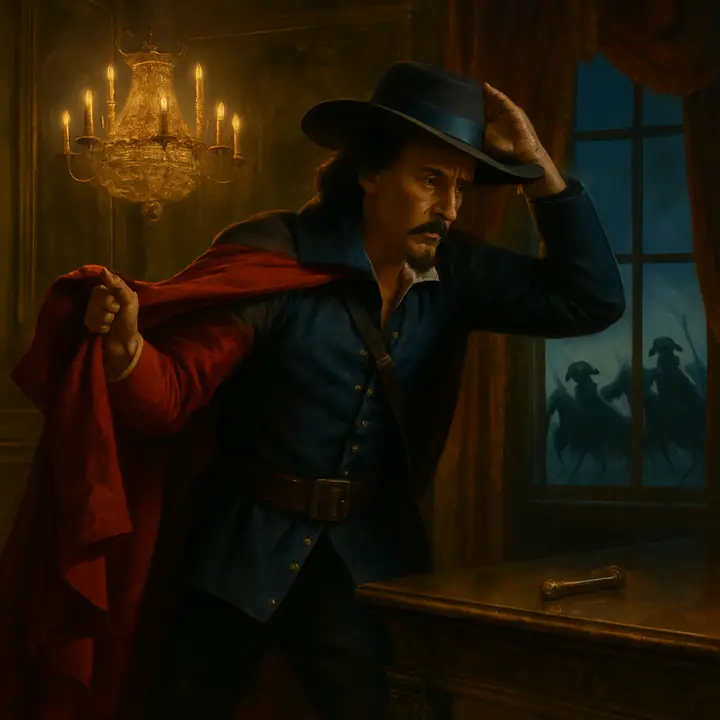
- In Chapter 1 he broods on being a 'beleaguered favorite' and resolves to inspect defenses in disguise, showing careful self-preservation and planning.
- Persuasive
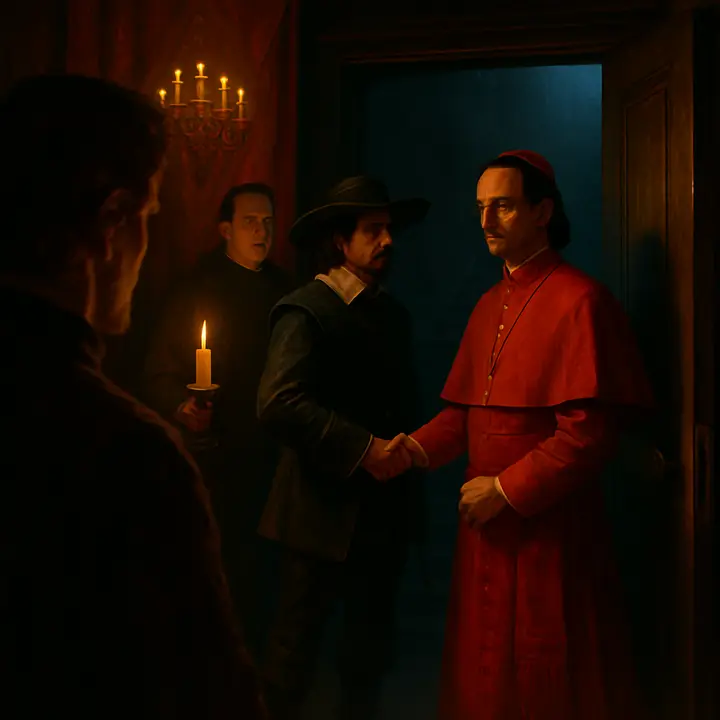
- In Chapter 5 he flatters d'Artagnan, produces the queen’s diamond, and subtly secures the lieutenant’s cooperation with a small purse.
- Pragmatic
- In Chapter 48–49 he counsels releasing Broussel to defuse revolt, then later offers to retire publicly (Chapter 81) as a political sacrifice if needed.
- Secretive
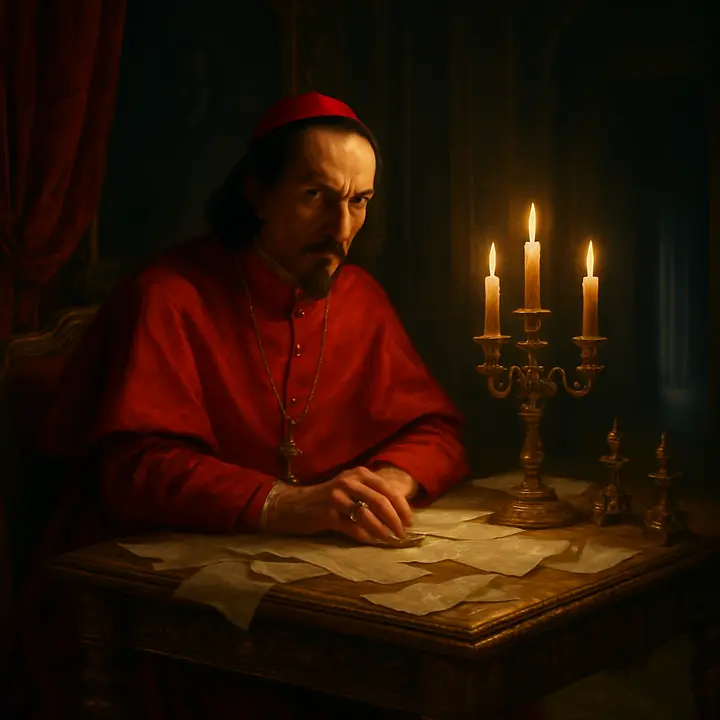
- In Chapters 51 and 85 he uses hidden passages, disguises, and a secret orangery stair to move and conceal himself and his treasure.
- Authoritative
- In Chapter 81 he frames his potential departure as a necessary instrument for peace and asserts the temporal power he wields, calling himself 'almost a king.'
Character arc
Mazarin begins as a solitary, embattled minister acutely aware of his unpopularity and the precariousness of a foreign favorite (Chapter 1). Early scenes establish him as a master of courtcraft: he recruits and rewards the musketeers (Chapters 5, 24), negotiates with foreign envoys (Chapters 37–38), and stages measured responses to street unrest (Chapters 44, 48). As the Fronde erupts he oscillates between tactical retreat and firmness—authorizing arrests, consenting to concessions when necessary, and organizing secret departures (Chapters 50–52). His secretive side surfaces in the use of hidden staircases and guarded pavilions at Rueil (Chapters 82–85), where he controls and monitors even his opponents. Politically pressured, he theatrically offers to resign yet ultimately resolves to remain, arguing that his staying better secures the crown (Chapter 81). By the end of the provided chapters he retains power through a blend of guile, coercion, and calculated magnanimity: he is not transformed into a different man but is revealed as a figure who doubles down on control, preferring to manipulate circumstances rather than yield them.
Cardinal Mazarin in pictures
Relationships
- Anne of Austria Sovereign he serves and protects politically; he acts as her chief minister and negotiator, and she both relies on and questions him.
- d'Artagnan Instrument and tested ally whom Mazarin flatters and recruits for sensitive missions, trusting his resourcefulness while manipulating his loyalties.
- Porthos A vainglorious recruit whom Mazarin courts with promises of rank and land to secure military support.
- Aramis A shrewd, ambiguous opponent whose political neutrality and ambitions Mazarin must negotiate and watch cautiously.
- Broussel A popular magistrate whose arrest and subsequent release become focal points of public revolt that directly threaten Mazarin’s authority.
- Bernouin Mazarin’s loyal valet and gatekeeper who enforces access and reports events in the cardinal’s private chamber.
Quotes by Cardinal Mazarin
““Foreigner!” he ejaculated, “Italian! that is their mean yet mighty byword of reproach—the watchword with which they assassinated, hanged, and made away with Concini; and if I gave them their way they would assassinate, hang, and make away with me in the same manner, although they have nothing to complain of except a tax or two now and then.”
Chapter 1Mazarin reflects bitterly on the popular hatred directed at him as a foreign favorite and the precarious fate of royal favorites.
“I wish to visit in person the outposts which surround the Palais Royal; do you suppose that there is any danger in so doing?”
Chapter 1Mazarin, after donning a musketeer uniform, proposes to make a personal inspection of the palace outposts amid the unrest.
““Give me a uniform of one of these musketeers and help me to put it on.””
Chapter 1Mazarin asks his valet Bernouin for a musketeer uniform, beginning his plan to disguise himself and move among the troops.
“You will do for me what you have done for the queen?”
Chapter 5Mazarin frames his request by invoking the musketeers' past service to the queen, using the diamond as proof and leverage.
“Take this," he said with a sigh, "’tis merely for your journey.”
Chapter 5Mazarin reluctantly supplies D'Artagnan with a bag of money, showing both calculation and a minimal generosity to ensure the mission begins.
“"What consoles me," said the cardinal after reading the letter, "is that, at least, in this chase, D'Artagnan has done me one good turn—he has destroyed Broussel."”
Chapter 26Mazarin reads the duke's letter and interprets the skirmish's political impact, linking battlefield events to courtly advantage.
Why Cardinal Mazarin matters
Mazarin personifies the novel’s central political tension between stability and liberty: his cunning and secrecy preserve monarchical order but breed resentment and revolt. He forces other characters to reveal their priorities—honor, friendship, ambition—by offering rewards, demanding obedience, or using imprisonment. Thematically, Mazarin embodies the ambiguous morality of statecraft: necessary to hold a fragile realm together yet culpable for manipulations that erode trust. His presence shows how personal loyalties and public duty collide, and his choices—public concession or private control—frame the novel’s exploration of power, loyalty, and the cost of political survival.
Chapters with Cardinal Mazarin
- Chapter 1
- Chapter 5
- Chapter 7
- Chapter 9
- Chapter 11
- Chapter 12
- Chapter 17
- Chapter 18
- Chapter 19
- Chapter 21
- Chapter 24
- Chapter 26
- Chapter 27
- Chapter 28
- Chapter 30
- Chapter 35
- Chapter 36
- Chapter 37
- Chapter 38
- Chapter 39
- Chapter 41
- Chapter 42
- Chapter 44
- Chapter 45
- Chapter 48
- Chapter 49
- Chapter 50
- Chapter 51
- Chapter 52
- Chapter 54
- Chapter 56
- Chapter 57
- Chapter 68
- Chapter 69
- Chapter 64
- Chapter 75
- Chapter 77
- Chapter 78
- Chapter 79
- Chapter 80
- Chapter 81
- Chapter 82
- Chapter 83
- Chapter 84
- Chapter 85
- Chapter 89
More Twenty Years After characters
 PorthosMajor character
 AthosMajor character
 AramisMajor character
 GrimaudMajor character
 MordauntAntagonist
 MousquetonMinor character
 PlanchetMajor character
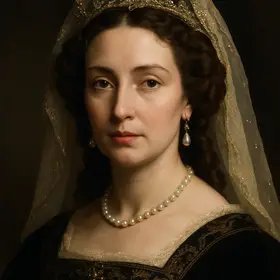 Anne of AustriaMajor character
All chapter summaries ›Characters ›
Read Twenty Years After illustrated
Every scene in these notes comes from the Book2Life reader, where the full public-domain text is illustrated as you read, with character portraits and narration. Free in your browser and on iPhone.
