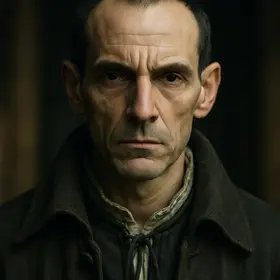
Grimaud in Twenty Years After
Major character
Athos’s taciturn, fiercely loyal servant who serves as sentinel, undercover agent, and indispensable aide.
Who is Grimaud?
Grimaud is the silent, imperturbable valet and keeper associated primarily with Athos. He repeatedly acts as a trusted agent in delicate operations: he is hired as keeper at Vincennes to help the Duc de Beaufort escape (confiscating forbidden items, delivering a sealed note, and sewing escape orders into a ball), he performs dangerous tasks during Beaufort’s actual descent and is injured in the attempt, he scouts and moves swiftly between theatres of action, and he serves as a vigilant scout and first responder in multiple crises. Grimaud also delivers urgent warnings — arriving bloodied at the Hermitage with a dagger to announce Milady’s son — and carries messages and orders with silent efficiency, selling his horse and traveling by post to summon aid for Athos. In military and maritime episodes he stands watch, discovers conspiracies (finding gunpowder in barrels aboard the felucca), helps execute escapes (standing sentinel during the Newcastle breakout), and provides practical assistance to wounded comrades. Throughout the chapters in which he appears, Grimaud’s competence, discretion and absolute fidelity make him indispensable to Athos and to the musketeers’ plans.
In the book: Grimaud is Athos’s fiercely loyal and famously silent servant. He operates as a discreet aide and sentinel, executing orders with precision, reading his master’s wishes without speech, and providing steady, unobtrusive support during delicate missions. His quiet competence and absolute fidelity make him an essential, if understated, part of the musketeers’ circle.
Personality
- Taciturn
- Chapter 18: La Ramee and others praise Grimaud’s silence and severity when he is examined for the keeper’s post at Vincennes.
- Loyal
- Chapter 33: After tending the dying executioner, Grimaud rushes to warn Raoul and forces a command that the monk must be killed to protect his master.
- Resourceful
- Chapter 19: Grimaud quietly sews detailed instructions into a tennis ball and pockets hidden items that are part of Beaufort’s escape plan.
- Courageous
- Chapter 23: Grimaud descends first on the improvised ladder during Beaufort’s escape and ends up injured but instrumental to its success.
- Perceptive
- Chapter 71: Grimaud slips through a hole, inspects the hold, and recognizes the presence of Mordaunt and a train attached to a cask—uncovering the plot.
Character arc
Grimaud appears consistently as a man of few words but decisive deeds. Early on at Vincennes he adopts the role of severe keeper, using outward harshness to conceal his true purpose and to gain Beaufort’s trust; he actively facilitates the duke’s escape and is wounded in the effort. From that point forward his function expands beyond custody to active reconnaissance, courier and emergency responder: he travels urgently to warn Athos’s circle after the Bethune killing, arrives bloodied with a dagger to announce the threat at the Hermitage, and repeatedly scouts dangerous ground (from following tracks on roads to keeping watch during stakeouts). At sea he turns from watchman to discoverer, exposing the ship’s powder-filled barrels and precipitating the crew’s escape from an explosion. Grimaud’s steadiness never changes—he remains essentially the same man: silent, loyal and pragmatic—but the scope of his responsibilities grows. He shifts from being primarily a household servant to a frontline agent whose quick, often solitary actions directly alter the musketeers’ fortunes. He refuses rhetorical change; his development is functional: widening trust and duties rather than a transformation of character.
Relationships
- Athos Master and the principal object of Grimaud’s absolute fidelity; Grimaud repeatedly risks himself to protect Athos and his interests.
- Duke of Beaufort Prisoner-turned-co-conspirator at Vincennes: Grimaud is employed as Beaufort’s keeper and secretly enables his escape.
- Mousqueton Fellow servant and combat companion who fights alongside Grimaud in skirmishes and whom Grimaud assists when wounded.
- Raoul de Bragelonne Household charge and young master-protector link: Grimaud accompanies Raoul on errands and safeguards him in the field.
- D'Artagnan Ally of the musketeers who benefits from Grimaud’s reconnaissance and whose operations Grimaud supports in moments of crisis.
- Mordaunt Enemy figure whom Grimaud helps unmask and whose dangerous acts (murder, sabotage) Grimaud helps expose through observation.
Quotes by Grimaud
“All is ready for to-morrow evening. Keep watch from seven to nine. Have two riding horses ready. We shall descend by the first window in the gallery.”
Chapter 19Grimaud dictates concise, operational escape instructions to be sewn into the ball and kept secret until execution.
“Two poniards, a knotted rope and a poire d’angoisse.”
Chapter 19Grimaud answers what the pâté will contain—tools and weapons for escape, with a cruelly comic suggestion about the poire d'angoisse.
“if ever you meet him again, wherever it may be, whether on the high road or in the street or in a church, anywhere that he or you may be, put your foot on his neck and crush him without pity, without mercy, as you would crush a viper or a scorpion!”
Chapter 33Grimaud's urgent command to Raoul and his companions—he frames the monk as a mortal threat whose existence endangers several lives, forcing immediate, violent measures.
“That woman had a child; that child has become a man; the tigress had a little one, the tiger has roused himself; he is ready to spring upon you—beware!”
Chapter 35Grimaud’s urgent declaration transforms the supper’s mood and reveals the central new threat: Milady’s avenging son.
Why Grimaud matters
Grimaud embodies the theme of silent service and the moral weight of loyalty. Without speeches or moralizing, his actions repeatedly translate the musketeers’ codes—honor, protection of the innocent, and fidelity to comrades—into concrete results. He also demonstrates how effective resistance often depends on small, unseen labors: sewn instructions, stealthy surveillance, a timely warning, or the discovery of gunpowder in a ship’s hold. In a novel preoccupied with shifting loyalties and political spectacle, Grimaud’s steady, wordless constancy underscores the difference between ostentatious heroics and the austere, indispensable work that actually preserves lives and upholds promises.
Chapters with Grimaud
- Chapter 13
- Chapter 15
- Chapter 16
- Chapter 17
- Chapter 18
- Chapter 19
- Chapter 20
- Chapter 21
- Chapter 22
- Chapter 23
- Chapter 26
- Chapter 27
- Chapter 30
- Chapter 31
- Chapter 33
- Chapter 35
- Chapter 39
- Chapter 41
- Chapter 42
- Chapter 43
- Chapter 51
- Chapter 55
- Chapter 56
- Chapter 58
- Chapter 59
- Chapter 60
- Chapter 61
- Chapter 65
- Chapter 67
- Chapter 68
- Chapter 70
- Chapter 71
- Chapter 72
- Chapter 63
- Chapter 64
- Chapter 75
- Chapter 76
- Chapter 77
- Chapter 79
- Chapter 82
- Chapter 86
- Chapter 87
- Chapter 89
More Twenty Years After characters
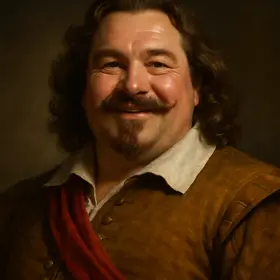 PorthosMajor character
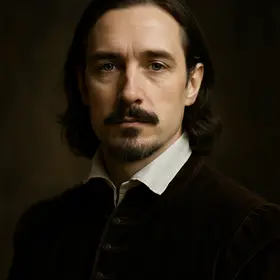 AthosMajor character
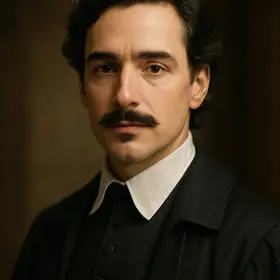 AramisMajor character
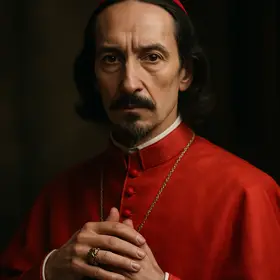 Cardinal MazarinAntagonist
 MordauntAntagonist
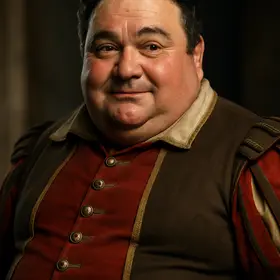 MousquetonMinor character
 PlanchetMajor character
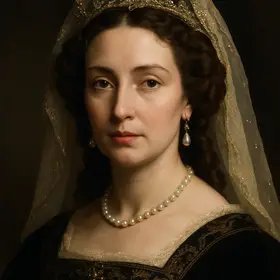 Anne of AustriaMajor character
All chapter summaries ›Characters ›
Read Twenty Years After illustrated
Every scene in these notes comes from the Book2Life reader, where the full public-domain text is illustrated as you read, with character portraits and narration. Free in your browser and on iPhone.
