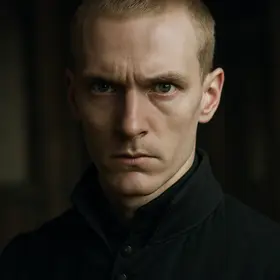
Mordaunt in Twenty Years After
Antagonist
Milady’s son and implacable Puritan agent who pursues vengeance and serves as executioner and Cromwell’s instrument.
Who is Mordaunt?
Mordaunt appears as a driven, fanatical young Englishman who believes himself wronged by Lord de Winter and the five men connected to his mother. He follows political currents—acting as a Puritan secretary and Cromwell’s ally—while pursuing a private vendetta. In the narrative he shadows De Winter in Paris, confronts the four musketeers in England, secures custody of prisoners after the battle, and positions himself close to power by meeting Cromwell. He is identified as the masked executioner who beheads Charles I, and later attempts to thwart the musketeers’ rescue plans by serving as lieutenant on a felucca laden with gunpowder. His actions directly precipitate critical crises: murder on the battlefield (the killing of Winter), the king’s execution, betrayals during rescue attempts, and the felucca’s destruction. Ultimately his relentless quest for vengeance and alignment with Cromwell escalate the conflict until a final underwater struggle ends with his own death, which the musketeers interpret as providential retribution.
In the book: Mordaunt is the implacable Puritan agent who crosses paths with the four musketeers during the English turmoil, serving as a principal antagonist driven by a personal vendetta. Intelligent, disciplined, and fanatically determined, he maneuvers through political intrigue and covert missions, pushing the heroes into peril while embodying the novel’s darker themes of retribution and fate—without his quest, much of the English adventure would not ignite.
Personality
- Implacable
- He accuses Lord de Winter of murdering his mother and vows to hold the five men to account (Chapter 40).
- Fanatical
- He moves within Puritan and Cromwellian circles, carrying dispatches for Cromwell and celebrating the king’s capture (Chapters 54, 57).
- Deceptive
- He adopts disguises and a masked executioner’s role, hiding his identity while carrying out the king’s beheading (Chapters 67–68).
- Ruthless
- On the battlefield he recognizes and shoots Lord de Winter, murdering him with a pistol (Chapter 56).
- Resourceful
- He orchestrates a plot aboard the felucca—placing barrels of gunpowder and arranging a timed train to destroy the ship (Chapters 71–72).
Character arc
Mordaunt first appears as a vengeful young man confronting Lord de Winter in Paris, claiming his mother’s wrongs and swearing retribution (Chapter 40). He then embeds himself in Puritan ranks and travels with Cromwell’s interests, turning private grievance into political violence: he fights at Newcastle, secures prisoners, and gains Cromwell’s trust to obtain custody and influence (Chapters 55, 56, 57). His role escalates from avenger to instrument of regicide when he is revealed as the masked executioner present at Charles I’s death (Chapters 67–68). After the execution he continues aggressive sabotage—serving as lieutenant aboard a felucca rigged with gunpowder to kill the musketeers—showing willingness to sacrifice others to achieve his aims (Chapters 70–72). In the final sequence his attempt to kill Athos by clinging and dragging him under during a rescue collapses into his own violent end: he drowns with a dagger in his breast after the felucca explodes (Chapters 63/Finality and 63 Fatality). Thus his trajectory moves from focused personal vengeance to destructive political action, and finally to a death that the protagonists read as the moral and providential closure of his vendetta.
Relationships
- Lord de Winter Object of Mordaunt’s vengeance; he accuses De Winter of complicity in his mother’s fate and ultimately kills him on the battlefield (Chapters 40, 56).
- Charles I Mordaunt serves the political apparatus that brings about the king’s capture and acts as the masked executioner at Charles’s beheading (Chapters 56, 67–68).
- Oliver Cromwell Political patron and commander with whom Mordaunt confers and whose confidence he earns, allowing him operational freedom (Chapters 57, 68).
- D’Artagnan Opposes Mordaunt’s schemes; they confront and attempt to unmask each other during rescue efforts and the felucca plot (Chapters 54, 69–72).
- Athos Personal antagonist whose past ties to Milady and presence at key moments make him Mordaunt’s primary emotional target, culminating in a fatal struggle at sea (Chapters 41, 63/Fatality).
- Porthos Adversary and musketeer opponent involved in thwarting Mordaunt’s plans aboard ship and in the courtroom incidents (Chapters 54, 63).
Quotes by Mordaunt
“She was my mother!”
Chapter 40Mordaunt's anguished, repeated cry asserts his personal stake and rejects De Winter's descriptions of the woman.
“To our next meeting, sirs, in England.”
Chapter 43The young man taunts them with a promise of a future encounter, leaving the boat’s occupants unsettled as they depart.
“When I tell you a thing, sir," said Mordaunt, "you insult me by doubting it.”
Chapter 58Mordaunt protests when D'Artagnan asks for written proof that Cromwell assigned the prisoners to him; the line shows his wounded pride and impulsive temper.
“I hope to kill all four of you, but I am more likely to kill the first than the second, the second than the third, and the third than the last.”
Chapter 69Mordaunt declares his intention to kill the musketeers and arrogantly explains his chances, provoking the duel.
“Then tell the men to be in readiness—don’t tell them why now. When the clock strikes a quarter after midnight collect your men. Get down into the longboat.”
Chapter 71Mordaunt outlines the timetable for the clandestine operation Grimaud overhears, revealing a planned attack at midnight.
Why Mordaunt matters
Mordaunt embodies the novel’s darker currents: vengeance turned political, the fusion of personal grievance with ideological zeal, and the destructiveness of revenge. His actions force the protagonists into moral and practical responses that test loyalty, honor, and the limits of mercy. As both private avenger and public agent of regicide, he exposes how individual vendettas can escalate into historical violence. His violent death functions as a narrative reckoning—suggesting providential justice—and underscores the book’s meditation on fate, retribution, and the tragic costs of obsessive hatred.
Chapters with Mordaunt
- Chapter 21
- Chapter 38
- Chapter 39
- Chapter 40
- Chapter 41
- Chapter 43
- Chapter 49
- Chapter 51
- Chapter 53
- Chapter 54
- Chapter 55
- Chapter 56
- Chapter 57
- Chapter 58
- Chapter 59
- Chapter 61
- Chapter 62
- Chapter 63
- Chapter 64
- Chapter 67
- Chapter 68
- Chapter 69
- Chapter 70
- Chapter 71
- Chapter 72
- Chapter 63
- Chapter 64
- Chapter 75
- Chapter 77
- Chapter 83
- Chapter 89
More Twenty Years After characters
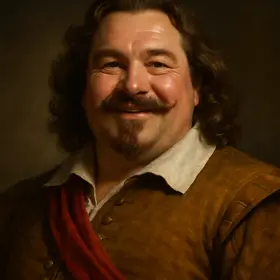 PorthosMajor character
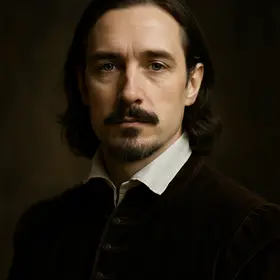 AthosMajor character
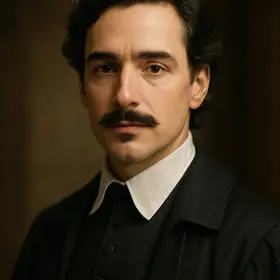 AramisMajor character
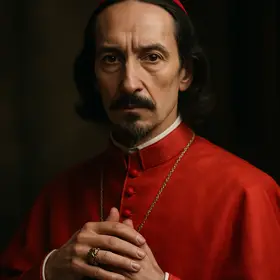 Cardinal MazarinAntagonist
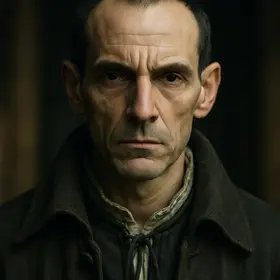 GrimaudMajor character
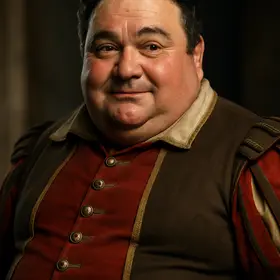 MousquetonMinor character
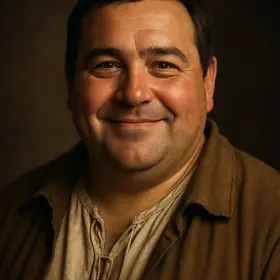 PlanchetMajor character
 Anne of AustriaMajor character
All chapter summaries ›Characters ›
Read Twenty Years After illustrated
Every scene in these notes comes from the Book2Life reader, where the full public-domain text is illustrated as you read, with character portraits and narration. Free in your browser and on iPhone.
