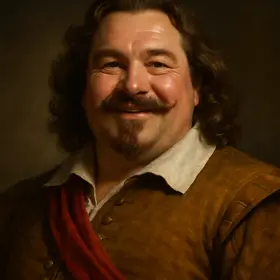
Porthos in Twenty Years After
Major character
A wealthy, larger-than-life musketeer turned gentleman-landowner seeking honor, recognition, and renewed adventure.
Who is Porthos?
Porthos (Monsieur du Vallon) is one of the four reunited musketeers: prosperous, physically imposing, and given to grand hospitality. In Twenty Years After he lives at a gilded château with Mousqueton and a retinue, enjoying estates and comforts but suffering loneliness and social exclusion because of his late wife's birth. When D'Artagnan arrives with a summons to political action, Porthos eagerly accepts service to Cardinal Mazarin in hopes of gaining a barony and public respect. He rejoins military exploits, rides with D'Artagnan on urgent missions, helps escort Mazarin and the queen, shares in daring rescues and escapes (including the flight with Mazarin, the sea voyages, and the attempted English adventures), and plays the role of the group’s strongman and genial provider. His appetite for food, drink, and ceremony supplies comic relief but also motivates him: pursuit of a coronet and social standing drives several decisions. Throughout the episodes recorded in the chapter notes, Porthos’s courage, loyalty, and appetite for grandeur help the friends accomplish perilous tasks while revealing the limits of wealth to achieve personal happiness.
In the book: In Twenty Years After, Porthos—now elevated in rank and fortune—reunites with his old companions as the realm is shaken by fresh political upheavals. He serves as the group’s indomitable strongman and genial bon vivant, whose loyalty, courage, and appetite for grandeur help drive their missions while adding humor and warmth to the camaraderie, without overshadowing the story’s darker turns.
Personality
- Boisterous
- In Chapter 11 he greets D'Artagnan with grand hospitality, gilt rooms, abundant food and wine and loud embraces.
- Ambitious
- In Chapter 11 he lights up at D'Artagnan’s promise of a coronet and gives his word to fight for Mazarin on condition of receiving a barony.
- Loyal
- In Chapter 59 he joins Athos, Aramis and D'Artagnan in resolving to act on behalf of Charles I and later aids in risky rescues.
- Physically formidable
- In Chapter 26 he fights fiercely in the mêlée, unhorsing attackers and later kills an insulting butcher at the trial scene (Chapter 63) with a single crushing blow.
- Genial provider
- In Chapter 53 he and D'Artagnan buy up straw at Saint Germain and profitably re-sell it inside the château to exhausted courtiers.
Character arc
Porthos begins as a newly wealthy but lonely landowner who has traded frontline service for comfort and ceremony. His fortunes and gilt rooms mask social frustration, and he readily embraces D'Artagnan’s call to action because it promises both excitement and the social legitimacy of a barony (Chapters 10–12). Re-entering public life, he displays consistent courage and the physical prowess of his youth: riding with D'Artagnan on missions, fighting in roadside encounters, escorting the queen and Mazarin, and joining in dangerous sea and English operations (Chapters 24–26, 51–54, 56–63). Porthos alternates comic appetite and practical initiative (the straw venture at Saint Germain) with genuine bravery in combat and rescues (the escape from Newcastle, the London incidents, and the boat survival). By the end, after joint political action and the treaty bargains in which his reward is secured, he prepares to depart with D'Artagnan for the coming campaign, reconciled to renewed service and reassured about his social standing (Chapters 87–90). He does not undergo a deep moral transformation; rather his restlessness is momentarily satisfied by regained purpose and the promise of honor, while his essential traits—loyalty, grandeur, appetite—remain intact.
Relationships
- d'Artagnan Old comrade and close friend who recruits Porthos back into action and shares many exploits with him.
- Mousqueton Devoted valet and comic attendant whose ambitions and fears reveal Porthos’s household life and responsibilities.
- Athos One of the three comrades whose reunion with Porthos rekindles mutual loyalty and collective resolve in dangerous missions.
- Aramis Another former companion whose political intrigues contrast with Porthos’s straightforward desire for honor and reward.
- Cardinal Mazarin Political patron whose promises of titles and money motivate Porthos to return to public service and risk.
- Raoul de Bragelonne Young man of the circle whose welfare figures in Athos’s choices; Porthos supports the group’s collective responsibilities toward him.
Quotes by Porthos
“I am a widower and have forty thousand francs a year.”
Chapter 11Porthos states his wealth yet reveals it has not cured his grief or loneliness, setting up the chapter's central contrast.
“We are going to return to the service, Mouston," replied Porthos, still trying to restore his mustache to the military curl it had long lost.”
Chapter 12Porthos's announcement of returning to military life propels the plot and sparks D'Artagnan's concern for his household.
“I have seen," he said, "many dreadful things, but nothing that ever agitated me so much as what I have just witnessed.”
Chapter 64Porthos expresses his shaken state after the night's violent episode, showing both relief and the lasting impact of the event.
“We are admired, i’faith," answered Porthos.”
Chapter 64After landing, Porthos jokingly misreads the attention of onlookers as admiration, lightening the mood before the group's serious decision to separate.
““What!” cried Porthos, “are we all going away, then? I also have made my preparations this morning.””
Chapter 90Porthos reacts with surprise and reveals he has already prepared to leave, underlining the imminent separation.
““’Twas that low fellow, Bonacieux.””
Chapter 90Porthos suddenly remembers the identity of the man he killed, a terse moment that adds a domestic, ironic touch to the farewell.
Why Porthos matters
Porthos embodies the novel’s tension between wealth/appearance and authentic honor. His gilded château and appetite for ceremony show that riches cannot alone supply respect or inner contentment; his eagerness for a barony dramatizes how status can motivate allegiance in turbulent politics. At the same time his steadfast courage, physical strength, and genial loyalty anchor the musketeers’ communal ethic: personal ambition coexists with fidelity to friends and to honor. Porthos’s blend of comedy and bravery humanizes the group, reminding the reader that ideals of service and reputation in the book are lived through imperfect, worldly men.
Chapters with Porthos
- Chapter 5
- Chapter 6
- Chapter 9
- Chapter 10
- Chapter 11
- Chapter 12
- Chapter 14
- Chapter 15
- Chapter 20
- Chapter 21
- Chapter 24
- Chapter 25
- Chapter 26
- Chapter 27
- Chapter 28
- Chapter 35
- Chapter 39
- Chapter 41
- Chapter 44
- Chapter 45
- Chapter 47
- Chapter 48
- Chapter 50
- Chapter 51
- Chapter 52
- Chapter 53
- Chapter 54
- Chapter 56
- Chapter 57
- Chapter 58
- Chapter 59
- Chapter 60
- Chapter 61
- Chapter 62
- Chapter 63
- Chapter 64
- Chapter 65
- Chapter 67
- Chapter 68
- Chapter 69
- Chapter 70
- Chapter 71
- Chapter 72
- Chapter 63
- Chapter 64
- Chapter 75
- Chapter 77
- Chapter 79
- Chapter 83
- Chapter 84
- Chapter 85
- Chapter 86
- Chapter 87
- Chapter 88
- Chapter 89
- Chapter 90
More Twenty Years After characters
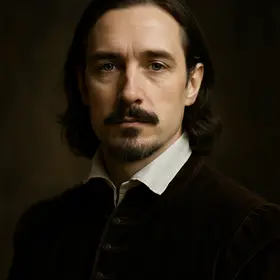 AthosMajor character
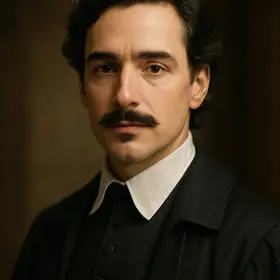 AramisMajor character
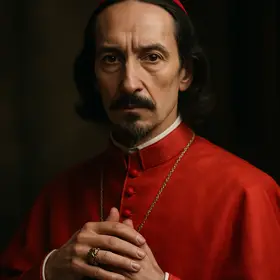 Cardinal MazarinAntagonist
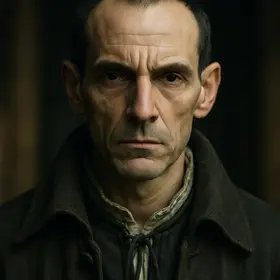 GrimaudMajor character
 MordauntAntagonist
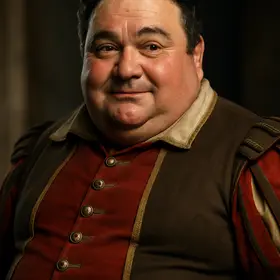 MousquetonMinor character
 PlanchetMajor character
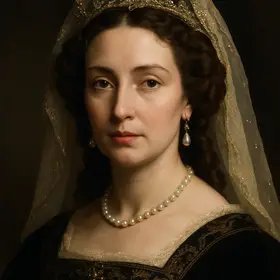 Anne of AustriaMajor character
All chapter summaries ›Characters ›
Read Twenty Years After illustrated
Every scene in these notes comes from the Book2Life reader, where the full public-domain text is illustrated as you read, with character portraits and narration. Free in your browser and on iPhone.
