
Planchet in Twenty Years After
Major character
D’Artagnan’s former servant turned respectable grocer and citizen-militia lieutenant, steadfastly loyal and resourceful.
Who is Planchet?
Planchet is introduced as d’Artagnan’s longtime manservant who has grown into a respectable Parisian tradesman and local leader while remaining devoted to his old master. Though now a confectioner/grocer by trade, he repeatedly re-enters the musketeers’ circle to offer practical help: he frees Rochefort in a street riot, sneaks back to serve D’Artagnan, and disguises himself to assist escapes. During the city’s unrest he pledges to Abbé de Gondy, recruits and arms common men, and drills citizens at the Palais-Royal; he accepts a knot-of-straw watchword and later commands halberdiers and muskets on the barricades. Planchet’s local influence and knowledge of Parisian streets and people enable crucial movements—helping the queen’s and cardinal’s flights, securing entrance for Athos and Aramis, and supporting Fronde forces at Charenton. Throughout, he balances courage, practical ingenuity, and comic warmth, acting as the musketeers’ dependable intermediary between courtly affairs and the city’s popular energies.
In the book: Formerly d’Artagnan’s loyal lackey, Planchet has become a respectable Parisian grocer, yet remains steadfastly devoted to his old master. In Twenty Years After he provides practical help, courage, and comic warmth, often using his wits and resources to smooth the musketeers’ path while embodying the series’ theme of loyalty across time.
Personality
- Loyal
- He returns to D’Artagnan’s service at dawn (Chapter 6) and repeatedly risks himself to protect and assist his old master and the musketeers.
- Resourceful
- He helps the queen’s escape by drilling and commanding citizen troops and by arranging checkpoints and disguises during the flight (Chapters 51–52).
- Courageous
- He leads men on the barricades and faces marshal de la Meilleraie’s forces during the riot (Chapter 47).
- Inventive
- He provides practical improvisations—disguises, recruitment plans, and signals like the knot-of-straw that coordinate the uprising (Chapter 46).
- Good-humored
- His comic warmth appears when Mousqueton embraces him at Porthos’s estate, showing how his cheer binds the household (Chapter 10).
Character arc
Planchet begins the story as a respectable grocer and former valet who nonetheless remains emotionally tied to the musketeers. Early scenes show him slipping back into servantly roles—sneaking to D’Artagnan’s window, informing him of rescues, and joining journeys to find the others (Chapters 6–9). As political tensions rise, Planchet moves from private loyalty to public action: Gondy recruits him to raise armed citizens, and he accepts the coadjutor’s money and signal, organizing muskets and halberds for the barricades (Chapters 46–47). From a modest tradesman he becomes a militia lieutenant and a visible leader in Paris’s popular resistance, drilling troops at the Palais-Royal and commanding men at Charenton (Chapters 54, 75–78). Yet his essential character does not change—he remains the witty, practical, loyal servant—only his sphere expands from domestic service to civic responsibility, proving that steadfast fidelity can scale into public courage and influence in turbulent times.
Relationships
- d'Artagnan Former master and lifelong patron whom Planchet serves loyally and repeatedly aids in missions.
- Athos Respected friend and ally who Planchet helps by securing passage and recognizing Athos on returning to Paris.
- Count de Rochefort Military ally in the city’s unrest: Planchet pledges to obey Rochefort’s leadership and helps coordinate his forces.
- Abbé de Gondy Conspiratorial contact who recruits and funds Planchet to raise and arm men for the uprising.
- Mousqueton Old household acquaintance who greets and embraces Planchet warmly at Porthos’s estate.
- Grimaud Fellow servant and sentinel whose presence accompanies Planchet when he helps Athos and Aramis re-enter Paris.
Quotes by Planchet
“I will lay a wager, your honor, that you and I are thinking of the same thing.”
Chapter 8Planchet senses D’Artagnan’s train of thought and proposes they are thinking alike, prompting the eavesdropping report that follows.
“You may count upon me, my lord, provided you want to make a complete upheaval of the city.”
Chapter 46Planchet pledges wholehearted support to Gondy but warns he expects a full-scale revolt, showing his readiness and the stakes.
“I know them and I answer for them.”
Chapter 75Planchet's declaration secures Athos and Aramis' entry and demonstrates how personal ties and reputation override formal documents in the crisis.
Why Planchet matters
Planchet embodies the theme of loyalty that endures despite time and changing social stations: a once-servant who becomes a respectable tradesman yet never abandons his comrades. He also represents the crucial agency of common people in political upheaval—his recruitment, local knowledge, and street-level leadership make larger plots possible. Comic and pragmatic, he humanizes the novel’s high drama, bridging aristocratic action and popular force and reminding the reader that courage and fidelity are not exclusive to nobility but flourish among everyday men.
Chapters with Planchet
More Twenty Years After characters
 PorthosMajor character
 AthosMajor character
 AramisMajor character
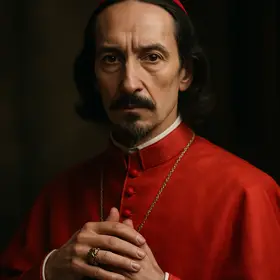 Cardinal MazarinAntagonist
 GrimaudMajor character
 MordauntAntagonist
 MousquetonMinor character
 Anne of AustriaMajor character
All chapter summaries ›Characters ›
Read Twenty Years After illustrated
Every scene in these notes comes from the Book2Life reader, where the full public-domain text is illustrated as you read, with character portraits and narration. Free in your browser and on iPhone.
