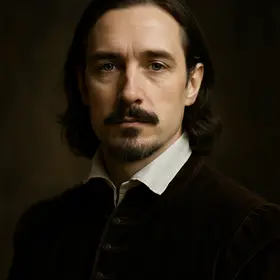
Athos in Twenty Years After
Major character
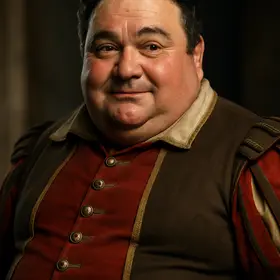
A former Musketeer, Comte de la Fère (Athos) is a sober, honorable leader and guardian, the moral conscience of the reunited friends.
Who is Athos?
Athos (the Comte de la Fère) is an ex‑musketeer who now lives as a country nobleman and guardian to the young Raoul de Bragelonne. When his old comrades reunite amid the Fronde and the English troubles, Athos provides the group's moral ballast: he counsels prudence, insists on honor, and repeatedly chooses duty over personal safety. He protects Raoul, counsels the queen and other allies, and helps plan or execute high‑risk operations — from rescuing King Charles I to escorting and confronting Cardinal Mazarin. Athos acts as a mediator during the Place Royale reconciliation, restrains violent impulses (breaking his sword to stop a duel), and makes hard choices about service (refusing to serve Mazarin while pledging to defend the king). Throughout the chapters in which he appears he combines stoic grief about past crimes with fatherly tenderness for Raoul, steady leadership in battle, and a readiness to sacrifice for vows and conscience.
In the book: A former Musketeer turned country nobleman (the Comte de la Fère), Athos serves as the group’s conscience when the friends reunite amid the political turbulence of the Fronde and entanglements abroad. Wise, principled, and unflinchingly honorable, he provides guidance and moral ballast, often shaping the band’s choices while revealing the depth of his loyalty and quiet strength.
Personality
- Honorable
- In Chapter 59 he refuses D'Artagnan’s plan to flee England because his pledge to defend King Charles binds him even at the risk of death.
- Paternal
- In Chapter 14 he explains how raising Raoul restored him, and in Chapter 22 he prepares Raoul for campaign with intimate, fatherly lessons.
- Sober
- When old tempers flare at the Place Royale (Chapter 28), Athos ends the danger by breaking his sword in its scabbard and calming the others.
- Resolute
- He stays under the scaffold at Charles’s execution (Chapter 66), risking capture in a final, failed rescue attempt and bearing the king’s blood.
- Reflective
- In Chapter 14 he meditates on Milady’s fate and the moral weight of past violence, showing sustained inward reckoning.
Character arc
Athos enters the narrative as a reclaimed man of dignity: no longer a dissipation‑ridden officer but a composed country noble whose life centers on safeguarding Raoul and living by conscience. Early chapters show him as a calm host (Chapters 13–15) and a man who has found purpose caring for Raoul. Political turmoil draws him back into hard action: he reengages with his comrades, negotiates uneasy reconciliations (Place Royale, Chapter 28), and moves from counsel to direct intervention abroad. In England he becomes one of the king’s defenders, fighting, being captured, and then suffering the shock of Charles’s trial and execution; his presence beneath the scaffold and the blood on his handkerchief (Chapter 66) mark the deepest emotional wound. After the English episodes he returns to France active in political negotiations and the Fronde, alternating diplomacy and warfare. By the end he chooses retirement to his estate at Bragelonne to secure Raoul’s future (Chapter 90) — still loyal and honorable, but wearied and shaped by the price of fidelity. Throughout he remains consistent in moral seriousness; his ‘change’ is less a reversal than a hardening of resolve and a deepened acceptance of sacrifice.
Relationships
- Raoul de Bragelonne Ward and father‑figure: Athos raises, trains, and protects Raoul, shaping his martial and moral education.
- d'Artagnan Old comrade and practical ally: they reunite as friends who trust and challenge one another in counsel and action.
- Aramis Friend and political foil: Athos trusts Aramis personally but often differs with his secretive, ambitious methods.
- Porthos Comrade in arms and fellow musketeer: Athos declaims leadership and steadiness while Porthos supplies strength and cheer.
- Lord de Winter Confidant in English affairs: Winter informs Athos about Milady’s son and aids coordination in England.
- Anne of Austria A sovereign whom Athos approaches as a principled servant; he seeks her aid and accepts her justice when seeking his friends.
Quotes by Athos
“Here you are, home again, Raoul,”
Chapter 13Athos greets Raoul's return; Raoul's arrival reveals a young presence in the household and helps explain Athos's changed demeanor.
“It is Raoul who has worked in me the change you see; I was dried up like a miserable tree, isolated, attached to nothing on earth; it was only a deep affection that could make me take root again and drag me back to life.”
Chapter 14Athos explains how raising Raoul restored his will to live and reshaped his character.
“She had a son, that unhappy woman?”
Chapter 14Athos asks about Milady's child, introducing the idea of an unknown heir and possible future consequences.
“There is but one person, or rather, one cause, to whom a man like me can be useful—that of the king.”
Chapter 15Athos defines the only legitimate loyalty he could accept, distinguishing service to the king from service to Mazarin.
“The Palace of the Louvre contains two things—the king, who must die, and royalty, which never dies.”
Chapter 22Athos explains the difference between the mortal king and the enduring concept of royalty before the royal tombs, framing the novel's political theme.
“I swear before God, who seeth us, and who, in the darkness of this night heareth us, never shall my sword cross yours, never my eye express a glance of anger, nor my heart a throb of hatred, at you.”
Chapter 28Athos promises lifelong friendship and renounces future enmity, invoking God and their shared past to bind them together.
Why Athos matters
Athos embodies the novel’s central moral themes: honor, loyalty, and the cost of conscience. As the group’s conscience he forces friends to face the consequences of past deeds (Milady’s legacy) while modeling paternal responsibility toward Raoul. His refusal to abandon a pledged cause and his anguish at the king’s execution dramatize questions about private duty versus political pragmatism. Athos’s steadiness and sorrow anchor the narrative’s ethical weight: his choices show how fidelity can demand sacrifice and how personal dignity shapes collective action in turbulent times.
Chapters with Athos
- Chapter 5
- Chapter 6
- Chapter 11
- Chapter 12
- Chapter 13
- Chapter 14
- Chapter 15
- Chapter 17
- Chapter 18
- Chapter 21
- Chapter 22
- Chapter 26
- Chapter 27
- Chapter 28
- Chapter 29
- Chapter 34
- Chapter 35
- Chapter 39
- Chapter 41
- Chapter 43
- Chapter 50
- Chapter 51
- Chapter 54
- Chapter 55
- Chapter 56
- Chapter 58
- Chapter 59
- Chapter 60
- Chapter 61
- Chapter 62
- Chapter 63
- Chapter 64
- Chapter 65
- Chapter 66
- Chapter 67
- Chapter 68
- Chapter 69
- Chapter 70
- Chapter 72
- Chapter 63
- Chapter 64
- Chapter 75
- Chapter 76
- Chapter 77
- Chapter 78
- Chapter 79
- Chapter 80
- Chapter 81
- Chapter 82
- Chapter 85
- Chapter 86
- Chapter 87
- Chapter 88
- Chapter 89
- Chapter 90
More Twenty Years After characters
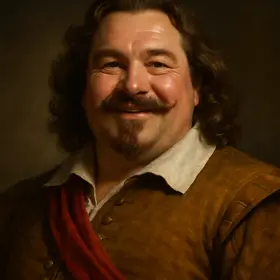 PorthosMajor character
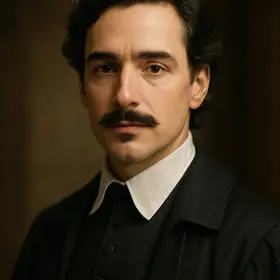 AramisMajor character
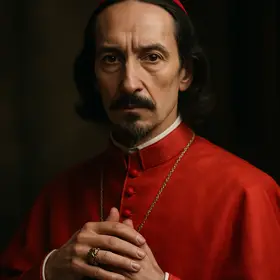 Cardinal MazarinAntagonist
 GrimaudMajor character
 MordauntAntagonist
 MousquetonMinor character
 PlanchetMajor character
 Anne of AustriaMajor character
All chapter summaries ›Characters ›
Read Twenty Years After illustrated
Every scene in these notes comes from the Book2Life reader, where the full public-domain text is illustrated as you read, with character portraits and narration. Free in your browser and on iPhone.
