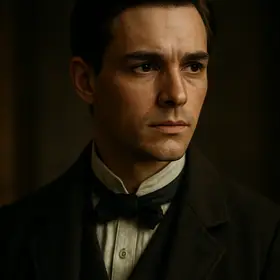
George Harris in Uncle Tom's Cabin
Major character
A skilled, determined enslaved man who escapes bondage to secure freedom for his wife Eliza and their child and later reunites with family in Canada.
Who is George Harris?
George Harris is introduced as a gifted mulatto laborer and inventor whose competence provokes his legal owner’s jealousy and cruelty. After being torn from skilled factory work and degraded to menial plantation drudgery, George resolves to escape rather than submit to sale or coerced marriage. He organizes a bold flight north with Eliza and their son Harry, accepts discreet help from sympathetic allies, and repeatedly demonstrates calm courage and strategic boldness—most strikingly when he helps defend a rocky pass against pursuers. He keeps his composure under pressure, helps arrange disguises and passage across the lake, and finally reaches Canada, where he and Eliza prosper. Years later George encounters Cassy and Madame de Thoux’s party on a river steamer, which leads to a moving family reunion and the decision to emigrate to Liberia to support a new nation for freed people. Throughout, George combines practical planning, fierce protectiveness for his family, and a refusal to accept any destiny dictated by slaveholders.
In the book: We first meet George as a gifted, enslaved worker whose talent at a factory has only earned him tighter control from a jealous master. He slips away to see his wife, Eliza, and you can feel how fiercely he wants a real life for their family—he’s already thinking and speaking like a man who means to be free.
Personality
- Resourceful
- He invents a hemp-cleaning machine in the factory and later arranges disguises, tickets, and passage for the family’s lake crossing in Sandusky.
- Determined
- After his owner reclaims him and plans to force him into servitude and marriage, George resolves he will flee to Canada rather than be taken.
- Courageous
- At the rocky fastness he issues a fearless proclamation and helps defend the pass, where Tom Loker is shot and the pursuers retreat.
- Proud
- He reacts with visible anger and indignation when reduced from skilled work to menial drudgery, insisting he will not be treated as mere property.
- Composed
- When Marks nearly exposes them in Sandusky by describing their features to a clerk, George keeps his composure and the escape continues.
Character arc
George begins as a capable, self-possessed skilled worker whose talents earn him praise but also the possessive cruelty of his legal owner. The injustice of being torn from his work and humiliated on the plantation crystallizes his determination: he refuses passive resignation and chooses flight over submission. His arc is one of agency and sustained resistance rather than moral transformation; he consistently moves from constrained dignity under slavery toward full, self-directed freedom. Along the way George demonstrates tactical leadership—accepting help, planning disguises, defending fugitives in armed confrontation, and maintaining calm under exposure—culminating in successful arrival in Canada. Later, his story widens to reunion and generational hope: the river meeting with Cassy and Madame de Thoux leads to the rediscovery of kin, emotional reconciliation, and a conscious decision to emigrate to Liberia to build a future for his people. By the end he has moved from individual escape to communal aspiration, exchanging the immediate fight for survival for long-term plans of uplift and nation-building.
Relationships
- Eliza Harris His wife and co-fugitive; they plan and execute escape together and establish a free household in Canada.
- Harry His young son whose safety is the central motive for George’s decision to flee and whose welfare he protects throughout the flight.
- Mrs. Smyth An ally who fosters Harry briefly and helps the family maintain their cover for the lake crossing.
- Phineas Fletcher An active conductor on the escape route who coordinates transport and moves George’s party toward safety.
- Marks A persistent pursuer whose near-exposure of the family in Sandusky tests George’s composure and tactical restraint.
- Cassy An eventual discoverer of family connections whose encounter aboard the steamer helps precipitate the reunion with George’s household.
Quotes by George Harris
“Who made this man my master? That’s what I want to know!”
Volume 1, Chapter 3George questions the legitimacy of his subjection, emphasizing his claim to selfhood and foreshadowing resistance.
“I’ll be free, or I’ll die!”
Volume 1, Chapter 3George declares his determination to escape rather than be returned to bondage, which sets his plan in motion.
“I am pretty well disguised, I fancy,”
Volume 1, Chapter 11George explains to Mr. Wilson how he altered his appearance to pass as a gentleman and avoid detection.
“I am George Harris. A Mr. Harris, of Kentucky, did call me his property. But now I’m a free man, standing on God’s free soil; and my wife and my child I claim as mine.”
Volume 1, Chapter 17George defiantly proclaims his freedom and his claim to his family from the rock, framing the confrontation as defense of personhood.
“We have arms to defend ourselves, and we mean to do it. You can come up, if you like; but the first one of you that comes within the range of our bullets is a dead man, and the next, and the next; and so on till the last.”
Volume 1, Chapter 17George warns the advancing posse that he and his companions will resist to the last, turning moral claim into armed resolve.
““Give me an education, Emily; that has always been my heart’s desire.””
Chapter 43George’s answer to Madame de Thoux’s offer of money—he requests schooling so he can better serve his family and people.
Why George Harris matters
George embodies the novel’s argument that enslaved people possess intellect, moral feeling, and a capacity for self-determination that slavery deliberately suppresses. His inventive talent, moral firmness, and refusal to accept ownership challenge pro-slavery claims of docility or inferiority. His flight and ultimate success dramatize the human cost of bondage and the moral urgency of abolition: freedom is shown as both practical deliverance and spiritual vindication. Later, his move toward collective uplift—education and emigration to Liberia—extends the book’s concern from rescue to reconstruction, suggesting routes for Black self-fashioning beyond Northern refuge.
Chapters with George Harris
More Uncle Tom's Cabin characters
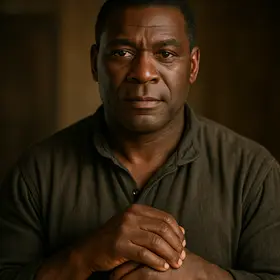 Uncle TomProtagonist
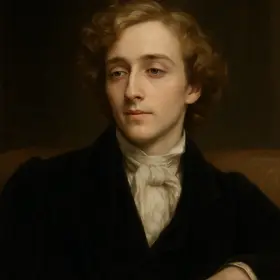 Augustine St. ClareMajor character
 EmmelineMinor character
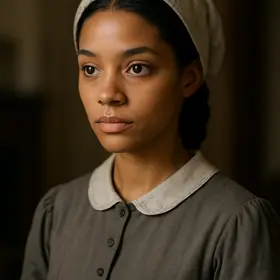 Eliza HarrisMajor character
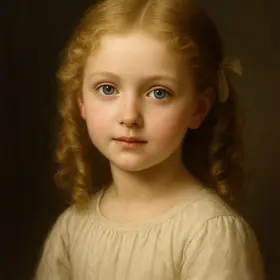 Little EvaMajor character
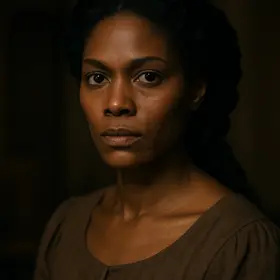 CassyMajor character
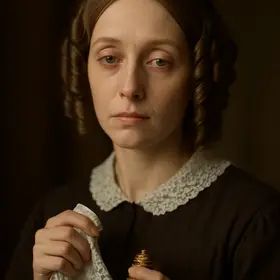 Marie St. ClareMajor character
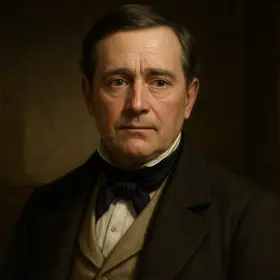 Mr. ShelbyMajor character
All chapter summaries ›Characters ›
Read Uncle Tom's Cabin illustrated
Every scene in these notes comes from the Book2Life reader, where the full public-domain text is illustrated as you read, with character portraits and narration. Free in your browser and on iPhone.
