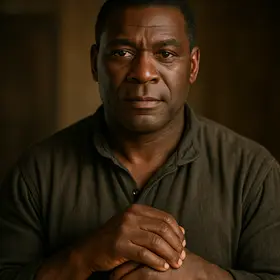
Uncle Tom in Uncle Tom's Cabin
Protagonist
A devout, steady enslaved man whose faith, patience, and moral strength guide others through suffering and sacrifice.
Who is Uncle Tom?
Uncle Tom is a dependable, deeply religious enslaved man first introduced on the Shelby farm in Kentucky as the spiritual center of the cabin. He comforts his family and neighbors, reads his Bible, and leads prayers at the weekly meeting. When Mr. Shelby sells him to settle debts, Tom accepts the change with calm resignation, believing his endurance may prevent worse harm to others. Shipped downriver, Tom serves briefly in the kindly St. Clare household where he bonds with Little Eva and becomes a moral companion to Augustine. After St. Clare’s death Tom is sold again to the cruel Simon Legree, endures brutal labor and repeated attempts to break his spirit, and becomes a pastoral presence among the other captives. Even when tortured to force betrayal of fugitives, Tom refuses violence and protects others, ultimately dying as a witness to his faith. His life catalyzes rescue efforts and, after his death, inspires George Shelby to manumit and reform practices on his plantation.
In the book: When we first meet him on the Shelbys’ Kentucky farm, he’s the dependable center of the quarters—devout, steady, and trusted by both his family and his master. He looks out for others before himself, and in a moment of household crisis, his calm integrity makes everyone lean on him.
Personality
- Deeply devout
- Leads prayer at the cabin meeting (Ch. 4) and reads Scripture to Consolation in the gin-house after his whipping (Ch. 34).
- Self-sacrificing
- Accepts sale without fleeing to spare his family further hardship and promises to tell Eliza’s husband why she ran (Ch. 5).
- Steadfastly moral
- Refuses Legree’s demand to betray the hiding fugitives and will not take up violence even when Cassy urges it (Ch. 40, Ch. 38).
- Compassionate caregiver
- Tends Little Eva in her decline, reads and prays with her, and comforts Augustine after her death (Ch. 26–27).
- Influential exemplar
- His dying testimony moves brutal hands like Sambo and Quimbo to remorse and later prompts George Shelby to free the household (Ch. 40, Ch. 44).
Character arc
Tom begins as the calm, pious center of the Shelby cabin, trusted by family and master and serving as spiritual leader among the enslaved there. When sold to pay debts, he meets the shock of separation with resignation and pastoral concern, maintaining composure as he leaves home (Ch. 10). In the St. Clare household his role shifts from field hand to intimate moral companion: he befriends Little Eva, comforts Augustine, and is entrusted with duties because of his prudence (Ch. 14–19). Eva’s death and St. Clare’s rash demise prompt hopes for Tom’s liberation, but bureaucratic and legal realities undo those plans; Tom is sent to a slave warehouse and sold south (Ch. 28–31). Under Legree, Tom’s faith is tested by systematic cruelty; he oscillates between despair and a triumphant religious vision, ultimately refusing to respond to violence with violence (Ch. 33–38). His final refusal to betray Cassy and the fugitives leads to his brutal martyrdom; even in death he forgives and prays, and his example provokes change in others, culminating in George Shelby’s emancipation efforts after Tom’s death (Ch. 40–44).
Relationships
- Aunt Chloe Tom’s devoted wife who grieves his sale and later undertakes work to raise funds toward his redemption (Ch. 4, Ch. 21).
- George Shelby Young master’s affectionate friend and correspondent whose hidden token and later arrival to reclaim Tom show mutual regard; George ultimately frees the household inspired by Tom (Ch. 10, Ch. 41, Ch. 44).
- Little Eva A child of intense compassion who befriends Tom, teaches and comforts him, and influences her father to promise Tom’s freedom (Ch. 14, Ch. 22–27).
- Augustine St. Clare Tom’s kind, indulgent master in New Orleans who values Tom’s honesty and hears Tom’s spiritual counsel, then promises emancipation that is never legally secured (Ch. 15, Ch. 18, Ch. 28).
- Simon Legree Tom’s final, brutal owner who seeks to break Tom’s spirit by violence and intimidation, and whose cruelty precipitates Tom’s martyrdom (Ch. 31–40).
- Cassy A traumatized fellow slave who ministers to Tom after his whipping, debates faith with him, and is influenced by his refusal of violence as she plans escape (Ch. 34–38).
Quotes by Uncle Tom
“Pray for them that ’spitefully use you, the good book says,”
Chapter 7Tom admonishes the kitchen to respond to cruelty with Christian mercy, highlighting the novel’s moral and religious frame.
“There’ll be the same God there, Chloe, that there is here.”
Volume 1, Chapter 10Tom comforts Aunt Chloe by asserting that God is present even where he is being taken, expressing his faith and calm resignation.
“I feel very bad, Mas’r. I allays have thought that Mas’r would be good to everybody.”
Volume 1, Chapter 18Tom tells St. Clare he is troubled because he believes his master is not acting as a true Christian toward himself.
“Mas’r allays been good to me. I haven’t nothing to complain of on that head. But there is one that Mas’r isn’t good to.”
Volume 1, Chapter 18Tom, pleading with St. Clare, distinguishes between gratitude for personal treatment and concern for St. Clare’s own spiritual welfare.
““I’m trying to write to my poor old woman, Miss Eva, and my little chil’en,” said Tom, drawing the back of his hand over his eyes;”
Chapter 19Tom’s quiet, domestic effort to communicate with his family illuminates his hopefulness and domestic bonds amid uncertainty.
“She's got the Lord's mark in her forehead.”
Volume 2, Chapter 24Tom tells Mammy he sees in Eva a spiritual sign that she is marked by God, expressing the household’s belief in her special, otherworldly destiny.
Why Uncle Tom matters
Uncle Tom embodies the novel’s moral argument against slavery by personifying Christian virtues—faith, patience, forgiveness—under extreme oppression. His steady piety contrasts with both indulgent masters and cruel taskmasters, revealing how institutional slavery corrupts all relationships. Tom’s refusal to repay cruelty with violence frames the book’s ethical vision: moral courage and sacrificial love can expose injustice and transform others. His martyrdom functions as the emotional and rhetorical pivot that compels characters and readers to confront the system’s evil, inspiring concrete acts (George Shelby’s manumissions) and the narrative’s appeal for moral responsibility and reform.
Chapters with Uncle Tom
- Volume 1, Chapter 4
- Volume 1, Chapter 5
- Chapter 7
- Volume 1, Chapter 10
- Volume 1, Chapter 14
- Volume 1, Chapter 15
- Volume 1, Chapter 18
- Chapter 19
- Volume 2, Chapter 21
- Volume 2, Chapter 22
- Volume 2, Chapter 24
- Volume 2, Chapter 25
- Volume 2, Chapter 26
- Chapter 27
- Volume 2, Chapter 28
- Volume 2, Chapter 29
- Volume 2, Chapter 30
- Volume 2, Chapter 31
- Volume 2, Chapter 32
- Volume 2, Chapter 33
- Volume 2, Chapter 34
- Chapter 35
- Volume 2, Chapter 36
- Volume 2, Chapter 38
- Volume 2, Chapter 40
- Chapter 41
- Chapter 42
- Volume 2, Chapter 44
- Volume 2, Chapter 45
More Uncle Tom's Cabin characters
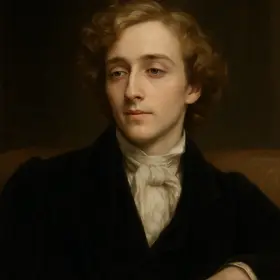 Augustine St. ClareMajor character
 EmmelineMinor character
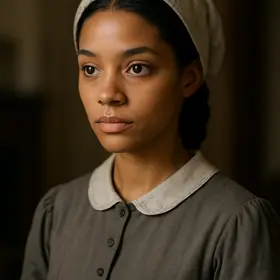 Eliza HarrisMajor character
 Little EvaMajor character
 CassyMajor character
 Marie St. ClareMajor character
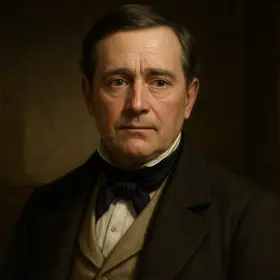 Mr. ShelbyMajor character
 Mrs. ShelbyMajor character
All chapter summaries ›Characters ›
Read Uncle Tom's Cabin illustrated
Every scene in these notes comes from the Book2Life reader, where the full public-domain text is illustrated as you read, with character portraits and narration. Free in your browser and on iPhone.
