
Little Eva in Uncle Tom's Cabin
Major character
A gentle, devout young girl whose compassion and faith deeply affect the St. Clare household and enslaved people around her.
Who is Little Eva?
Little Eva (Evangeline) is Augustine St. Clare’s frail, kind-hearted daughter who arrives from the riverboat with her father and immediately befriends Uncle Tom. She reads Scripture, speaks with simple theological certainty, and expresses an intense compassion for enslaved people, imagining their freedom and even proposing to sell her mother’s jewels to help them. Eva quietly ministers to servants and children—teaching Mammy to read a little, comforting Topsy, and helping Uncle Tom with letters—while her obvious tenderness and calm piety win Miss Ophelia’s respect and soften household attitudes. Her declining health becomes central: family members oscillate between denial and grief as Eva foresees her short life and asks her father to free Tom after she dies. Her presence provokes Augustine’s moral reflection and influences plans for the servants; after her death, the household’s mourning reshapes commitments and initiates concrete efforts to protect and educate those she loved.
In the book: We first meet Little Eva as a kind, quietly devout girl traveling with her father on a Mississippi riverboat, instantly warm to strangers and full of grace beyond her years. She befriends Uncle Tom at once, and her clear affection helps bring him into the St. Clare household in New Orleans.
Personality
- Compassionate
- She comforts and talks tenderly to Topsy in the glass-room, bringing the child to tears and a promise to try to be good (Chapter 25).
- Devout
- Eva reads Revelation and speaks of seeing 'spirits bright' and insists calmly that she is 'going there,' showing steady religiosity as her illness worsens (Chapter 22).
- Innocently resolute
- She insists on ideas like selling her mother’s jewels to buy freedom and schooling for the enslaved, despite Marie’s rebukes (Chapter 22).
- Influential
- Her requests and dying words move Augustine toward promising steps to free Uncle Tom and cause Miss Ophelia to adopt a gentler plan for Topsy (Chapters 24, 28).
Character arc
Eva appears as a child of rare sweetness and spiritual clarity: from her first warmth toward Uncle Tom on the riverboat she becomes a quiet moral force within the St. Clare household. Over time she deepens friendships with servants, reads Scripture aloud, and articulates a compassionate—almost evangelical—vision for the enslaved, refusing to accept the moral complacency around her. Her health declines quickly; even as the family alternates between cheer and alarm, Eva accepts her short life with calm certainty and uses her remaining influence to plead for Uncle Tom’s freedom and for better treatment of servants. After her death, the household is irrevocably altered: Augustine is stirred toward moral action, Miss Ophelia softens and assumes protective plans for Topsy, and the servants grieve profoundly. Thus Eva’s arc runs from luminous presence and active ministry in life to posthumous catalyst for conscience and change among those she left behind.
Relationships
- Augustine St. Clare Her indulgent, affectionate father who is deeply moved by her piety and whose conscience she helps stir toward moral reflection.
- Uncle Tom A devoted friend and spiritual companion whom she comforts, reads with, and asks her father to free after she dies.
- Miss Ophelia St. Clare A practical, stern cousin whose prejudices and methods are softened by Eva’s example and compassion.
- Marie St. Clare Her self-absorbed mother who rebukes Eva’s charitable notions and contrasts with Eva’s sincerity.
- Topsy A mischievous enslaved child whom Eva lovingly persuades to try to be good and whose grief at Eva’s death reveals Eva’s deep impact.
Quotes by Little Eva
““These things sink into my heart, Tom,” said Eva,—“they sink into my heart,” she repeated, earnestly.”
Chapter 19Eva’s immediate, emotional response to hearing of Prue’s alleged suffering, showing her deep compassion and sensitivity.
“I would die for them, Tom, if I could,”
Volume 2, Chapter 24Eva tells Uncle Tom she would gladly die if her death could stop the suffering she has seen among enslaved people, revealing her selfless view of sacrifice.
“I want to say them now, before I get weaker.”
Volume 2, Chapter 24Eva tells her father she must speak the thoughts she has long held—announcing calmly that she expects to die and pressing him to act for the enslaved.
“I love you, because you haven’t had any father, or mother, or friends;—because you’ve been a poor, abused child!”
Volume 2, Chapter 25Eva explains why she loves Topsy, using compassion and identification to move Topsy toward repentance and hope.
Why Little Eva matters
Little Eva embodies the novel’s moral ideal of Christian charity: childlike faith, self-sacrificing compassion, and a willingness to see the humanity of the enslaved. Through small, intimate acts—teaching, consoling, pleading—she exposes the household’s hypocrisies and softens hardened attitudes, prompting concrete moves toward education and protection for enslaved children and persuasive moral reflection in Augustine. Her premature death intensifies the book’s critique of a society that both produces suffering and relies on private virtue to ameliorate it, making Eva both a spiritual exemplar and a tragic catalyst for change.
Chapters with Little Eva
More Uncle Tom's Cabin characters
 Uncle TomProtagonist
 Augustine St. ClareMajor character
 EmmelineMinor character
 Eliza HarrisMajor character
 CassyMajor character
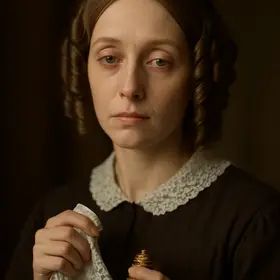 Marie St. ClareMajor character
 Mr. ShelbyMajor character
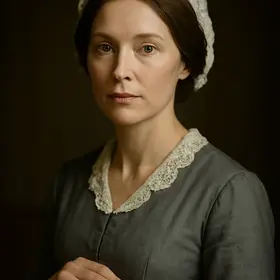 Mrs. ShelbyMajor character
All chapter summaries ›Characters ›
Read Uncle Tom's Cabin illustrated
Every scene in these notes comes from the Book2Life reader, where the full public-domain text is illustrated as you read, with character portraits and narration. Free in your browser and on iPhone.
