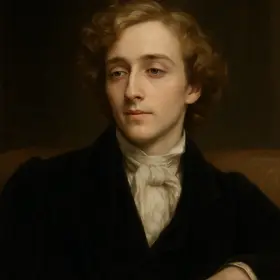
Augustine St. Clare in Uncle Tom's Cabin
Major character
A cultured, witty New Orleans gentleman whose indulgent charm conceals moral irresolution and a latent conscience stirred by his daughter Eva.
Who is Augustine St. Clare?
Augustine St. Clare is introduced as a wealthy but somewhat indolent New Orleans gentleman who travels with his gentle daughter, Evangeline (Little Eva). Amused and sardonic, he purchases Uncle Tom after Tom rescues Eva and brings him into the elegant St. Clare household, where Augustine’s easy kindness sets the domestic tone. He provokes and entertains Miss Ophelia’s stern New England morals, tolerates his self-absorbed wife Marie, and intermittently philosophers about slavery and human nature. Eva’s pure compassion and dying requests awaken Augustine’s conscience: he listens seriously to debates about slavery, reflects honestly on his upbringing and the system’s abuses, and is moved to consider manumitting Tom. Augustine alternates between witty skepticism and genuine tenderness—teaching, arguing, indulging, and later brooding over Eva’s influence. Ultimately, after promising reforms and beginning to take steps toward freeing Tom, Augustine suffers a sudden, fatal stabbing while intervening in a public altercation, dying in a state of spiritual clarity that comes too late to secure Tom’s emancipation.
In the book: We first meet Augustine St. Clare aboard a Mississippi steamboat with his gentle daughter, Eva—a wealthy New Orleans gentleman who is cultured, witty, and a bit indolent. Impressed by Tom after the riverboat incident with Eva, he purchases Tom and brings him into his household, shifting the story to the world of New Orleans society.
Personality
- cultured
- He furnishes his house with Moorish-influenced taste and amuses company with literary and musical talk when the party lands at New Orleans (Ch. 15).
- indulgent
- He consistently tolerates household disorder, spares servants from harsh discipline, and teases Miss Ophelia rather than enforcing strict rules (Chs. 15–16).
- sardonic
- He responds to Eva’s plea to buy Tom with teasing calculations about the price of religion and human virtues before purchasing him (Ch. 14).
- reflective
- After Eva’s death he broods over her influence, reads scripture with Tom, and admits a desire to change his ways (Chs. 27–28).
- inconsistent
- Though he condemns slavery’s abuses in conversation and begins steps toward Tom’s emancipation, his earlier pragmatism and late action leave his servants unprotected after his death (Chs. 19, 28–29).
Character arc
Augustine first appears as an urbane, indulgent master who treats Tom kindly more from humor and sentiment than moral rigor. Early on he purchases Tom almost playfully after Little Eva’s rescue (Ch. 14) and sets a household tone of casual benevolence rather than structured reform (Chs. 15–16). Over time he engages in earnest conversations about slavery’s evils, recounts his upbringing and attempts to mitigate abuses, and is moved by Eva’s uncompromising compassion and dying requests to consider practical steps for justice (Chs. 19, 22, 24–26). Eva’s death deepens his introspection: he reads Scripture with Tom, vows to do his duty to the lowly, and begins formal efforts to manumit Tom (Chs. 27–28). Before those plans are secured, Augustine is abruptly wounded while intervening in a public disturbance and dies shortly afterward in a state of spiritual openness and repentance (Ch. 28–29). His trajectory moves from amused indulgence to awakened conscience, but his late change arrives too late to prevent the household’s unraveling and the sale of its servants.
Relationships
- Little Eva His beloved daughter; her compassion and dying wishes awaken his conscience and prompt him toward emancipation plans (Chs. 14, 24–27).
- Marie St. Clare His self-absorbed wife whose theatrical complaints and resistance complicate his efforts to protect and free servants (Chs. 15–16, 29).
- Miss Ophelia His practical New England cousin brought south to manage the household; she challenges his lax domestic habits and moral complacency (Chs. 15–16, 18–20).
- Uncle Tom His purchased slave whose piety and steady goodness probe Augustine’s conscience; Tom prays and reads with him as Augustine contemplates reform (Chs. 18, 27–28).
- Topsy He buys and presents Topsy to Miss Ophelia as a charge to be educated, using the child to tease Ophelia into acting on her principles (Ch. 20).
- Alfred St. Clare / Henrique He converses with his brother and observes Henrique’s brutal treatment of a groom, using the episode to argue that the system corrupts both masters and youth (Ch. 23).
Quotes by Augustine St. Clare
“I’ve bought you a coachman, at last, to order. I tell you, he’s a regular hearse for blackness and sobriety, and will drive you like a funeral, if you want.”
Volume 1, Chapter 15St. Clare’s teasing presentation of Uncle Tom to Marie, showing his genial, playful approach to household matters.
“It’s wholly inexcusable in them, in the light of the example that Marie and I set them,—this laziness.”
Volume 1, Chapter 16St. Clare’s ironizing remark and wider remarks about social custom complicate straightforward defenses of slavery and mock self-justifying rhetoric.
“The thing itself is the essence of all abuse!”
Chapter 19St. Clare’s blunt moral verdict in the middle of his extended condemnation of slavery as inherently abusive.
“I suppose that’s what we may call republican education, Alfred?”
Volume 2, Chapter 23Augustine uses the observed beating to introduce a criticism of the society’s proclaimed ideals versus practiced inequality.
“But I believe that all the trying in the world to benefit a child, and all the substantial favors you can do them, will never excite one emotion of gratitude, while that feeling of repugnance remains in the heart;—it’s a queer kind of a fact,—but so it is.”
Volume 2, Chapter 25St. Clare reflects to Miss Ophelia that true moral influence depends on overcoming inner repugnance, not merely on outward benevolence.
Why Augustine St. Clare matters
Augustine St. Clare embodies the novel’s exploration of conscience versus complacency. His cultivated manners and genial indulgence reveal how sentiment and intellect can coexist with moral procrastination: he understands and condemns slavery’s abuses yet delays decisive action until moved by Eva’s holiness. His late conversion and untimely death dramatize the costs of deferred responsibility—personal remorse cannot repair systemic injustice once opportunities pass. Through St. Clare, the book critiques polite benevolence that fails to translate into justice and shows how individual awakening, while powerful, is insufficient without prompt, concrete reform.
Chapters with Augustine St. Clare
- Volume 1, Chapter 14
- Volume 1, Chapter 15
- Volume 1, Chapter 16
- Volume 1, Chapter 18
- Chapter 19
- Volume 2, Chapter 20
- Volume 2, Chapter 22
- Volume 2, Chapter 23
- Volume 2, Chapter 24
- Volume 2, Chapter 25
- Volume 2, Chapter 26
- Chapter 27
- Volume 2, Chapter 28
- Volume 2, Chapter 29
- Volume 2, Chapter 30
- Volume 2, Chapter 31
- Volume 2, Chapter 45
More Uncle Tom's Cabin characters
 Uncle TomProtagonist
 EmmelineMinor character
 Eliza HarrisMajor character
 Little EvaMajor character
 CassyMajor character
 Marie St. ClareMajor character
 Mr. ShelbyMajor character
 Mrs. ShelbyMajor character
All chapter summaries ›Characters ›
Read Uncle Tom's Cabin illustrated
Every scene in these notes comes from the Book2Life reader, where the full public-domain text is illustrated as you read, with character portraits and narration. Free in your browser and on iPhone.
