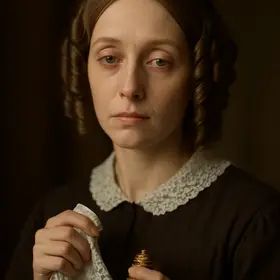
Marie St. Clare in Uncle Tom's Cabin
Major character
Augustine St. Clare’s delicate, self-absorbed wife and Little Eva’s mother, fretful, status-conscious, and imperious with servants.
Who is Marie St. Clare?
Marie St. Clare appears as the beautiful, wealthy, and hypochondriacal mistress of the St. Clare household. From her first scenes she asserts a sharp preoccupation with her comforts and social standing, complaining about servants and blaming domestic troubles on perceived neglect; she speaks theatrically of ailments and expects deference. She functions as a contrast to Miss Ophelia’s stern practicality and Eva’s compassionate simplicity, setting a chilly, status-conscious tone in the house. Marie repeatedly rebukes Eva’s charitable impulses and dismisses discussions about educating or freeing the enslaved as childish or impractical. After Little Eva’s illness and death she performs overt, theatrical mourning but ultimately proves unable to follow through on Eva’s wishes; when Augustine dies, Marie’s nervous collapse and resistance to emancipation lead her to assert control, signing punitive orders (for example sending Rosa to the whipping-house) and resisting Ophelia’s attempts to secure Tom’s freedom. Her actions precipitate the servants’ immediate vulnerability and the auctioning of the household.
In the book: When we meet her in the St. Clare household, she’s Augustine St. Clare’s fretful, self-styled invalid wife and little Eva’s mother, absorbed in her ailments and social niceties. She’s brisk and imperious with the servants, quick to complain, and far more interested in being attended to than in attending to others. Her presence sets the household’s chilly, status-conscious tone around Tom’s arrival.
Personality
- Self-absorbed
- At breakfast she monopolizes conversation with complaints about her health and household annoyances, treating servants as nuisances (Chapter 16).
- Imperious
- She briskly directs and criticizes the servants and insists on strict control of the household, provoking Ophelia’s resistance (Chapter 16).
- Theatrical
- After Eva’s death she adopts a dramatic posture of mourning that contrasts with Augustine’s inward grief (Chapter 27).
- Status-conscious
- She prioritizes social proprieties and decries servants’ behavior as degrading, shaping the household’s chilly tone when Tom arrives (Chapter 15).
- Resistant to reform
- When Ophelia seeks to prevent Rosa’s punishment and to intercede for Tom’s manumission, Marie resists emancipation and presses punitive measures (Chapter 29).
Character arc
Marie’s portrayal remains consistent in temperament but grows consequential as the household’s dynamics shift. She is introduced as a delicate, emotionally shallow invalid whose complaints and insistence on decorum mark the St. Clare home from the start. Early on she rebukes servants and treats Eva’s charitable ideas as fanciful, establishing her as uninterested in practical reform or the moral claims made on Augustine. During Eva’s illness and death she performs maternal anguish, but this grief does not translate into moral action; instead she mourns dramatically while Augustine is inwardly transformed. After Augustine’s sudden death, Marie’s nervous collapse gives way to assertive control: she signs orders that punish servants (sending Rosa to a whipping-house) and resists Ophelia’s attempts to honor Eva’s and Augustine’s inclinations toward kindness and freedom. Her refusal or inability to act on Eva’s wishes directly precipitates the servants’ unprotection and Tom’s transfer to the slave-warehouse. Thus Marie moves from a passive, complaining presence to an active enforcer of harsh practical outcomes, and she remains largely unchanged in compassion even as the stakes rise around her.
Relationships
- Augustine St. Clare Her husband; their marriage is emotionally distant—he indulges her fragility while she fails to minister to his deeper wounds.
- Little Eva Her daughter; Marie is Eva’s mother but responds to Eva’s compassionate impulses with rebuke or theatrical sorrow rather than practical support.
- Miss Ophelia St. Clare Her practical New England cousin-in-law and household reformer; they clash over discipline, morality, and the treatment of servants.
- Uncle Tom A respected servant in her household; Marie dismisses or downplays efforts toward his emancipation despite Eva and Augustine’s concerns.
- Rosa A young quadroon servant whom Marie orders to be punished, demonstrating Marie’s readiness to wield authority punitively.
- Adolph One of the household servants present in scenes that show domestic order and mourning, his duties underscore Marie’s social sphere.
Quotes by Marie St. Clare
“I don't know, I'm sure, except for a plague; they are the plague of my life.”
Volume 1, Chapter 16Marie’s harsh verdict about the servants displays her self-centered view and provides a foil to Miss Ophelia's moral seriousness and Eva’s sympathy.
Why Marie St. Clare matters
Marie embodies the social complacency and aesthetic refinement that mask moral indifference in the novel. Her preoccupation with status, health, and propriety contrasts with Eva’s innocence and Augustine’s intermittent conscience, highlighting how genteel manners can coexist with cruelty. By resisting emancipation and enforcing punitive measures after Augustine’s death, Marie concretely demonstrates how personal selfishness and social performance sustain the oppressive system; her character helps dramatize the theme that sentimental refinement without moral resolve perpetuates injustice.
Chapters with Marie St. Clare
More Uncle Tom's Cabin characters
 Uncle TomProtagonist
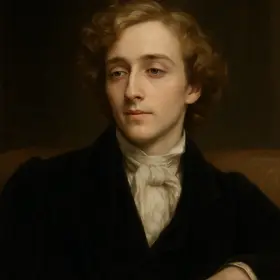 Augustine St. ClareMajor character
 EmmelineMinor character
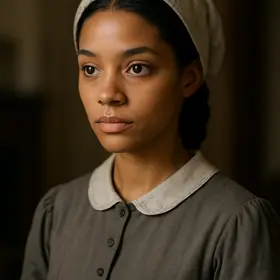 Eliza HarrisMajor character
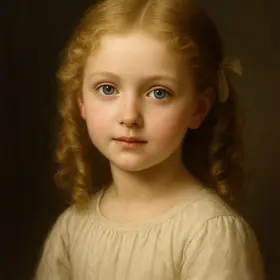 Little EvaMajor character
 CassyMajor character
 Mr. ShelbyMajor character
 Mrs. ShelbyMajor character
All chapter summaries ›Characters ›
Read Uncle Tom's Cabin illustrated
Every scene in these notes comes from the Book2Life reader, where the full public-domain text is illustrated as you read, with character portraits and narration. Free in your browser and on iPhone.
