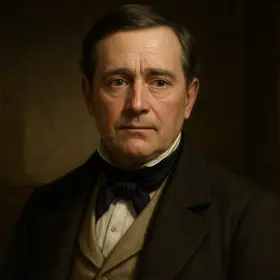
Mr. Shelby in Uncle Tom's Cabin
Major character
Affable but indebted Kentucky gentleman whose choice to sell enslaved people triggers the novel’s central crises.
Who is Mr. Shelby?
Mr. Shelby is the genteel owner of a Kentucky farm struggling under mortgages and bills. He wants to preserve his household’s outward respectability and avoid ruin, but his limited funds force him into a grim business decision: to sign bills of sale that send Uncle Tom and a young child away to satisfy debts. In conversation with the coarse trader Haley he bargains awkwardly, trying to maintain decorum while conceding possession. After Eliza flees and Tom is taken, Shelby oscillates between remorse, concern for his honor, and pragmatic dealings with Haley; he tolerates his wife’s schemes but resists detailed accounting. Later chapters show his farm life continuing amid anxiety about Tom’s fate; Mrs. Shelby and the household work to raise money for redemption while Mr. Shelby treats the problem as an unavoidable business annoyance. By the time his son George comes searching for Tom, the text reports that Mr. Shelby has died, leaving the consequences of his decision to unfold through others.
In the book: When we first meet Mr. Shelby, he’s the affable but indebted owner of a Kentucky farm, trying to keep up the polish of a gentleman while juggling bills. Over cigars and account books he bargains with the rough trader Mr. Haley, and the choices he makes there ripple through his household. He matters because his deal is the spark that sets everything else in motion.
Personality
- Indebted
- He signs bills of sale to satisfy mortgages and bills after bargaining with Haley (Ch. 1; Ch. 5).
- Affable
- He lounges after dinner and preserves outward polish even while worrying about finances (Ch. 21).
- Ambivalent
- He resists morally but ultimately consents to the sale and later frets about honor more than the moral wrong (Ch. 1; Ch. 6).
- Pragmatic
- He treats Tom’s sale as a business necessity and dismisses detailed fundraising plans as annoyances (Ch. 5; Ch. 21).
Character arc
At first appearance Mr. Shelby is a personable, cultivated master confronted with financial collapse; he negotiates with Haley, attempting to reconcile the image of a gentleman with the brutal commerce of human property. Though uneasy and morally troubled—he consults his wife, shows visible discomfort and later frets about appearances—he signs the bills of sale under pressure. When Eliza flees, he worries about how Haley will interpret the loss and strives to preserve decorum rather than fully confront the moral catastrophe. In subsequent episodes he becomes more passive: Mrs. Shelby and others take up active efforts to redeem Tom while he views the situation largely as an unavoidable business problem. By the time George pursues Tom years later, the narrative reports Mr. Shelby’s death; he does not live to repair his error. Thus his arc is less a moral conversion than a trajectory from compromised decision-maker to the consequence-bearing absence that leaves redemption and justice to others.
Relationships
- Mrs. Shelby His wife and moral foil who argues passionately against the sale and works to raise funds for Tom’s redemption.
- George Shelby His son (Mas'r George) who cares for Uncle Tom, objects to the sale, and later seeks to re-purchase Tom after his father’s death.
- Uncle Tom An enslaved man on Shelby’s plantation whom Mr. Shelby sells to Haley to meet debts, setting Tom’s journey in motion.
- Mr. Haley A coarse slave-trader who bargains with Mr. Shelby and takes possession of Tom and the child under the bills of sale.
- Aunt Chloe The household cook and Tom’s wife who interacts with Mr. Shelby over Tom’s fate and later helps implement plans to raise redemption money.
Quotes by Mr. Shelby
“Tom is an uncommon fellow; he is certainly worth that sum anywhere,—steady, honest, capable, manages my whole farm like a clock.”
Volume 1, Chapter 1Shelby praises Tom’s reliability and character while discussing Haley’s offer, showing why he feels sorrow at the thought of parting with him.
“Mr. Haley, she is not to be sold,”
Volume 1, Chapter 1Shelby firmly refuses Haley’s suggestion that the young quadroon woman be sold, asserting a boundary he fears he may be forced to cross later.
“"Wal, now, the thing’s done!" said the trader, getting up. "It’s done!" said Mr. Shelby, in a musing tone; and, fetching a long breath, he repeated, "It’s done!"”
Volume 1, Chapter 4Marks the completion of the bills of sale and contrasts the warm domestic scene with the cold business of selling Tom.
“Wife, you talk like a fool! Really, it will be something pretty awkward for me, if she is. Haley saw that I hesitated about selling this child, and he'll think I connived at it, to get him out of the way. It touches my honor!”
Volume 1, Chapter 6Shelby’s primary worry is his personal honor and how Haley will interpret Eliza’s escape, revealing social pressures on slaveholders.
“This yer young-un business makes lots of trouble in the trade," said Haley, dolefully.”
Volume 1, Chapter 8Haley laments the practical and emotional complications of dealing in children, revealing a rare flicker of conscience.
Why Mr. Shelby matters
Mr. Shelby embodies the novel’s critique of a paternalistic, genteel slaveholding class whose economic pressures and concern for reputation enable the system of slavery. His compromise—choosing financial expedience over moral action—is the causal spark for the chain of escapes, persecutions, and moral reckonings that follow. By showing a master who is neither monstrous nor heroic but entangled in debt and social expectations, the book argues that slavery’s harm extends beyond cruel individuals to social and economic structures and to the quiet complicity of otherwise amiable people.
Chapters with Mr. Shelby
More Uncle Tom's Cabin characters
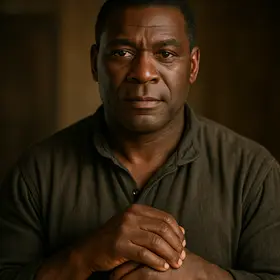 Uncle TomProtagonist
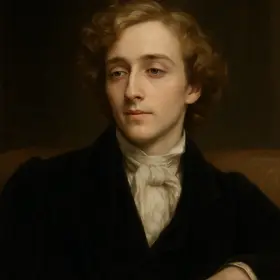 Augustine St. ClareMajor character
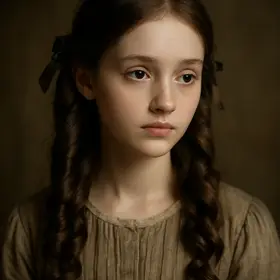 EmmelineMinor character
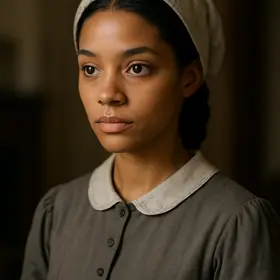 Eliza HarrisMajor character
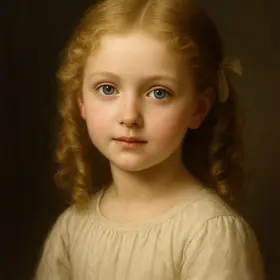 Little EvaMajor character
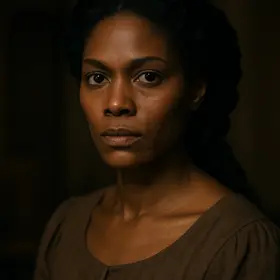 CassyMajor character
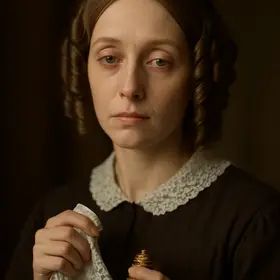 Marie St. ClareMajor character
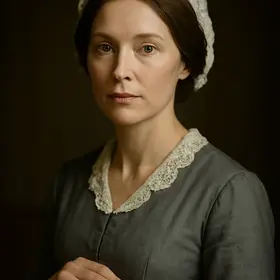 Mrs. ShelbyMajor character
All chapter summaries ›Characters ›
Read Uncle Tom's Cabin illustrated
Every scene in these notes comes from the Book2Life reader, where the full public-domain text is illustrated as you read, with character portraits and narration. Free in your browser and on iPhone.
