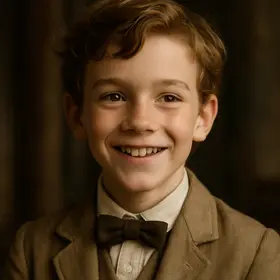
Buck Grangerford in Adventures of Huckleberry Finn
Major character
The youngest Grangerford son who befriends Huck and embodies his family's courtly manners amid a senseless blood feud.
Who is Buck Grangerford?
Buck Grangerford is the teenage son of the Grangerford household who quickly befriends Huck when Huck arrives at the farm posing as "George Jackson." Polite, talkative, and accustomed to genteel rituals, Buck welcomes Huck into the family, shares his clothes, and plays spelling games with him. Through Buck, Huck sees the Grangerfords' neat, well-furnished home and hears family stories, including the sentimental poems of the dead daughter Emmeline. Buck explains the long-standing feud with the Shepherdsons matter-of-factly, treating violence as part of daily life. When the feud erupts after Miss Sophia runs off with Harney Shepherdson, Buck rides out with other young men and is shot while fleeing an ambush. His death—found by Huck in the woods and carried back to the river—becomes a traumatic turning point that propels Huck to flee the aristocratic, violent world and rejoin Jim on the raft. Buck functions as both a friendly guide and a tragic symbol of inherited honor culture.
In the book: Buck is the youngest Grangerford son and quickly becomes Huck’s friend, serving as Huck’s gateway into the proud, courtly world of the Grangerfords. Through Buck and his family, the novel explores themes of honor culture and the senselessness of inherited feuds, contrasting genteel manners with underlying violence without needing Huck to state it outright.
Personality
- Friendly
- He shares his clothes and room with Huck and plays spelling games with him to help him learn the assumed name.
- Courtly
- He is raised within the Grangerfords' polite rituals and neat household, reflecting their genteel manners.
- Unselfconscious
- He talks openly about the feud and treats the long-standing retaliations as ordinary, everyday facts.
- Youthful idealism
- He rides out with romanticized bravado during the pursuit of the Shepherdsons and Harney, despite the danger.
Character arc
Buck appears as a warm, welcoming adolescent who readily befriends Huck and introduces him to the Grangerfords' orderly, courtly world. In his first scenes he is playful and companionable—sharing clothes, teaching Huck to spell his false name, and showing Huck the family's prized objects and Emmeline's mourning poems. As the narrative unfolds, Buck explains the Grangerford–Shepherdson feud with a baffled casualness that reveals how normal violence has become in his life. That normalcy collapses when Miss Sophia elopes with Harney Shepherdson: the genteel family rituals give way to a chaotic, deadly ambush. Buck's final act—riding with his peers and then being hunted and shot while fleeing—transforms him from an emblem of hospitable youth into a tragic casualty of an inherited code of honor. He does not undergo moral introspection or change; instead his death functions as the pivot that forces Huck to reject the Grangerfords' violent world and return to the simpler moral clarity of the raft.
Buck Grangerford in pictures


Relationships
- Huckleberry Finn Becomes an immediate friend and host to Huck, sharing his room, clothes, and companionship.
- Colonel Grangerford Is the son of the family patriarch, living under the Colonel's aristocratic, honor-bound household rules.
- Miss Sophia Is a member of the household whose elopement with Harney Shepherdson precipitates the deadly clash that kills Buck.
- Harney Shepherdson Is the rival young man whose secret meeting with Miss Sophia sparks the feud's violent outbreak that leads to Buck's death.
- Emmeline Is the dead sister whose preserved mourning poems and room form part of the family atmosphere Buck inhabits.
Quotes by Buck Grangerford
“A feud is this way. A man has a quarrel with another man, and kills him; then that other man’s brother kills him; then the other brothers, on both sides, goes for one another; then the cousins chip in—and by-and-by everybody’s killed off, and there ain’t no more feud.”
Chapter 18Buck gives a blunt, recursive explanation of the feud that exposes its circular, pointless brutality and generations-long perpetuation.
Why Buck Grangerford matters
Buck personifies the novel's critique of an honor culture that blends polite appearance with entrenched violence. As a courteous, hospitable youth, he makes the Grangerfords' genteel lifestyle appealing, which heightens the shock when that world produces senseless slaughter. His casual acceptance of the feud and his sudden death expose the moral hollowness and destructiveness of inherited social codes. For Huck—and for the novel—the loss of Buck helps dramatize the choice between a civilized veneer that conceals brutality and the freer, more humane life on the raft.
Chapters with Buck Grangerford
More Adventures of Huckleberry Finn characters
 Huckleberry FinnProtagonist
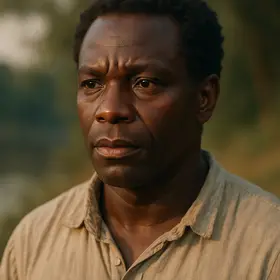 JimMajor character
 Tom SawyerMajor character
 The DukeMajor character
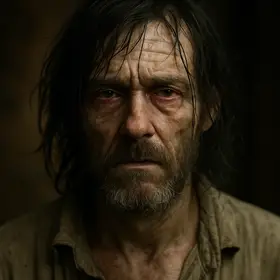 Pap FinnAntagonist
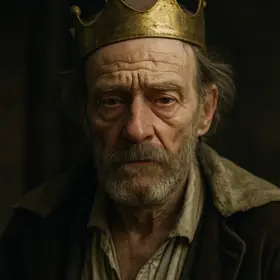 The KingAntagonist
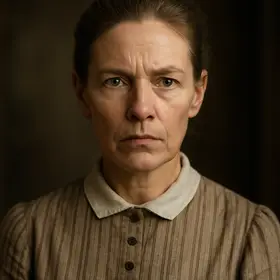 Aunt SallyMajor character
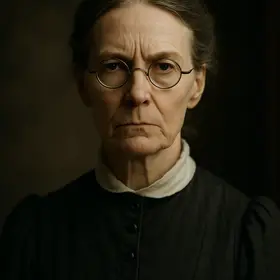 Miss WatsonMajor character
All chapter summaries ›Characters ›
Read Adventures of Huckleberry Finn illustrated
Every scene in these notes comes from the Book2Life reader, where the full public-domain text is illustrated as you read, with character portraits and narration. Free in your browser and on iPhone.
Read Adventures of Huckleberry Finn free
