Don Quixote Chapter 31 Summary
Reception at the Duke's Castle
Don Quixote and Sancho arrive at the duke and duchess's castle and are ceremonially received while Sancho's bluntness and a churchman's rebuke provoke amusement and tension.
Summary
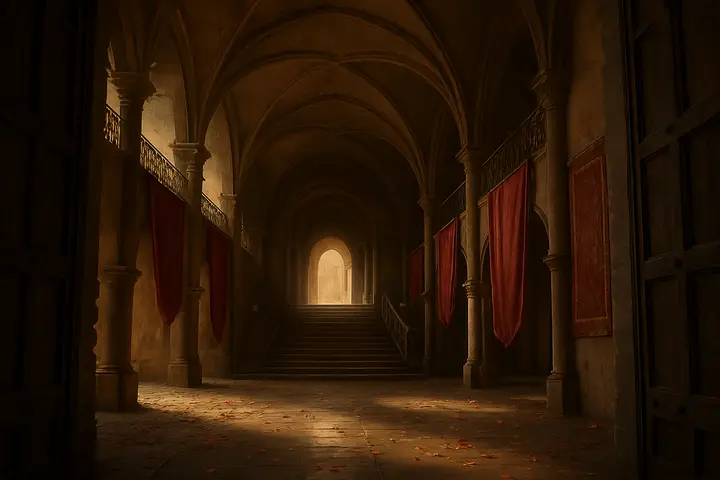
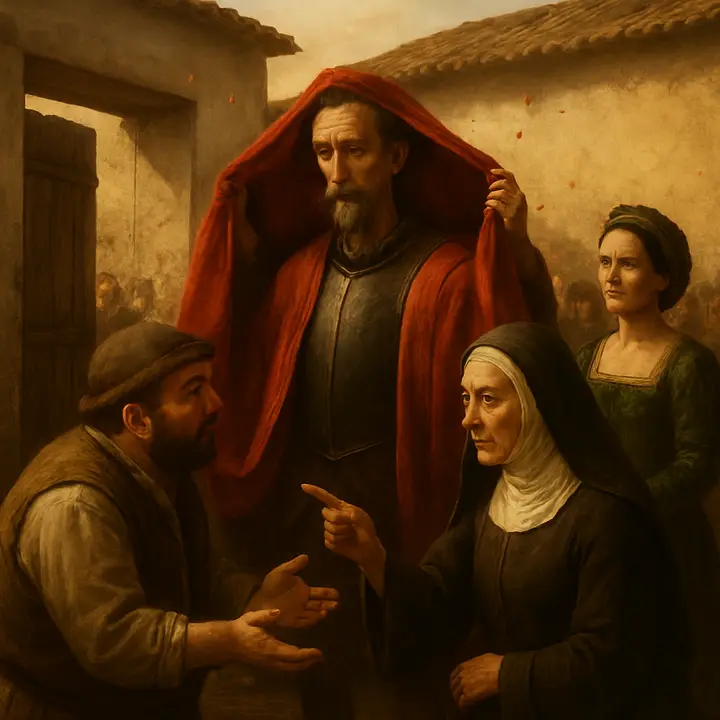
Don Quixote and Sancho approach the duke and duchess’s country house, where the duke has prepared an elaborate reception to treat Don Quixote like a true knight-errant. At the gate Don Quixote is met with pomp: attendants fling scented pellets, place a scarlet mantle on him, and hail him with flattering cries. Sancho, eager for good food and anxious about his donkey Dapple, pleads with a duenna, Doña Rodríguez, to have the beast stabled; his rustic bluntness quickly escalates into an angry exchange that the duchess overhears and defuses.
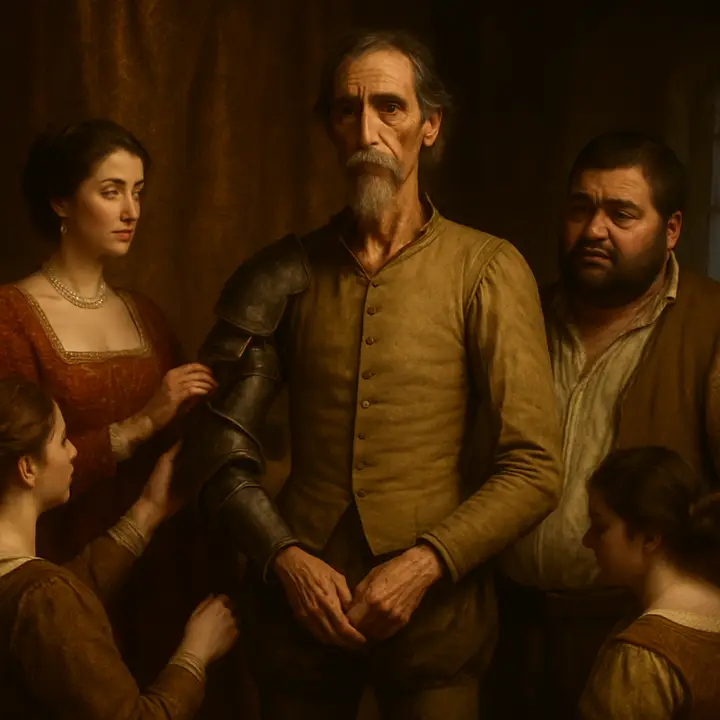
Inside, Don Quixote is ushered into a richly appointed chamber, helped out of his armour by instructed damsels, and dressed in ceremonial garments so he can fully believe his role. Sancho is warned by Don Quixote to curb his coarseness lest it undermine his master's dignity. At dinner the duke and duchess press Don Quixote to take the head of the table; Sancho launches into a long, rambling anecdote about a seating quarrel in his village, amusing the hosts and irritating a grave ecclesiastic who scolds both Sancho's chatter and Don Quixote’s fantasies. When the ecclesiastic angrily reproves Don Quixote and tells him to abandon his knight-errant delusions, Don Quixote rises to answer, and the chapter ends as his retort is left to be told in the next chapter.
Key events
- The Duke arranges a theatrical reception for Don Quixote at his castle.
- Attendants hail Don Quixote and shower the party with scented pellets.
- Sancho pleads with Doña Rodríguez to stable his donkey, leading to an insulted quarrel.
- Don Quixote is ceremonially disarmed, clothed, and paraded through the household.
- At dinner Sancho tells a long village story, amusing hosts and vexing the ecclesiastic.
- A grave ecclesiastic angrily denounces Don Quixote’s knight-errant pursuits, prompting Don Quixote to rise.
Chapter 31 in pictures
Analysis
This chapter stages a formal, theatrical reception that underscores two central dynamics: the gap between appearance and reality, and the social performance of identity. The duke and duchess orchestrate an elaborate mise-en-scène to enact the literary honorifics Don Quixote has long imagined; their staged ceremony both flatters and gently mocks him, showing how aristocratic power can manufacture status. Don Quixote’s sincere acceptance of the ritual deepens his conviction that his imagined world has tangible social recognition, while Sancho’s earthy concerns and comic bluntness reveal the porous boundary between high fantasy and low reality.
The episode also foregrounds conflicting attitudes toward books and folly. The ecclesiastic’s rebuke articulates a sober, conventional critique of knight-errantry as dangerous delusion, setting up a moral and intellectual opposition to the indulgent patronage of the duke and duchess. Narrative technique is playful: Cervantes uses staged irony (hosts arranging to make Don Quixote feel like a hero) and contrast (Don Quixote’s solemnity vs Sancho’s rustic anecdotes) to produce comedy that is at once empathetic and satirical. Symbolically, the scarlet mantle, ceremonious washing, and the head-of-table dispute signal how ceremony, courtesy, and rank can be performed or contested, anticipating further tests of authenticity for both master and squire.
Important quotes
“Welcome, flower and cream of knight-errantry!”
ServantsServants greet Don Quixote during the staged, ceremonial reception that seeks to make him feel like a true knight-errant.
“Tell me, thou new-fledged buffoon and old booby, dost thou think it right to offend and insult a duenna so deserving of reverence and respect as that one just now?”
Don QuixoteDon Quixote reprimands Sancho in private, urging him to avoid coarse talk that might shame them before their noble hosts.
“Go your ways in a good hour, and in a good hour be it said to you. Go home and bring up your children if you have any, and attend to your business, and give over going wandering about the world, gaping and making a laughing-stock of yourself to all who know you and all who don’t.”
the ecclesiasticA grave churchman angrily denounces Don Quixote's knight-errant project at the dinner table, provoking Don Quixote to rise and reply.
Characters in Chapter 31
- Don Quixote
- Sancho Panza
- The Duke
- The Duchess
- Doña Rodríguez
- the ecclesiastic
- Dapple
- damsels
- pages
- servants
All chapter summaries ›Characters ›
Read Don Quixote illustrated
Every scene in these notes comes from the Book2Life reader, where the full public-domain text is illustrated as you read, with character portraits and narration. Free in your browser and on iPhone.
