Don Quixote Chapter 32 Summary
Reply and Courtly Jests
Don Quixote defends knight-errantry before the duke and duchess while Sancho is promised an island and both endure playful court mockery.
Summary
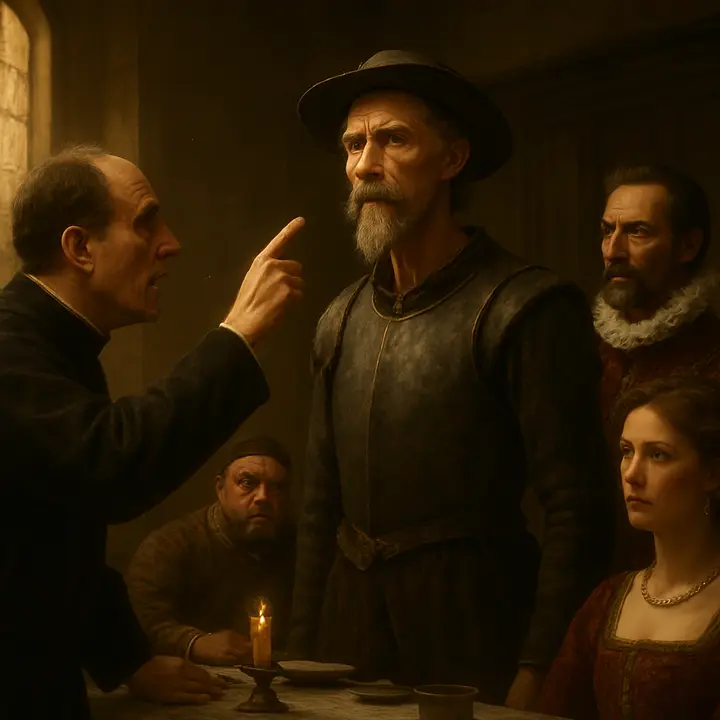
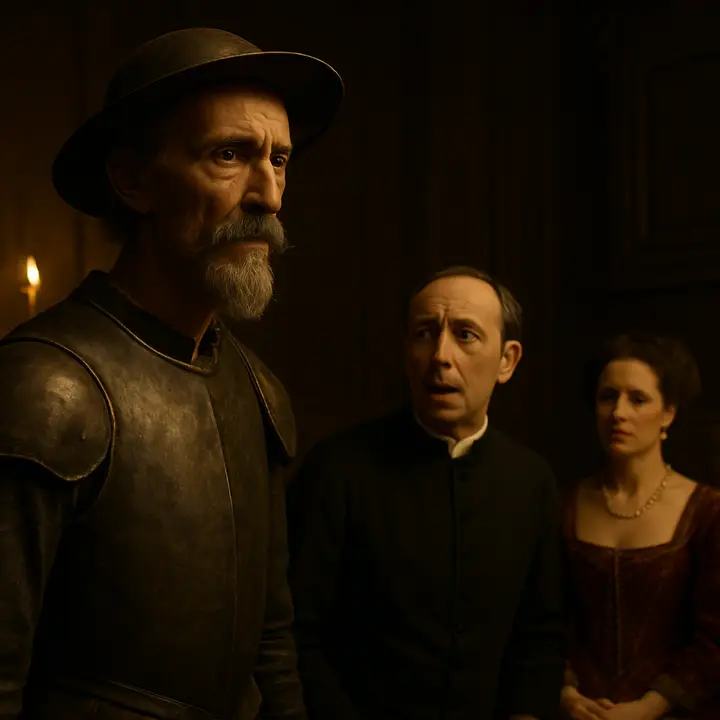
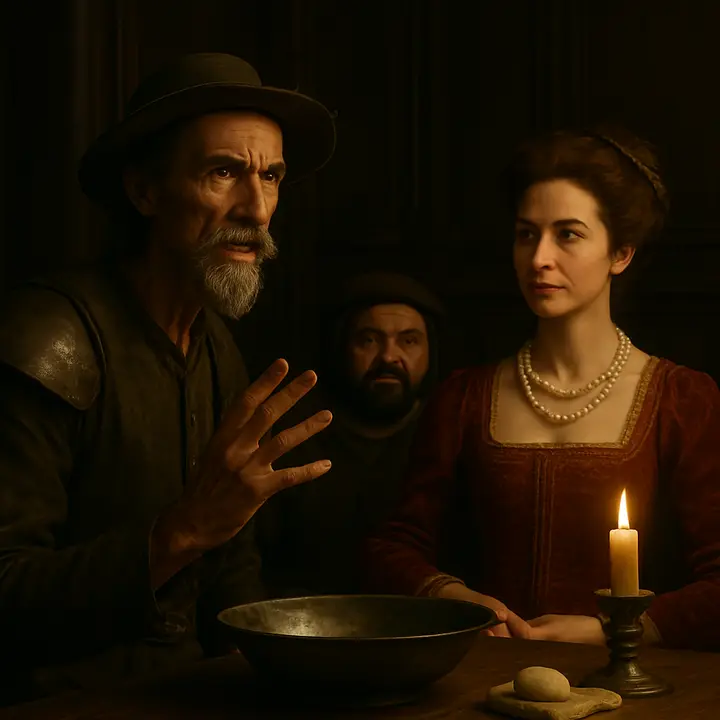
At the ducal palace Don Quixote rises to answer an ecclesiastic who has publicly mocked the existence and value of knights-errant. He makes a spirited defence of his vocation, insisting that knight-errantry is honourable, that his intentions are good, and that being in love is a duty of his order. Sancho supports his master and boldly proclaims his own worth as a promised governor, prompting the duke to grant Sancho the government of an island and to order that Don Quixote be treated like a celebrated knight.
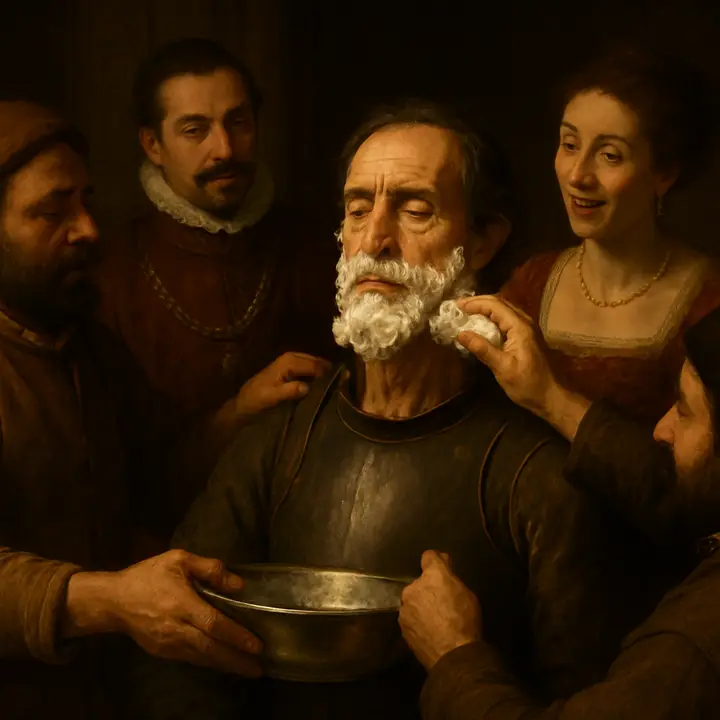
The meal turns into a gentle practical joke arranged by the duke and duchess: damsels unexpectedly wash and lather Don Quixote (and then the duke) to comic effect. Sancho is later subjected to a coarser version of the same trick, which angers him until the duchess intervenes and rebukes the servants; she promises to press the duke to fulfil Sancho’s promised governorship and invites Sancho to spend the afternoon with her. The chapter closes with Don Quixote expounding on Dulcinea — defending her nobility, explaining alleged enchantments that hide her true beauty, and praising Sancho’s odd mixture of simplicity and shrewdness while the duke and duchess delight in the spectacle and adopt the role of patronizing hosts who will play along with the knightly fiction.
Key events
- Don Quixote angrily replies to the ecclesiastic’s public censure with a long defence of knighthood.
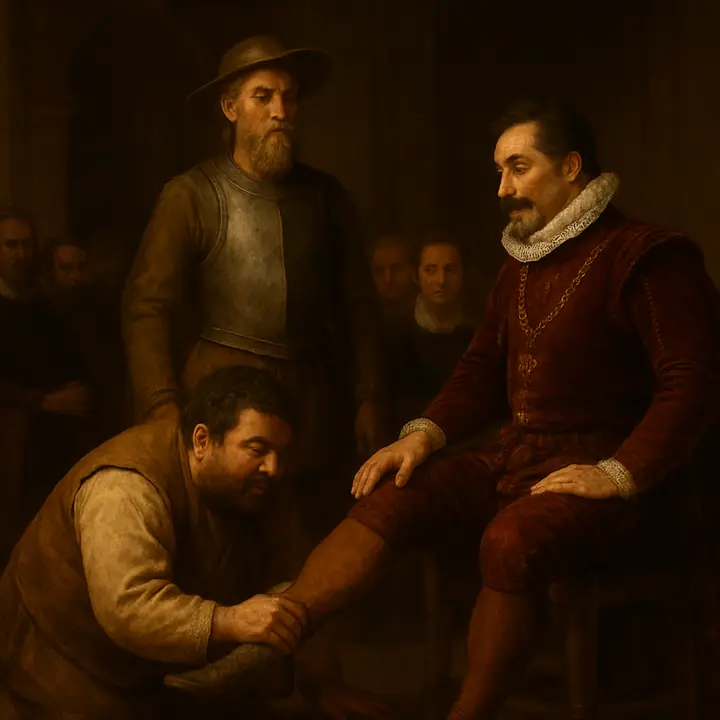
- Sancho affirms his right to the promised island and the duke formally grants him a government.
- Damsels ceremonially wash and lather Don Quixote (and later the duke) as a comic court prank.
- Sancho is brought out to be washed with dirty dishwater, protests angrily, and is defended by the duchess.
- The duchess promises to secure Sancho’s government and invites him to spend the afternoon with her.
- Don Quixote explains his belief that Dulcinea has been enchantingly transformed and praises Sancho’s mixed qualities.
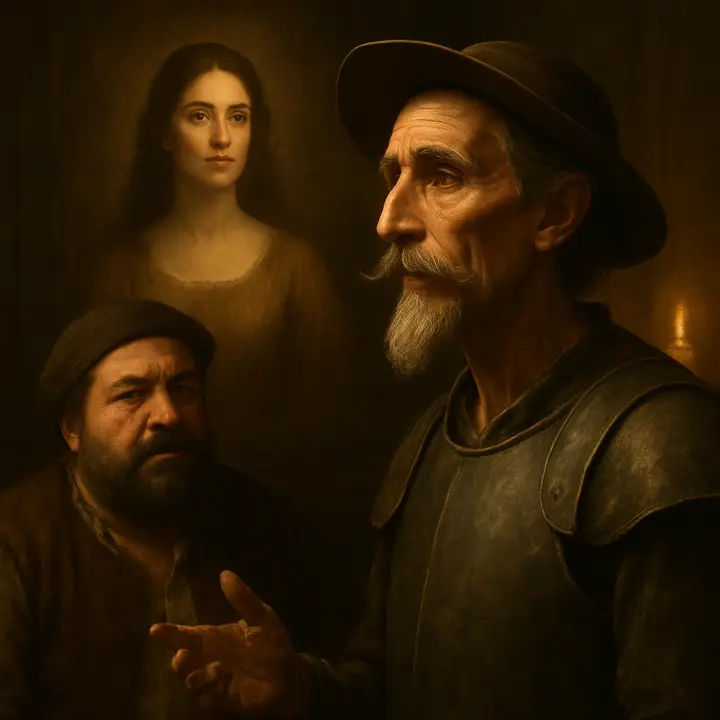
Chapter 32 in pictures
Analysis
This chapter mixes serious assertion and comic set-piece to examine performance, reputation, and the social theater surrounding Don Quixote. His eloquent defence of knight-errantry asserts the novel’s recurring theme that identity is partly performative: Don Quixote insists on his chosen role despite ridicule, defining honour and intention as the true measures of worth. The duke and duchess act as benign manipulators, treating Quixote’s fantasy as an entertaining drama to be staged; their jokes reveal the aristocratic power to author and control narratives about others. Sancho functions here as foil and social barometer: his earthy protests and comic vulnerability expose class differences and the double standard of courtly ritual, yet Don Quixote’s praise of Sancho underscores their mutual dependency and the blurred boundary between cunning and simplicity.
Structurally the chapter alternates rhetoric and farce, allowing extended speech (Don Quixote on chivalry and Dulcinea) to sit beside bodily comedy (the washing scenes), which both humanizes the protagonists and keeps the reader aware of the novel’s satirical lens. Symbolically the soap-and-wash episode literalizes the cleansing and shaping of reputation—courtiers scrub and reframe identities—and Don Quixote’s account of enchantment emphasizes the theme of perception versus reality. Narrative technique balances direct speech, ironic host commentary, and social staging, reinforcing the novel’s persistent question: who has authority to define truth and honor?
Important quotes
“Knight I am, and knight I will die, if such be the pleasure of the Most High.”
Don QuixoteDon Quixote defiantly asserts his commitment to the calling of knight-errantry while replying to the ecclesiastic's insult.
“I have redressed injuries, righted wrongs, punished insolences, vanquished giants, and crushed monsters;”
Don QuixoteA proud summation of Don Quixote’s self-image and the noble deeds he claims as justification for his vocation.
“Dulcinea is illustrious and well-born, and of one of the gentle families of El Toboso, which are many, ancient, and good.”
Don QuixoteDon Quixote insists on Dulcinea's noble status and explains alleged enchantments that conceal her true beauty from others.
Characters in Chapter 32
All chapter summaries ›Characters ›
Read Don Quixote illustrated
Every scene in these notes comes from the Book2Life reader, where the full public-domain text is illustrated as you read, with character portraits and narration. Free in your browser and on iPhone.
