
The Duke in Don Quixote
Major character
A wealthy, playful aristocrat who, with his duchess, stages elaborate entertainments to test and humour Don Quixote and Sancho.
Who is The Duke?
The Duke is a rich, cultivated nobleman who, together with the Duchess, invites Don Quixote and Sancho to his country house in Part II and turns their oddities into a long series of theatrical jests. He wants diversion and the intellectual amusement of observing how the knight’s chivalric delusions and the squire’s earthiness respond to contrivances; to that end he arranges receptions, mock miracles (the Dulcinea pageant), processions, a faux quest for Clavileño, and Sancho’s mock governorship of Barataria. Acting as host, patron, and stage-manager, he supplies props, actors, and plots (for example the staged enchantment, the Distressed Duenna, and the mock battle) that propel Don Quixote and Sancho into public spectacles. He also manipulates reports of Sancho’s rulings and reads Don Quixote’s written counsels, treating both men as objects of cultivated amusement while occasionally rewarding or consoling them after the pranks. Throughout his interventions he combines curiosity about human behaviour with a taste for elaborate social theatre.
In the book: The Duke is a wealthy aristocrat who, with the Duchess, hosts Don Quixote and Sancho Panza in Part II and stages elaborate entertainments and trials that engage with Don Quixote’s chivalric ideals. Serving as a patron, provocateur, and mirror to societal attitudes toward folly and honor, he catalyzes significant episodes that probe illusion, power, and the ethics of amusement without requiring detailed prior knowledge of the plot.
Personality
- playful
- He devises and enjoys elaborate practical jokes such as the staged Dulcinea penance (Ch. 34–35) and the Clavileño flight (Ch. 41).
- patronly
- He welcomes Don Quixote with pomp, dresses him in ceremonial garments, and promises honours and carriage at his castle (Ch. 31).
- manipulative
- He orchestrates mock trials, false enchantments, and a faux island government for Sancho to observe their reactions and guide outcomes (Ch. 32–36, 44–45).
- observant
- He watches Don Quixote’s replies to ridicule and carefully stages situations (Altisidora’s ballad, the bells and cats) to test his convictions (Ch. 46).
- amusedly cruel
- He authorizes humiliating spectacles that endanger dignity—like Altisidora’s mock death and the flogging of Doña Rodríguez—while treating them as entertainment (Ch. 50, 69–70).
Character arc
The Duke appears as an urbane, curious nobleman who delights in theatrical experiments from his first reception of Don Quixote. Early on he is chiefly a hospitable patron, dressing Don Quixote with ceremony and promising Sancho an island (Ch. 30–33). As the visits progress he escalates his interventions from benevolent hospitality to elaborate stratagems: staged enchantments intended to corroborate Don Quixote’s beliefs, public pageants demanding Sancho’s voluntary penance, and invented personae like the Distressed Duenna and Trifaldin (Ch. 34–39). He controls the narrative around both men—arranging Sancho’s governorship, composing mock trials, and engineering the Clavileño voyage (Ch. 41–45). Though his actions repeatedly humiliate and test Don Quixote and Sancho, he also affords them consolation and release when spectacles end and even offers practical assistance (sending ropes to rescue Sancho from a pit, Ch. 55). He remains essentially consistent in temperament: a playful, experimental host whose curiosity about human folly drives increasingly complex entertainments; he does not undergo a moral conversion but shows a steady preference for guided spectacle over outright malice, retreating from harms by restoring comforts and farewells when the episodes close (Ch. 56–57).
The Duke in pictures


Relationships
- The Duchess His wife and principal collaborator in staging entertainments and practical jokes upon Don Quixote and Sancho.
- Don Quixote The object of his cultivated amusement and patronage, whom he honors, tests, and stages in chivalric pageants.
- Sancho Panza Both a plaything and a subject of benevolence: the duke engineers Sancho’s mock governorship and observes his reactions.
- Doña Rodríguez A household duenna whose grievances and public humiliations become material for the duke’s spectacles.
- Altisidora A maid used in theatrical episodes (song, mock death) that the duke deploys to provoke and entertain Don Quixote.
- Tosilos A lacquey the duke instructs and uses as a sham opponent in the arranged mock combat against Don Quixote.
Quotes by The Duke
“Tell me, brother squire," asked the duchess (whose title, however, is not known), "this master of yours, is he not one of whom there is a history extant in print, called ‘The Ingenious Gentleman, Don Quixote of La Mancha,’ who has for the lady of his heart a certain Dulcinea del Toboso?”
Chapter 30The duchess shows she knows of Don Quixote’s printed fame, which frames how she and the duke choose to receive him.
“Go your ways in a good hour, and in a good hour be it said to you. Go home and bring up your children if you have any, and attend to your business, and give over going wandering about the world, gaping and making a laughing-stock of yourself to all who know you and all who don’t.”
Chapter 31A grave churchman angrily denounces Don Quixote's knight-errant project at the dinner table, provoking Don Quixote to rise and reply.
“May the great Dulcinea del Toboso live a thousand years, and may her fame extend all over the surface of the globe, for she deserves to be loved by a knight so valiant and so virtuous;”
Chapter 44The duchess flatters Don Quixote by praising Dulcinea, reinforcing his chivalric devotion and providing comic noble support for his ideals.
“It has come to my knowledge, Señor Don Sancho Panza, that certain enemies of mine and of the island are about to make a furious attack upon it some night...”
Chapter 47The duke’s letter warns Sancho of spies and assassins and advises vigilance, prompting Sancho’s defensive measures.
Why The Duke matters
The Duke embodies the book’s ambivalent attitude toward satire, spectacle, and power: he stages tests that expose the tensions between idealism and worldly amusement. By converting noble resources into theatrical contrivances, he makes social power visible and probes questions about the ethics of mockery, compassion, and authority. His entertainments force Don Quixote and Sancho to perform their identities, revealing how social rank can manufacture narratives and decide whose follies are punished or pardoned. In doing so, the Duke highlights central themes: the porous line between illusion and reality, the use of fiction as social play, and how those with means shape the reputations and sufferings of others for the sake of refined amusement.
Chapters with The Duke
- Chapter 28
- Chapter 30
- Chapter 31
- Chapter 32
- Chapter 33
- Chapter 34
- Chapter 35
- Chapter 36
- Chapter 37
- Chapter 38
- Chapter 39
- Chapter 41
- Chapter 42
- Chapter 43
- Chapter 44
- Chapter 45
- Chapter 46
- Chapter 47
- Chapter 48
- Chapter 49
- Chapter 50
- Chapter 52
- Chapter 53
- Chapter 54
- Chapter 55
- Chapter 56
- Chapter 57
- Chapter 66
- Chapter 68
- Chapter 69
- Chapter 70
More Don Quixote characters
 Don QuixoteProtagonist
 Sancho PanzaMajor character
 Dulcinea del TobosoMinor character
- RRocinanteMajor character
- DDappleMinor character
 The BarberMajor character
 Cide Hamete BenengeliNarrator
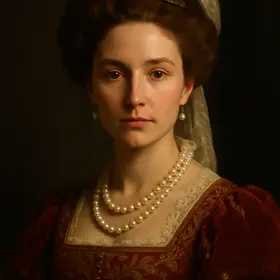 The DuchessMajor character
All chapter summaries ›Characters ›
Read Don Quixote illustrated
Every scene in these notes comes from the Book2Life reader, where the full public-domain text is illustrated as you read, with character portraits and narration. Free in your browser and on iPhone.
