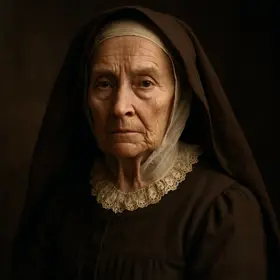
Doña Rodríguez in Don Quixote
Major character
A house duenna at the duke and duchess’s castle who seeks Don Quixote’s help to vindicate her dishonored daughter.
Who is Doña Rodríguez?
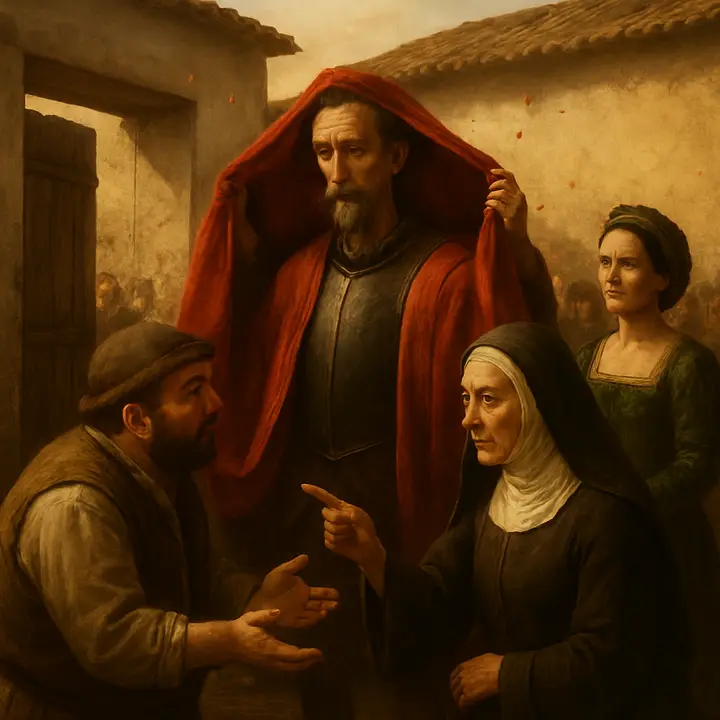
Doña Rodríguez is a duenna in the household of the duke and duchess who appears repeatedly during the duke’s entertainments for Don Quixote. She advocates for the dignity and proper treatment of duennas, defends their social worth, and becomes a petitioner when her daughter is seduced and abandoned by a wealthy rustic. To secure justice, she throws herself at Don Quixote’s feet and asks him to find and, if necessary, duell the seducer; Don Quixote accepts and the duke arranges a mock combat and set of theatrical proceedings to resolve the matter. Doña Rodríguez also figures in the comic intrigues at the castle: she argues with Sancho about the care of his donkey, consoles and counsels Sancho about Clavileño, and suffers public humiliation when discovered slipping into Don Quixote’s room—an episode that the duchess uses for sport. Her actions move the subplot about the Distressed Duenna and anchor a formal complaint that generates several staged events in the duke’s jesting court.
Personality
- dutiful
- She presents her daughter before Don Quixote and formally places their complaint in his hands to seek redress (Chapter 52).
- protective
- She pleads passionately for justice for her shame-faced daughter and implores Don Quixote to find and punish the seducer (Chapter 52).
- proud
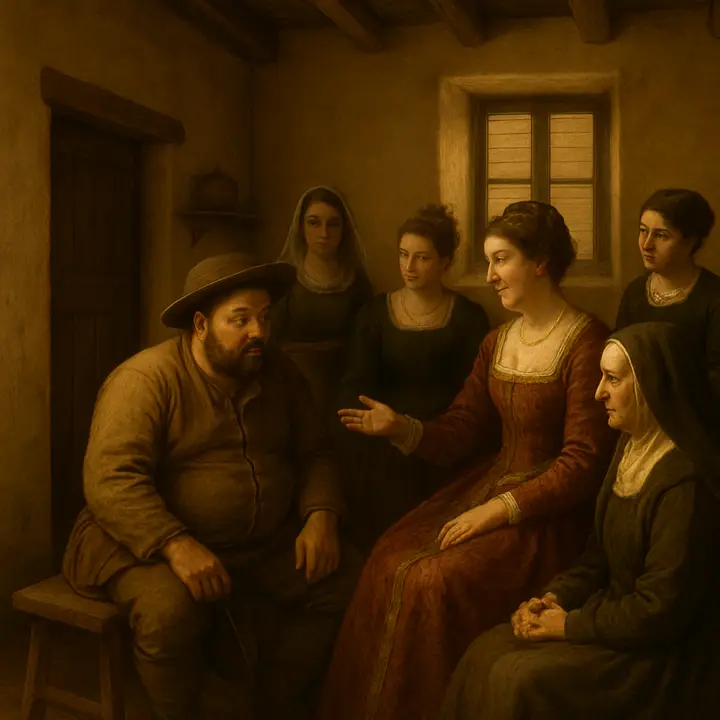
- She defends the honor and social worth of duennas against Sancho’s comic slanders in the ducal hall (Chapter 37).
- vulnerable
- She is publicly flogged and humiliated after being caught slipping into Don Quixote’s chamber, exposing her to the duchess’s mockery (Chapter 50).
- resolute
- Despite earlier embarrassment, she returns with her daughter to lodge a formal complaint and presses for a judicial contest (Chapter 52).
Character arc
Doña Rodríguez first appears as a spirited duenna who defends her class and speaks up in the duke’s hall. Early on she argues against Sancho’s cynical remarks and upholds the dignity of duennas, establishing herself as someone who claims respect despite low household status. Her private life becomes public when her daughter is disgraced: she moves from debating social standing to urgent solicitation of knightly justice, throwing herself at Don Quixote’s feet and prompting the duke to set a mock contest. Between these formal moves she suffers humiliation when she is discovered slipping into Don Quixote’s chamber and is flogged as part of the household’s amusements; that moment exposes her vulnerability and the precariousness of servants within aristocratic parody. Nonetheless, she does not withdraw—she returns to press her complaint, and her persistence precipitates the staged combat and the eventual resolution wherein a lacquey’s sudden declared love ends the matter. By the end of her appearances she remains a figure whose honor has been defended through the duke’s theatre: she gains a temporary, staged vindication but remains subject to the caprices of aristocratic entertainment rather than true legal redress.
Doña Rodríguez in pictures
Relationships
- Don Quixote She petitions him as a knight-errant to vindicate her daughter and casts down a glove to demand justice (Chapter 52).
- Sancho Panza She scolds and jokes with Sancho over duennas and the care of his donkey, and she counsels him about Clavileño (Chapters 31, 37, 40).
- The Duchess The duchess supports Doña Rodríguez in the hall, elevates her petitioners’ status, but also orchestrates teasing and public humiliation that involve Doña Rodríguez (Chapters 31, 50, 52).
- The Duke The duke hears her complaint, accepts Don Quixote’s challenge on the youth’s behalf, and stages the courtyard combat to resolve the matter (Chapter 52, 56).
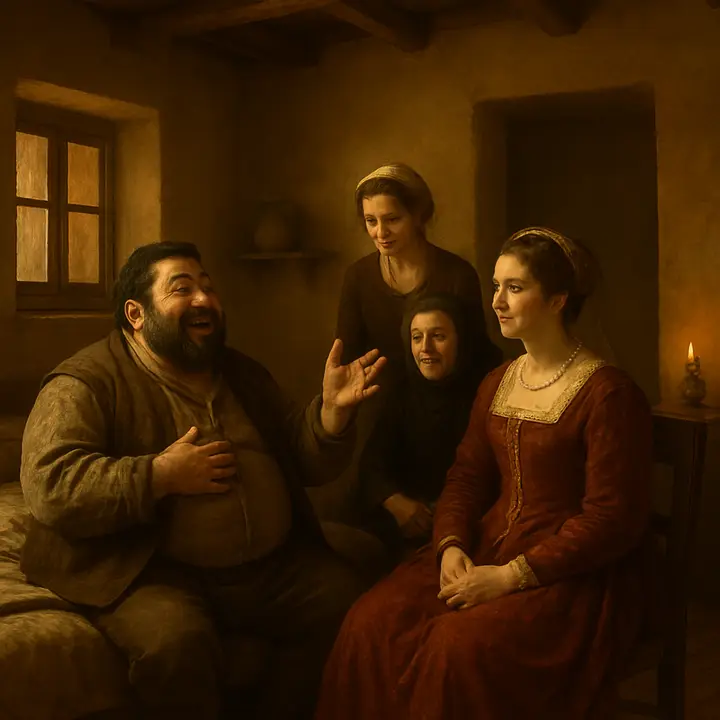
- Tosilos Her daughter’s suitor in the staged combat, Tosilos ultimately declares his willingness to marry the damsel, ending the contest (Chapter 56).
- Altisidora Altisidora takes part in the household’s mockery that leads to Doña Rodríguez’s exposure and flogging (Chapter 50).
Quotes by Doña Rodríguez
“These squires," returned Doña Rodriguez, "are always our enemies; and as they are the haunting spirits of the antechambers and watch us at every step, whenever they are not saying their prayers (and that’s often enough) they spend their time in tattling about us...”
Chapter 37Doña Rodríguez defends duennas and attacks squires for slandering the household women.
“Some days since, valiant knight, I gave you an account of the injustice and treachery of a wicked farmer to my dearly beloved daughter, the unhappy damsel here before you, and you promised me to take her part and right the wrong that has been done her;”
Chapter 52Doña Rodríguez formally explains to Don Quixote and the duke the grievance: her daughter was seduced and abandoned, asking for chivalric redress.
“This is a trick! This is a trick! They have put Tosilos, my lord the duke’s lacquey, upon us in place of the real husband.”
Chapter 56They accuse the duke of fraud when Tosilos is revealed to be a lacquey, protesting that the appearance before the crowd is deceptive.
Why Doña Rodríguez matters
Doña Rodríguez highlights the tension between true grievance and theatrical justice in the duke’s court. Her petition transforms a private dishonor into a staged spectacle that exposes how aristocratic power can mock and manage servants’ lives under the guise of entertainment. Through her dignity, vulnerability, and persistence, the text examines themes of honor, social hierarchy, and the fragility of marginal voices when subjected to elite play-acting; her subplot shows how justice may be performed without necessarily being genuinely served.
Chapters with Doña Rodríguez
More Don Quixote characters
 Don QuixoteProtagonist
 Sancho PanzaMajor character
 Dulcinea del TobosoMinor character
- RRocinanteMajor character
 The DukeMajor character
- DDappleMinor character
 The BarberMajor character
 Cide Hamete BenengeliNarrator
All chapter summaries ›Characters ›
Read Don Quixote illustrated
Every scene in these notes comes from the Book2Life reader, where the full public-domain text is illustrated as you read, with character portraits and narration. Free in your browser and on iPhone.
