Don Quixote Chapter 37 Summary
The Duenna Debate
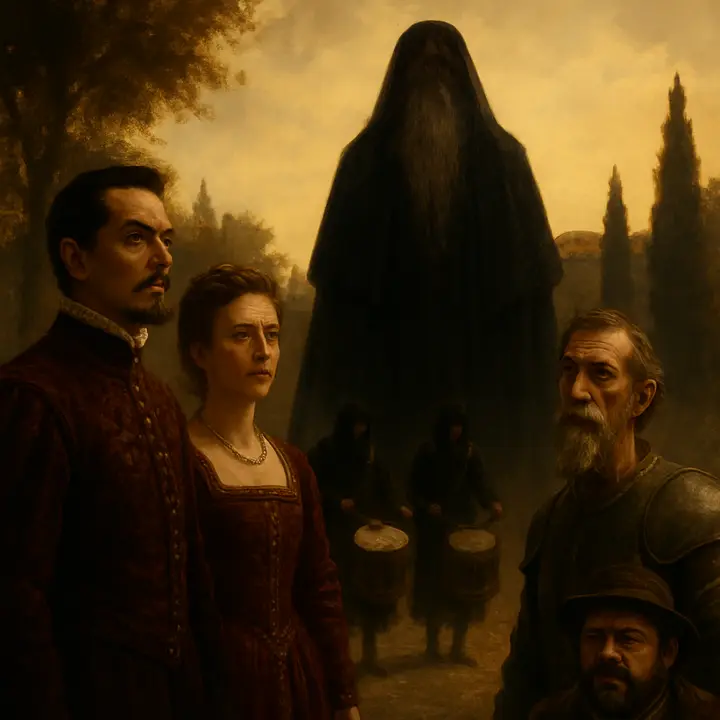
At the duke's hall the household argues about duennas while drums announce the arrival of the Distressed Duenna.
Summary
In the duke and duchess’s hall Don Quixote, Sancho Panza, and several household members discuss the character and social standing of the woman who has come seeking Don Quixote’s help. Sancho, suspicious and comically prejudiced, repeats an apothecary’s cynical view that duennas are meddlesome and troublesome; he fears trouble for his promised governorship if this duenna interferes. Don Quixote counters with a chivalric defense, elevating the visitor by insisting she must be of high rank because she comes from far away.
Doña Rodríguez, present among the household, protests on behalf of duennas, insisting that ancient maiden duennas possess virtues and social worth that warrant respect; she also complains about squires who slander women of her class. The duchess supports Doña Rodríguez but urges patience. Sancho alternately boasts he no longer cares for duennas now that the governorship is in view and then reiterates his desire that the duchess receive the visitor as a countess but not as a duenna. Their argument is cut short when the fife and drums sound, signaling the Distressed Duenna’s formal entrance; the duke decides to judge the courtesy owed by seeing her for himself. The chapter ends as the procession approaches and the narrative promises to continue the notable adventure in the next chapter.
Key events
- Sancho voices suspicion and prejudice about duennas, citing a Toledo apothecary.
- Don Quixote defends the visitor, arguing she must be a high-ranking countess.
- Doña Rodríguez defends duennas and scolds the squires for slander.
- The duchess moderates and supports Doña Rodríguez’s plea for patience.
- Drums and fife announce the arrival of the Distressed Duenna.
- The duke resolves to see the countess and the chapter ends as she approaches.
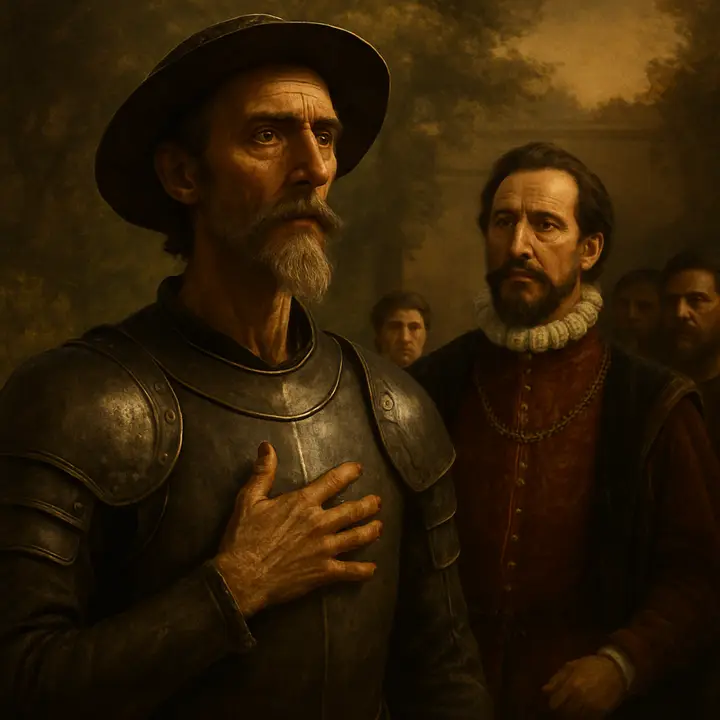
Chapter 37 in pictures
Analysis
This chapter foregrounds social satire and comedic debate: duennas become a proxy for class, gender, and reputation. The exchange shows Cervantes’ interest in contested social roles—Sancho’s earthy common sense and prejudice clashes with Don Quixote’s idealizing chivalry and Doña Rodríguez’s defensive pride in female respectability. The scene advances characterization: Sancho remains pragmatic and self-interested, Don Quixote upholds ritualized honor, and the duchess plays the moderating, aristocratic judge. Structurally, the chapter is a short episode that suspends the forward action to stage a comic dispute, building tension immediately before the Distressed Duenna’s entrance; it functions as a transitional moment that both delays and heightens attention to the upcoming encounter.
Narratively, the passage uses dialogue to reveal social attitudes and to perform irony: characters speak in maxims and proverbs, exposing worldly wit and hypocrisy. The recurring reference to trumpets and drums signals ceremonial spectacle and frames the forthcoming scene as a staged performance—appropriate to the duke’s artificial entertainments. The debate about duennas also foreshadows the themes of disguise, reputation, and rank that will be tested when the visitor appears. Finally, the presence of named social roles (duke, duchess, duenna, squire) underscores how Cervantes interrogates the gap between social titles and true virtue.
Important quotes
“I hope this señora duenna won’t be putting any difficulties in the way of the promise of my government; for I have heard a Toledo apothecary, who talked like a goldfinch, say that where duennas were mixed up nothing good could happen.”
Sancho PanzaSancho explains his prejudice against duennas and worries they will interfere with his promised governorship.
“These squires," returned Doña Rodriguez, "are always our enemies; and as they are the haunting spirits of the antechambers and watch us at every step, whenever they are not saying their prayers (and that’s often enough) they spend their time in tattling about us...”
Doña RodríguezDoña Rodríguez defends duennas and attacks squires for slandering the household women.
“"Sancho is right," said the duke; "we’ll see what the countess is like, and by that measure the courtesy that is due to her."”
NarratorThe duke decides to wait for the visitor’s appearance before deciding how formally to receive her.
Characters in Chapter 37
- Don Quixote
- Sancho Panza
- The Duke
- The Duchess
- Doña Rodríguez
- The Distressed Duenna
- The Barber
- a Toledo apothecary
All chapter summaries ›Characters ›
Read Don Quixote illustrated
Every scene in these notes comes from the Book2Life reader, where the full public-domain text is illustrated as you read, with character portraits and narration. Free in your browser and on iPhone.
