Don Quixote Chapter 38 Summary
The Distressed Duenna’s Tale
A masked mourning procession presents a distraught duenna who begs Don Quixote and Sancho to hear her long story about Princess Antonomasia and Don Clavijo.
Summary
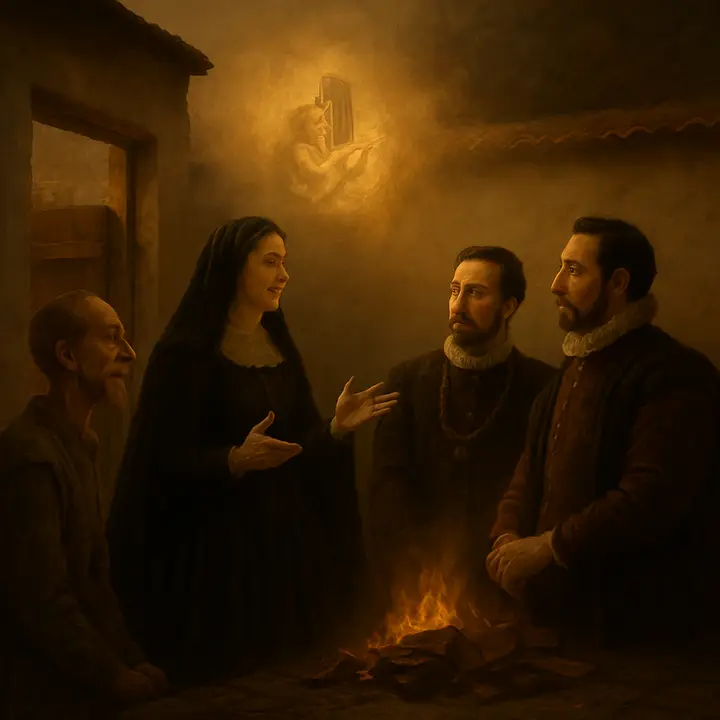
A theatrical procession enters the garden: twelve duennas in full mourning accompany the Countess Trifaldi, whose three-pointed skirt and attendant Trifaldin attract joking commentary from the narrator. The masked figures form a lane and the Distressed Duenna is led forward, kneels, and declares that her misfortune has robbed her of her wits; she appeals specifically for the presence and aid of Don Quixote and his squire Sancho Panza. The duke and duchess receive her with polite courtesy, while Sancho impatiently blurts that both he and his master are present and ready to help. Don Quixote offers his service as a knight-errant, asking only that she state her plight plainly.
The Duenna—who performs with passionate gestures—throws herself before Don Quixote and then grasps Sancho’s hands, praising both as exemplars of chivalric virtue and begging Sancho to intercede. As she begins her narrative, she frames it as a tale of love and treachery: she was the chief duenna to Princess Antonomasia of Kandy, who reached exceptional beauty and intelligence. A court gentleman, Don Clavijo, secretly courted the princess and won the duenna’s cooperation through gifts and enchanting verses and songs. The duenna now confesses that her complicity led to clandestine meetings and an arranged ruse that nearly resulted in marriage by a written agreement; when the pregnancy risked exposure, the vicar took cognisance and placed the princess in custody of an alguacil. The tale pauses as Sancho, amused and impatient, asks for the continuation, and the Duenna promises to proceed.
Key events
- Procession of twelve duennas and Countess Trifaldi enters in mourning dress.
- The Distressed Duenna kneels and appeals specifically to Don Quixote and Sancho.
- Don Quixote pledges to help; Sancho eagerly confirms their presence.
- The Duenna begins her long récit about Princess Antonomasia and Don Clavijo.
- She admits her own complicity: bought by Don Clavijo and seduced by his verses.
- A secret agreement and a near-marriage are revealed; the vicar intervenes and orders the princess into the alguacil’s custody.
Analysis
This chapter stages storytelling as spectacle: the procession, veils, and ceremonial address present the Duenna’s confession as both theatrical performance and narrative hook. Cervantes uses self-conscious theatricality to parody courtly romance conventions—exaggerated mourning, high-sounding titles (Kandy, Trapobana), and the melodramatic language of amour that the Duenna both mocks and embodies. The interruptions by Sancho and the amused duke and duchess expose a comic frame: readers watch an audience watch a performance, which undercuts the Duenna’s claim to absolute pathos. The chapter also advances characterization: Don Quixote’s readiness to aid reinforces his identity as a chivalric ideal, while Sancho’s earthy interjections remind us of his pragmatic comic role. The narrator’s aside about Benengeli and the playful etymology of Trifaldi signal Cervantes’ metafictional habit of calling attention to storytelling artifice and authorial mediation. The Duenna’s condemnation of poets even as she is undone by a poet’s verses highlights the novel’s ambivalence toward literature: it can enchant and destroy. Finally, the chapter functions structurally as an embedded tale that will delay plot action while enriching themes of deception, rank, and the performative nature of honor and love.
Important quotes
“May it please your highnesses not to offer such courtesies to this your servant, I should say to this your handmaid, for I am in such distress that I shall never be able to make a proper return, because my strange and unparalleled misfortune has carried off my wits, and I know not whither;”
Distressed DuennaOpening plea that frames her tale: she claims madness and asks the company—especially Don Quixote—to hear her misfortune.
“I am Don Quixote of La Mancha, whose calling it is to give aid to the needy of all sorts; and that being so, it is not necessary for you, señora, to make any appeal to benevolence, or deal in preambles, only to tell your woes plainly and straightforwardly:”
Don QuixoteDon Quixote pledges his chivalric duty and invites a plain statement of the Duenna’s case.
“From that sweet enemy of mine My bleeding heart hath had its wound; And to increase the pain I’m bound To suffer and to make no sign.”
Distressed Duenna (quoting a song)Lines from Don Clavijo’s verses that the Duenna remembers as key to her being seduced and betrayed by poetry’s power.
Characters in Chapter 38
- Countess Trifaldi
- Trifaldin
- the Distressed Duenna
- the Duke
- the Duchess
- Don Quixote
- Sancho Panza
- Cide Hamete Benengeli
- Princess Antonomasia
- Don Clavijo
- Vicar
- alguacil
- Samson Carrasco
All chapter summaries ›Characters ›
Read Don Quixote illustrated
Every scene in these notes comes from the Book2Life reader, where the full public-domain text is illustrated as you read, with character portraits and narration. Free in your browser and on iPhone.
