Frankenstein Chapter 7 Summary
Return and Accusation
Victor returns to Geneva after learning by letter that his brother William has been murdered and Justine is accused.
Summary
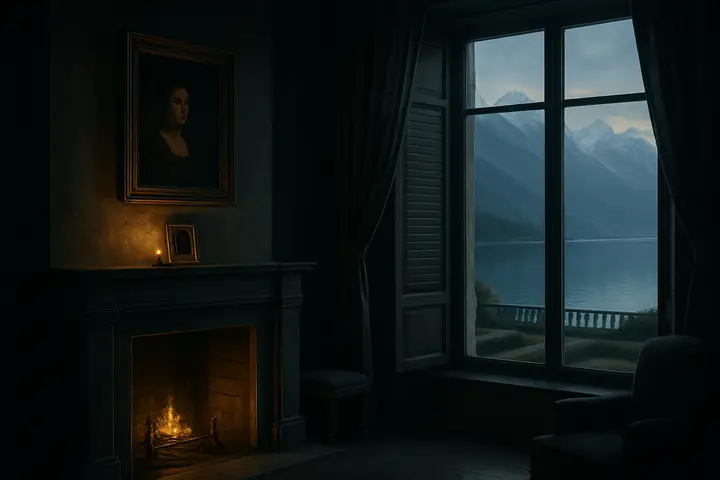
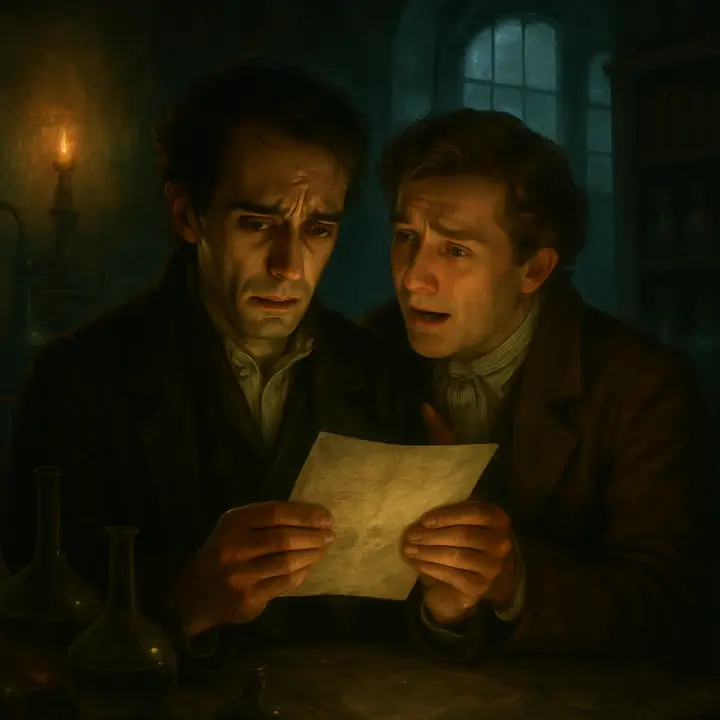
Victor receives a letter from his father, Alphonse Frankenstein, informing him that William has been found murdered and begging Victor to return to Geneva to comfort the family. The letter describes the discovery of William’s body, Elizabeth’s torment and self‑accusation, and the family’s grief; Alphonse urges Victor to come home with gentleness rather than vengeance. Henry Clerval shares Victor’s shock and accompanies him as he immediately sets out for Geneva.
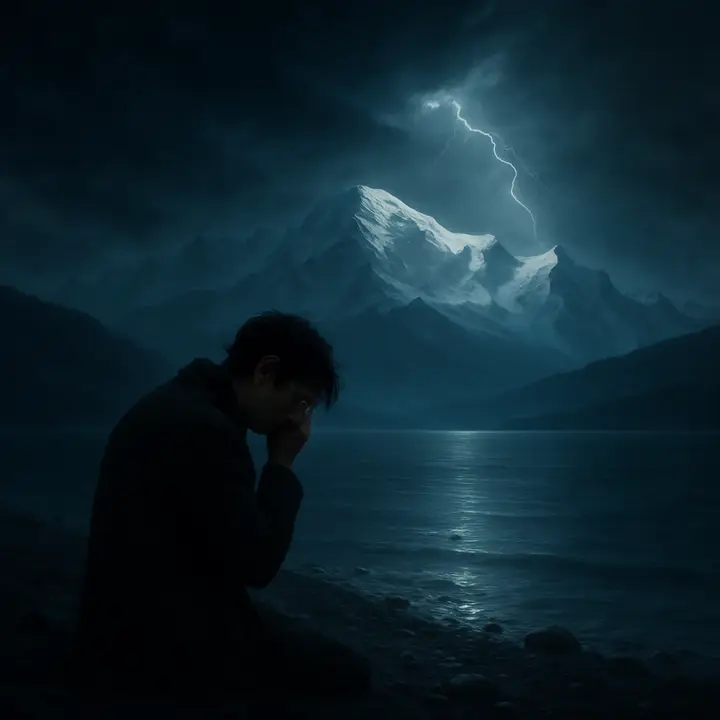
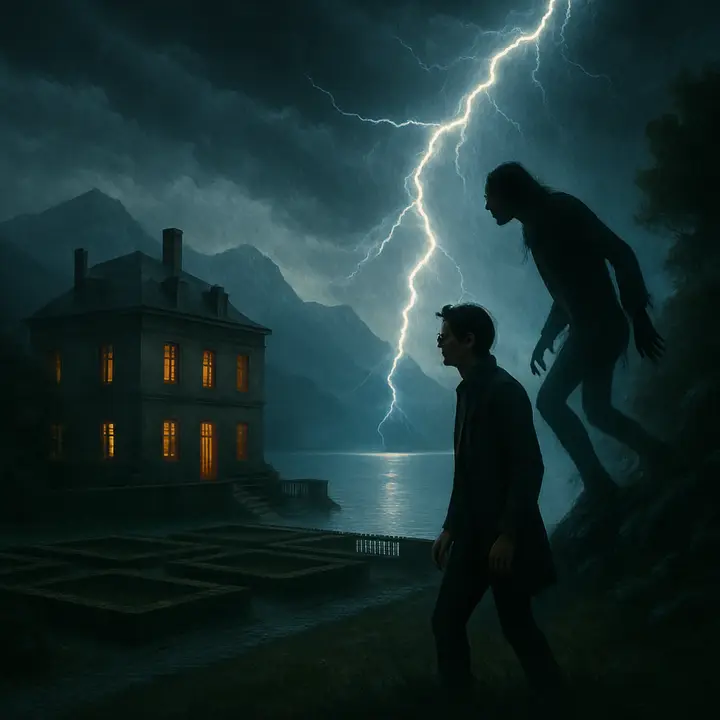
On the journey Victor alternates between haste and paralyzing dread as he nears his native landscape; the familiar lake and mountains both console and mock him. He visits Plainpalais at night during a storm and, in a flash of lightning, sees the Creature on Mont Salêve. Convinced the Creature is William’s murderer, Victor contemplates pursuit but decides to keep silent because his story of creating a living being would sound like madness and would be useless against such a powerful, inhuman being. Back in Geneva Victor reunites with his family: Ernest, his father, and Elizabeth. They explain that Justine Moritz has been accused because William’s mother’s miniature was found in her possession and because her confused demeanor made her look suspicious; a trial is imminent. Victor knows Justine is innocent of the murder but cannot reveal his knowledge of the Creature without revealing his own culpability in creating it, leaving him isolated and tormented.
Key events
- Victor reads Alphonse’s letter announcing William’s murder and Elizabeth’s distress.
- Victor and Henry set out for Geneva; Victor experiences grief and foreboding on the journey.
- Victor sees the Creature by lightning on Mont Salêve and believes it to be the murderer.
- Victor decides to remain silent about the Creature to avoid sounding insane and futile pursuit.
- Victor returns home and learns Justine Moritz has been accused after William’s miniature is found in her pocket.
Chapter 7 in pictures
Analysis
This chapter shifts the novel from Victor’s scientific obsession to the personal consequences of his act, bringing the supernatural horror into direct collision with domestic tragedy. The letter format at the opening compresses family grief into formal news, emphasizing distance and duty before Victor’s emotional collapse. Victor’s sighting of the Creature during the storm functions as a dramatic confirmation of his dread and a symbolic linking of natural fury (the tempest) with moral catastrophe: the storm both reveals and obscures, mirroring Victor’s dawning recognition of responsibility and his simultaneous inability to act transparently. The decision to keep silent is pivotal for plot and theme — it entrenches Victor’s isolation, guilt, and moral cowardice, and it generates tragic irony because he can prevent neither the false conviction of Justine nor the grief of his family without confessing his own culpability. Narrative technique blends epistolary (the father’s letter), first‑person confession, and vivid natural description to align the reader with Victor’s inner turmoil while also inviting skepticism about his reliability. Symbols recur: the miniature (token of familial love and the motive for violence), the mountains and lake (unchanging nature contrasting human ruin), and lightning/storm (illumination and destructive force). The chapter intensifies moral complexity: Victor’s creation now appears as an independent agent of harm, but Victor’s silence implicates him in subsequent injustices, deepening the novel’s interrogation of responsibility, secrecy, and the social consequences of unchecked scientific ambition.
Important quotes
“William is dead!—that sweet child, whose smiles delighted and warmed my heart, who was so gentle, yet so gay! Victor, he is murdered!”
Alphonse Frankenstein (letter)Alphonse announces William’s death in a letter that summons Victor home and frames the family’s grief.
“William, dear angel! this is thy funeral, this thy dirge!”
Victor Frankenstein (Narrator)Victor cries out during the storm on the lake, interpreting the tempest as a supernatural mourning for William.
“I had turned loose into the world a depraved wretch, whose delight was in carnage and misery; had he not murdered my brother?”
Victor Frankenstein (Narrator)Victor recognizes the Creature in the lightning and immediately connects his act of creation with William’s murder, feeling acute responsibility and horror.
Characters in Chapter 7
All chapter summaries ›Characters ›
Read Frankenstein illustrated
Every scene in these notes comes from the Book2Life reader, where the full public-domain text is illustrated as you read, with character portraits and narration. Free in your browser and on iPhone.
