
Henry Clerval in Frankenstein
Major character
Victor Frankenstein’s devoted childhood friend and moral foil, warm, imaginative, and tragically murdered while accompanying Victor.
Who is Henry Clerval?
Henry Clerval is Victor Frankenstein’s closest companion from childhood; he embodies humane curiosity, chivalric imagination, and social warmth. He studies languages and literature rather than natural philosophy, delighting in poetry, history, and the picturesque, and he steadies Victor during periods of collapse. Henry nurses Victor through the fever after the creature’s animation, removes reminders of Victor’s laboratory, and encourages him toward healthier pursuits and correspondence with family. He travels with Victor to England and Scotland, sharing in tours and scholarly interests while often acting as the more sociable, worldly presence. Henry’s practical kindness and idealism contrast sharply with Victor’s obsessive scientific drive. Ultimately Henry becomes one of the creature’s victims: his body is discovered on the shore while Victor is staying on the Orkney island, and his death precipitates Victor’s imprisonment and further moral collapse of the protagonist.
In the book: Henry Clerval is Victor Frankenstein’s closest childhood friend and moral foil, embodying warmth, kindness, and a humanistic love of learning—especially languages and poetry. His presence highlights what balanced ambition and empathy look like, grounding the story’s darker scientific pursuits in compassion. Through his loyalty and idealism, he reveals the costs of obsession and the value of friendship, serving as a touchstone for the novel’s ethical and emotional stakes without driving the central experiment himself.
Personality
- Compassionate
- He nurses Victor devotedly through a long nervous fever after the creature’s animation (Chapter 5).
- Idealistic
- He pursues romantic, chivalric learning—languages and poetry—and delights in picturesque travel while Victor broods (Chapters 6, 18).
- Loyal
- He immediately accompanies Victor back to Geneva on hearing of William’s murder and stays by his friend through the crisis (Chapter 7).
- Sociable
- In London and on their northern tour he seeks learned societies and the company of others while Victor withdraws (Chapter 19).
- Tragic
- His body is found on the shore, identified by Victor in prison, which deepens Victor’s guilt and rage (Chapter 21).
Character arc
Henry enters the narrative as Victor’s cheerful, steady counterweight: imaginative, humane, and drawn to languages and the moral arts rather than the dangerous sciences that consume Victor. Early on he comforts and restores Victor after the creation episode, removing reminders of Victor’s labors and reintroducing social study and travel. He serves as companion and safeguard during Victor’s journeys—both as a remedy for melancholy and as a practical traveling partner arranged by Victor’s father. As the men travel through Britain, Henry’s curiosity and sociability contrast ever more starkly with Victor’s alienation and secret torment. The arc ends abruptly and tragically: Henry is discovered murdered while Victor is away from the scene, a death that incapacitates Victor emotionally, leads to his imprisonment, and accelerates the novel’s spiral of vengeance. Henry himself does not change morally—he remains constant in compassion and curiosity—but his death marks the collapse of the humane counterbalance to Victor’s destructive obsession.
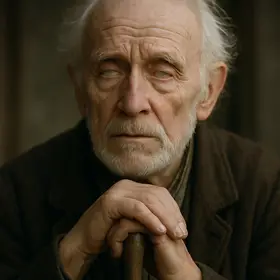
Henry Clerval in pictures


Relationships
- Victor Frankenstein Closest childhood friend and moral foil; he nurses, travels with, and consistently supports Victor.
- Elizabeth Lavenza Member of the same intimate family circle from childhood; Henry participates in the domestic world that surrounds Elizabeth and Victor.
- Alphonse Frankenstein Victor’s father arranges for Henry to accompany Victor to England, showing familial trust in Henry as a stabilizing companion.
- The Creature Indirectly opposed to him: the creature’s murderous campaign claims Henry’s life, making Henry one of its victims.
- Mr. Kirwin The magistrate who brings Victor before witnesses and later oversees the inquiry into Henry’s death while Victor lays delirious beside the corpse.
Quotes by Henry Clerval
“This is what it is to live," he cried; "now I enjoy existence!”
Chapter 18Clerval exults in the beauty of the Rhine and contrasts his vivid enjoyment of life with Victor’s gloom.
Why Henry Clerval matters
Henry functions as the humane counterpoint to Victor’s destructive ambition: his concern for languages, poetry, and social bonds models a balanced, ethically grounded curiosity. By nursing Victor and coaxing him back to ordinary human ties, Henry highlights what Victor sacrifices in pursuit of forbidden knowledge. Henry’s murder is thematically crucial: it demonstrates the collateral damage of unchecked scientific obsession and severs the moral anchor that might have checked Victor’s vengeance. His presence and loss thus underline the novel’s warnings about isolation, responsibility, and the human costs of pursuing knowledge without empathy.
Chapters with Henry Clerval
More Frankenstein characters
 Victor FrankensteinProtagonist
 The CreatureMajor character
 Elizabeth LavenzaMajor character
 Alphonse FrankensteinMajor character
 William FrankensteinMinor character
 Justine MoritzMinor character
 De LaceyMinor character
 Felix De LaceyMajor character
All chapter summaries ›Characters ›
Read Frankenstein illustrated
Every scene in these notes comes from the Book2Life reader, where the full public-domain text is illustrated as you read, with character portraits and narration. Free in your browser and on iPhone.
