Frankenstein Chapter 8 Summary
Trial and Condemnation
Justine is tried, condemned for William's murder despite Elizabeth's defence, and later executed, while Victor endures consuming guilt.
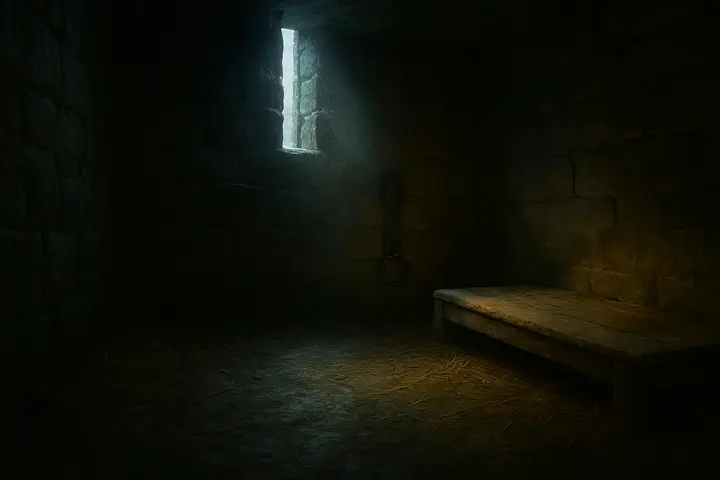
Summary
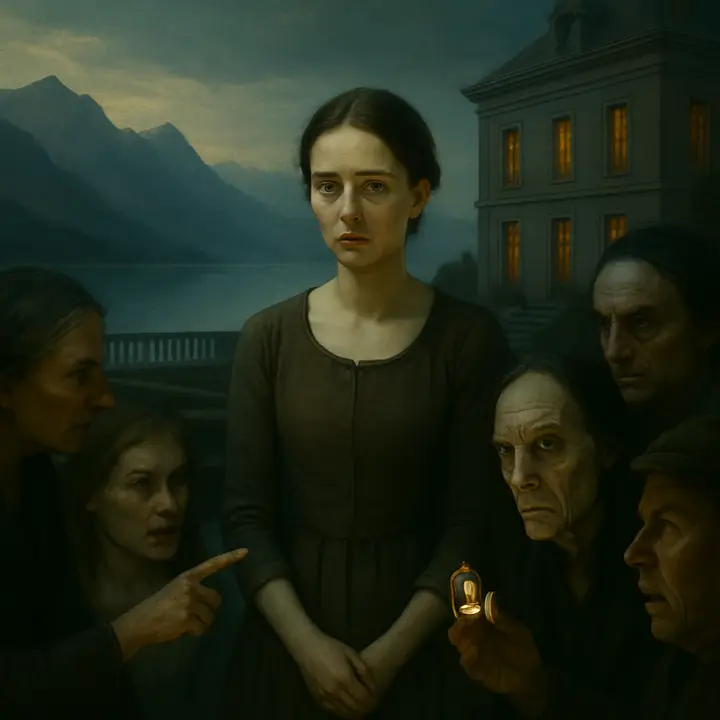
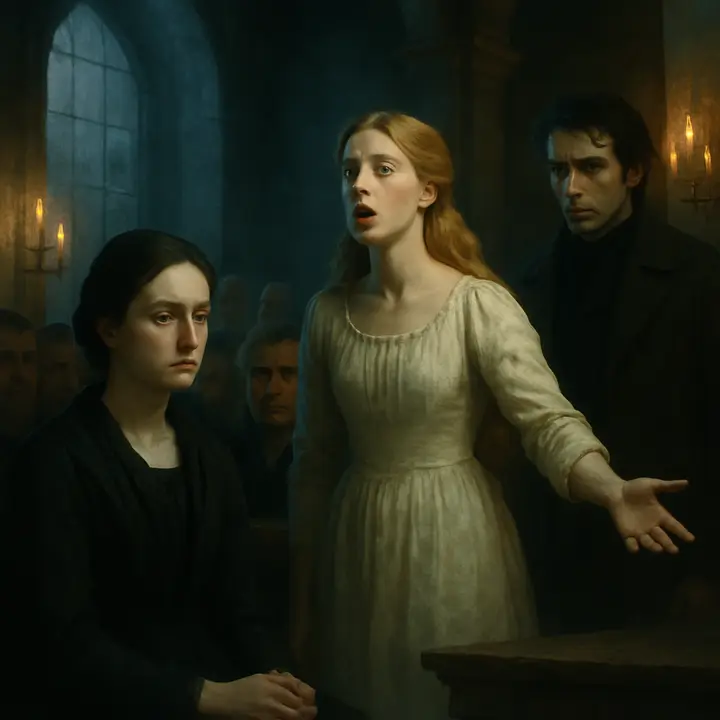
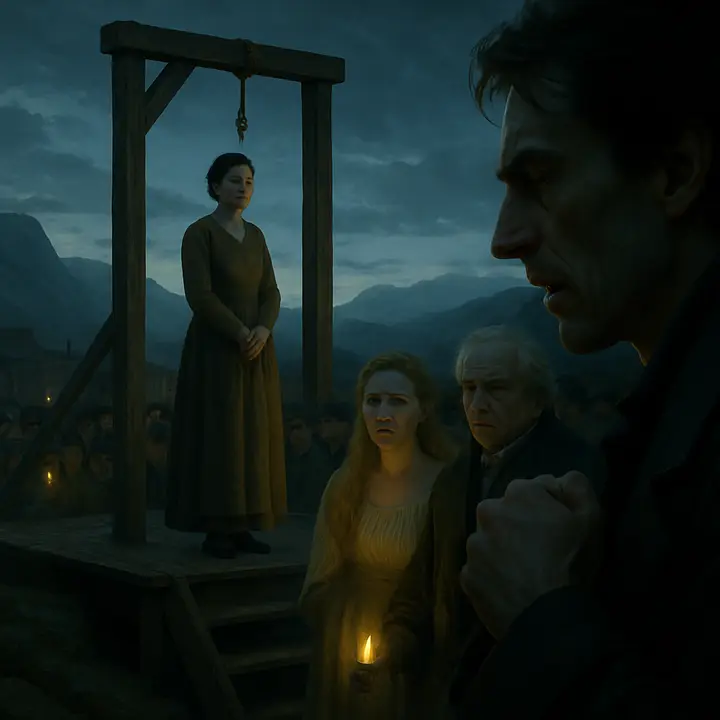
Victor accompanies his family to the trial of Justine Moritz, accused of the murder of young William. The court session is a torment for Victor, who knows Justine is innocent but cannot reveal the Creature’s role; his internal agony frames the chapter. Witnesses produce a sequence of circumstantial facts: Justine was seen near the time and place of the crime; she behaved strangely when questioned by a market-woman; a miniature picture taken from William’s neck is found in her pocket; Elizabeth identifies that picture as the same she had placed on William. Justine rises to defend herself, offering an account of her movements that night — seeking the child, sheltering in a barn when the gates closed — and admits ignorance about how the miniature came to be on her person.
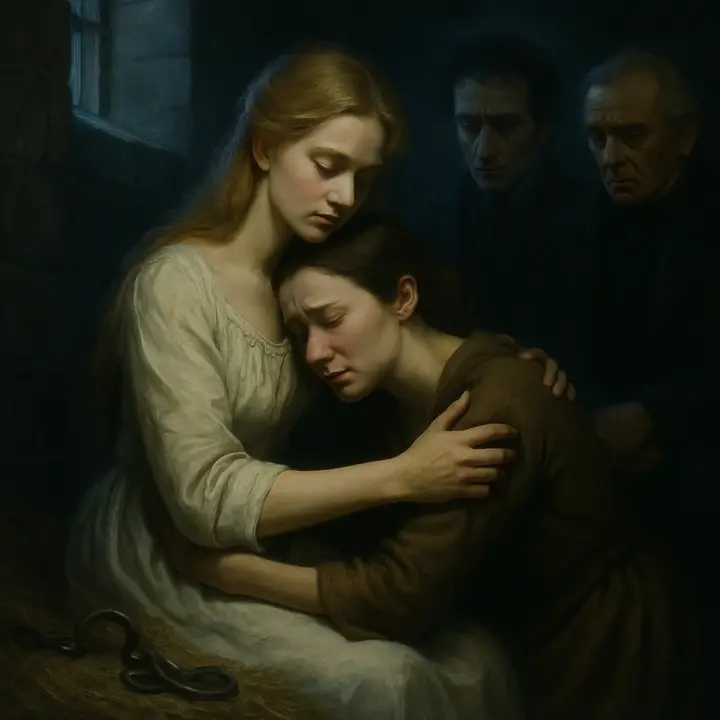
Despite testimony in her favour and Elizabeth’s earnest, eloquent appeal to the court about Justine’s long character of service and kindness, public hatred and fear prevail. Many of Justine’s potential character witnesses shrink back. When the ballots are cast, they are all black: Justine is condemned. Victor hears that she has “confessed,” which astonishes him; when he visits her in prison he learns the confession was a lie extracted under threat by her confessor, who promised absolution in exchange for a false admission. Justine says she confessed to escape the terrors of excommunication and to die with her soul at peace; she maintains in private to Victor and Elizabeth that she is innocent and exhibits resignation and Christian patience. Victor is racked by remorse and despair, seeing Justine’s calm endurance and Elizabeth’s grief; he cannot bring himself to tell the truth. The chapter closes with Justine’s execution and Victor’s recognition that his scientific curiosity has produced the ruin of his family and their first victims.
Key events
- Victor and family attend Justine’s trial for William’s murder
- Circumstantial evidence (sighting, strange behavior, miniature in pocket) is presented
- Justine pleads innocence and explains her night, but cannot account for the miniature
- Elizabeth gives a passionate defence of Justine’s character
- Justine is condemned after ballots and a supposed confession
- Victor learns the confession was false—extracted to gain absolution
- Justine dies resignedly; Victor sinks deeper into remorse
Chapter 8 in pictures
Analysis
This chapter intensifies the novel’s moral center by shifting focus from scientific ambition to human consequence: Victor’s creation indirectly produces two victims and the collapse of domestic innocence. The trial sequence dramatizes the failure of social justice when fear and prejudice outweigh reason and testimony. Justine’s calm, saintly demeanor and ultimate false confession highlight themes of innocence, guilt, and the power of institutional authority (both civil and religious) to compel self-betrayal. Elizabeth’s plea functions as a counterpoint of empathy and moral clarity, yet it cannot overcome collective panic; her failed rhetoric underscores the limits of individual virtue against communal superstition.
Structurally, the chapter is a turning point that converts abstract horror into concrete loss for Victor’s family, tightening the novel’s emotional stakes and setting up a spiral of retribution and remorse. Symbolically, the miniature found in Justine’s pocket acts as an index of how small, material traces can condemn the innocent and mislead the public — a motif about evidence and interpretation. The narrative technique — Victor’s interior, guilt-stricken focalization — keeps the reader trapped in his subjective torment, aligning sympathy with the wrongdoer and complicating moral judgment. Foreshadowing is present in Victor’s repeated recognition that his acts bring ruin; his prophetic denunciation at the chapter’s end intimates further tragedies without revealing them, maintaining tension while isolating Victor psychologically from his family and the legal world that seeks to punish.
Important quotes
“The tortures of the accused did not equal mine; she was sustained by innocence, but the fangs of remorse tore my bosom and would not forgo their hold.”
NarratorVictor describes his private agony at seeing Justine condemned for a crime he knows he indirectly caused.
“I did confess, but I confessed a lie. I confessed, that I might obtain absolution; but now that falsehood lies heavier at my heart than all my other sins.”
Justine MoritzJustine admits to Victor and Elizabeth that she falsely confessed under clerical pressure to avoid spiritual horror before death.
Characters in Chapter 8
All chapter summaries ›Characters ›
Read Frankenstein illustrated
Every scene in these notes comes from the Book2Life reader, where the full public-domain text is illustrated as you read, with character portraits and narration. Free in your browser and on iPhone.
