
Elizabeth Lavenza in Frankenstein
Major character
Victor Frankenstein’s gentle childhood companion and later fiancée, a steady domestic presence and moral conscience.
Who is Elizabeth Lavenza?
Elizabeth Lavenza is introduced as the orphaned child taken into the Frankenstein household and raised as Victor’s cherished companion. She embodies warmth, domestic stability, and affectionate devotion to family life, serving as the emotional center Victor often fails to protect. Through letters and presence she comforts Victor during his studies and convalescences, reports household news (like Justine’s return), and presses him gently about his feelings and plans for marriage. Elizabeth endures intense grief when William is murdered and when Justine is condemned; she supposes and speaks of the world’s cruelty, yet displays Christian patience and moral fortitude. Victor conceals from her the truth about the Creature and his own responsibility for the tragedies that befall the family. She becomes his intended bride, urging him to marry freely, and her murder on their wedding night becomes the final and most devastating loss that propels Victor into absolute vengeance. Elizabeth’s consistent compassion and domestic ideal contrast sharply with Victor’s secrecy and ambition throughout the narrative.
In the book: Elizabeth Lavenza is Victor Frankenstein’s beloved childhood companion and later fiancée, a figure of warmth, kindness, and domestic stability in contrast to Victor’s consuming scientific pursuits. Through her letters and presence, she anchors the family sphere and highlights themes of empathy, moral responsibility, and the human need for connection. Her character’s gentle influence and the dangers that encroach upon it underscore the novel’s tensions between ambition and duty without delving into the book’s major revelations.
Personality
- Gentle
- She writes an anxious but consoling letter to Victor urging him to write and recounting family news and concerns (Chapter 6).
- Devotional
- She is described as devotional toward nature and poetry and as someone who was chosen by Victor’s mother as a ‘pretty present’ to join the family (Chapter 2; Chapter 1).
- Resilient
- Despite Justine’s condemnation and execution she shows Christian patience and maintains composure when visiting Justine in prison (Chapter 8).
- Moral anchor
- She presses Victor about his feelings and the prospect of marriage, encouraging him to make a free, loving choice (Chapter 22).
- Vulnerable
- Her torment and self‑accusation after William’s murder demonstrate her emotional fragility under family tragedy (Chapter 7).
Character arc
Elizabeth appears first as the pale, rescued child brought into the Frankenstein household and quickly becomes Victor’s intimate, almost claimed companion. As a young woman she serves as the domestic moral center—writing tender letters, consoling family members, and offering steady affection while Victor departs for university and later suffers illness. When tragedy strikes she moves from anxious comforter to grieving mourner: she is tormented after William’s murder, painfully present at Justine’s trial and execution, and repeatedly tries to restore familial calm though Victor withdraws into secrecy. In later chapters she urges Victor toward marriage as a path back to domestic happiness, insisting on his voluntary consent. Her arc concludes abruptly and darkly when she is murdered on her wedding night by the Creature; this final loss transforms her role in the narrative from passive moral ideal to the victim whose death crystallizes Victor’s obsessive quest for vengeance. Elizabeth never learns the truth and thus remains a symbol of the human ties Victor neglects and ultimately destroys.
Elizabeth Lavenza in pictures
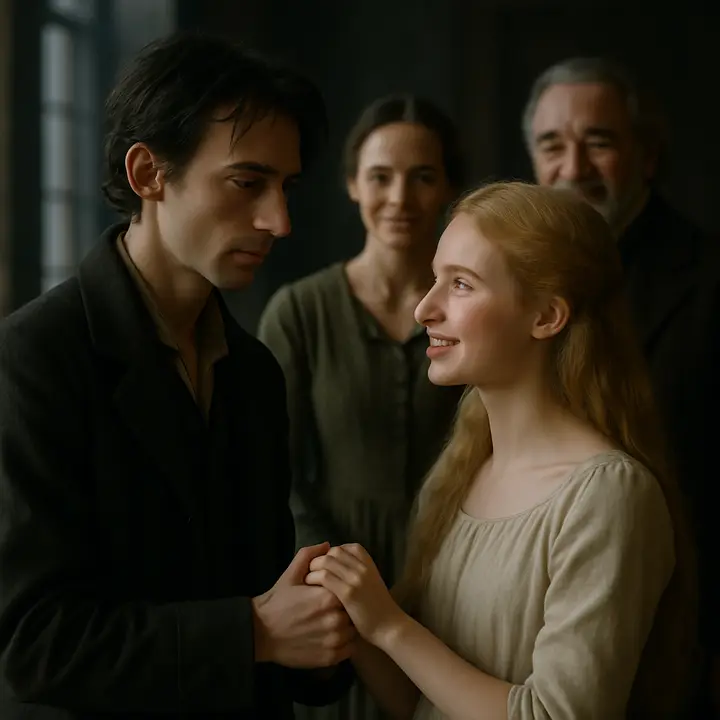
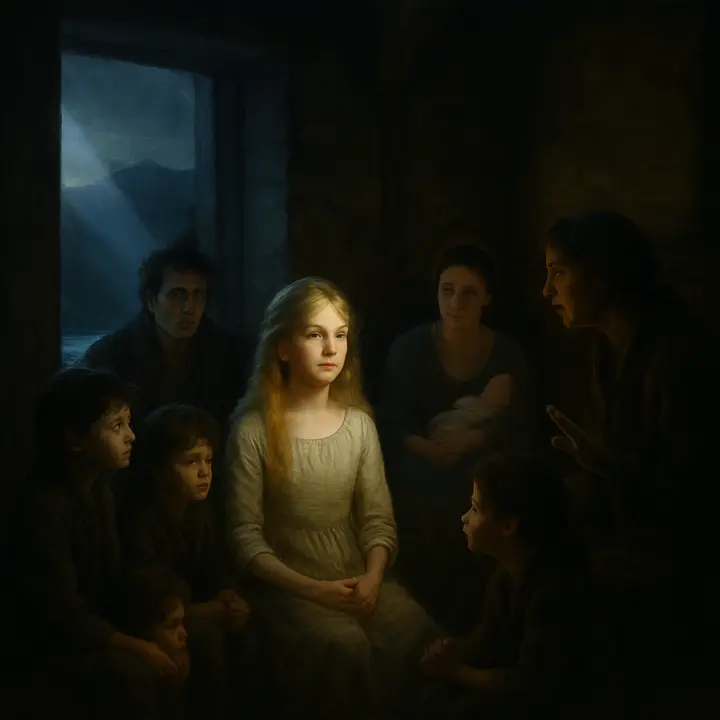

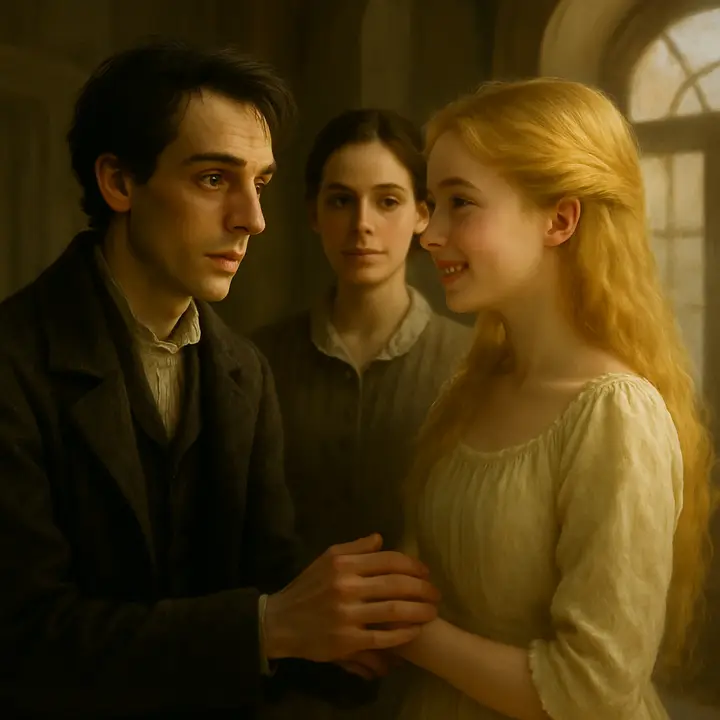


Relationships
- Victor Frankenstein Her adoptive cousin, childhood companion, and later fiancée; she is the central object of his domestic affections and his failure to protect.
- Caroline Beaufort Frankenstein The woman who rescues Elizabeth as a child and brings her into the Frankenstein family; Caroline treats her as a ‘present’ for Victor.
- William Frankenstein The young child whose murder plunges Elizabeth into torment and self-accusation, intensifying her grief and the family’s distress.
- Justine Moritz A servant and family friend whom Elizabeth defends and visits in prison, believing in her innocence and suffering at her execution.
- Alphonse Frankenstein Victor’s father and Elizabeth’s relative by household who shares concern for Elizabeth and looks to marriage as a remedy for family sorrow.
- Henry Clerval Victor’s close friend whose nursing of Victor indirectly restores family hopes that include Elizabeth’s eventual marriage to Victor.
Quotes by Elizabeth Lavenza
“Write, dearest Victor,—one line—one word will be a blessing to us.”
Chapter 6Elizabeth’s letter presses Victor to write and illustrates the family’s anxious, affectionate concern.
Why Elizabeth Lavenza matters
Elizabeth represents the novel’s human, domestic moral sphere—the duties, attachments, and empathetic obligations Victor neglects in pursuit of scientific ambition. Her compassion and patient suffering highlight consequences of secrecy and failed responsibility: she embodies what Victor sacrifices and, in her murder, becomes the moral reckoning that exposes the cost of his hubris. Through Elizabeth, the text interrogates duty to family, the ethical limits of ambition, and the human need for connection that the novel’s catastrophes repeatedly violate.
Chapters with Elizabeth Lavenza
More Frankenstein characters
 Victor FrankensteinProtagonist
 The CreatureMajor character
 Alphonse FrankensteinMajor character
 Henry ClervalMajor character
 William FrankensteinMinor character
 Justine MoritzMinor character
 De LaceyMinor character
 Felix De LaceyMajor character
All chapter summaries ›Characters ›
Read Frankenstein illustrated
Every scene in these notes comes from the Book2Life reader, where the full public-domain text is illustrated as you read, with character portraits and narration. Free in your browser and on iPhone.
