
Justine Moritz in Frankenstein
Minor character
A gentle servant taken in by the Frankensteins, beloved by Elizabeth, later wrongfully accused and executed for William’s murder.
Who is Justine Moritz?
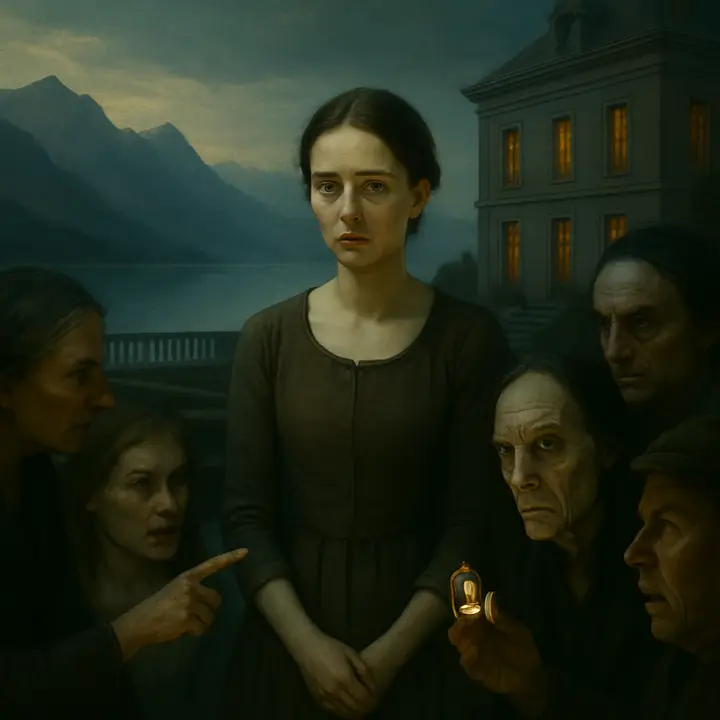
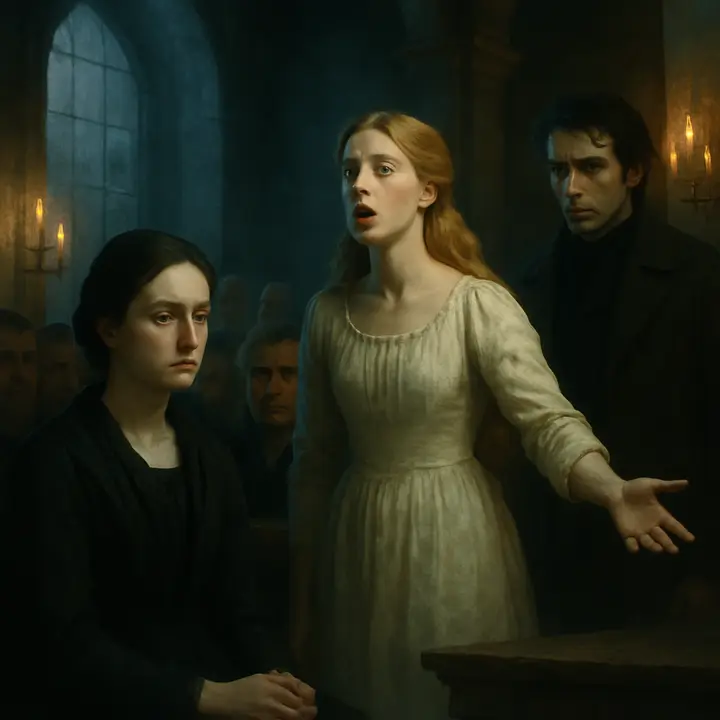
Justine Moritz is a servant and long‑standing companion in the Frankenstein household, especially close to Elizabeth. Raised and sheltered by the family after personal losses, she embodies piety, humility, and dutiful service. When William is found murdered, circumstantial evidence and public suspicion fall upon her: a miniature belonging to William is discovered in her pocket and witnesses claim to have seen her near the scene. Brought to trial, she faces social prejudice and a frightened populace; despite Elizabeth’s eloquent defence and her own consistent insistence on innocence to friends, Justine signs a false confession extracted by her confessor under threat of excommunication. She chooses to confess in order to secure absolution and die with her soul at peace. Her calm resignation in prison and execution devastate the Frankenstein family and intensify Victor’s guilt, turning Justine’s fate into a moral and emotional catalyst within the narrative.
In the book: Justine Moritz is a servant and beloved companion in the Frankenstein household, cherished especially by Elizabeth. Her kindness, piety, and humility make her a moral touchstone in the early narrative. When she becomes entangled in a grave accusation, her situation becomes a catalyst that exposes the novel’s central concerns with justice, social judgment, and the destructive ripple effects of secrecy and guilt, profoundly shaping Victor’s inner turmoil and the story’s moral stakes.
Personality
- Pious
- She tells Victor and Elizabeth in prison that she confessed only to avoid excommunication and to secure peace for her soul.
- Humble
- Elizabeth’s letter and the trial record present her as a devoted, long‑serving member of the household who accepts duties without complaint.
- Resigned
- At her visitation Victor observes her calm endurance and acceptance of death after the false confession.
- Trustworthy (reputation)
- Elizabeth and many who know her vouch for her lifelong character of kindness and service during the courtroom testimony.
Character arc
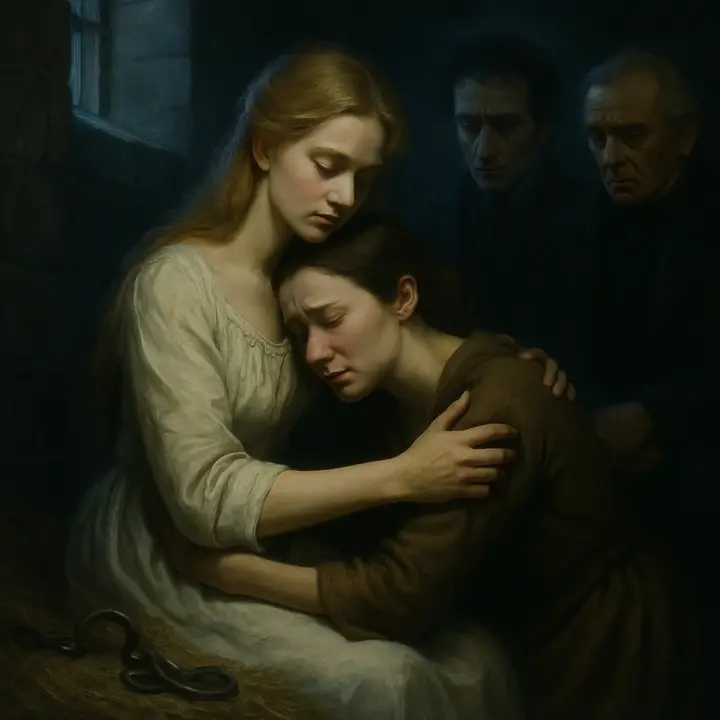
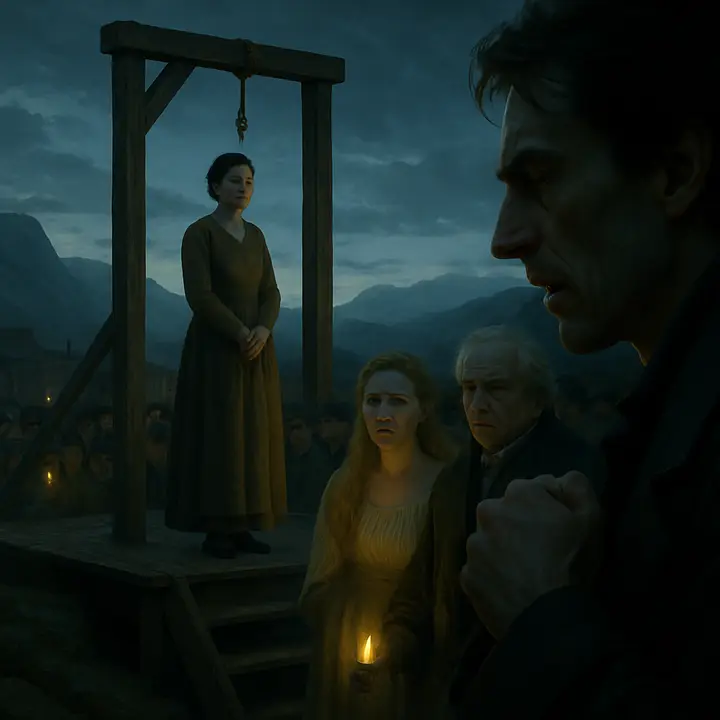
Justine appears first in Elizabeth’s letter as a recovered companion welcomed back into the household after previous hardships; she is portrayed as a stabilizing, morally upright presence in Geneva. Her arc takes a tragic turn when William is murdered: circumstantial evidence and fear of the community make her the prime suspect despite her proven character. At trial she defends the truth about her movements and insists she does not know how the miniature came into her possession, yet the court convicts her amid public hatred. In prison she makes a conscious, sorrowful choice to sign a false confession to avoid excommunication and to preserve her spiritual peace; privately she reiterates her innocence to Victor and Elizabeth. Her execution is final and unredeemed within the narrative: she does not change Victor’s actions nor expose the Creature, but her death marks a turning point, converting the family’s grief into Victor’s consuming guilt and setting him on a path toward vengeance. Justine’s arc is a tragic descent from moral steadiness to victimhood, illustrating how social fear and institutional pressure can crush an innocent life.
Justine Moritz in pictures
Relationships
- Elizabeth Lavenza Beloved companion and almost‑sister figure; Elizabeth defends Justine passionately at her trial and mourns her execution.
- William Frankenstein The murdered child whose death triggers the accusation and trial that lead to Justine’s condemnation.
- Victor Frankenstein A guest and witness to her fate: Victor knows of the Creature’s guilt but remains silent, and Justine’s death intensifies his remorse.
- Alphonse Frankenstein Head of the household that sheltered Justine; he participates in the family’s grief over her trial and execution.
- Ernest Frankenstein A family member present during the family’s reaction to William’s death and Justine’s accusation; part of the household circle affected by her fate.
Quotes by Justine Moritz
“I did confess, but I confessed a lie. I confessed, that I might obtain absolution; but now that falsehood lies heavier at my heart than all my other sins.”
Chapter 8Justine admits to Victor and Elizabeth that she falsely confessed under clerical pressure to avoid spiritual horror before death.
Why Justine Moritz matters
Justine functions as the moral and social counterpoint to Victor’s secretive transgression: her unquestioned goodness contrasted with the community’s readiness to condemn highlights themes of injustice, social prejudice, and the fragile protection innocence receives from society. Her coerced confession and execution expose the power of institutional religion and public opinion to produce wrongful punishment, while her death intensifies Victor’s guilt and isolates him psychologically. Through Justine, the novel shows how one secret action can ripple outward, destroying the lives of the blameless and underscoring the ethical consequences of irresponsible scientific ambition.
Chapters with Justine Moritz
More Frankenstein characters
 Victor FrankensteinProtagonist
 The CreatureMajor character
 Elizabeth LavenzaMajor character
 Alphonse FrankensteinMajor character
 Henry ClervalMajor character
 William FrankensteinMinor character
 De LaceyMinor character
 Felix De LaceyMajor character
All chapter summaries ›Characters ›
Read Frankenstein illustrated
Every scene in these notes comes from the Book2Life reader, where the full public-domain text is illustrated as you read, with character portraits and narration. Free in your browser and on iPhone.
