Frankenstein Chapter 9 Summary
Remorse and Alpine Solitude
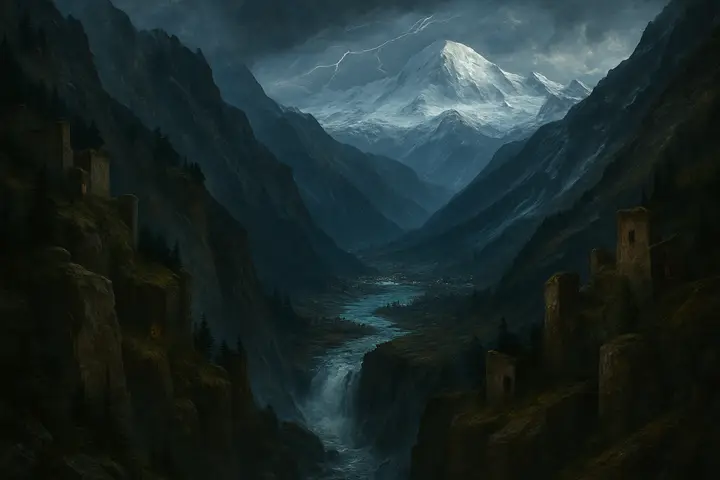
Victor sinks into crushing remorse after Justine's execution and seeks relief in the sublime Alpine valley of Chamounix.
Summary
Victor opens the chapter engulfed by a dead calm of despair after Justine's execution: life continues around him but he is numbed by guilt and sleeplessness. He reflects on his original benevolent intentions and how they are now ruined by the unalterable evils for which he feels responsible. His health and social faculties suffer; he shuns others and finds only solitude tolerable. His father (Alphonse) tries gentle, moral reasoning to rouse him, but Victor cannot accept consolations because remorse and terror dominate his sensations.
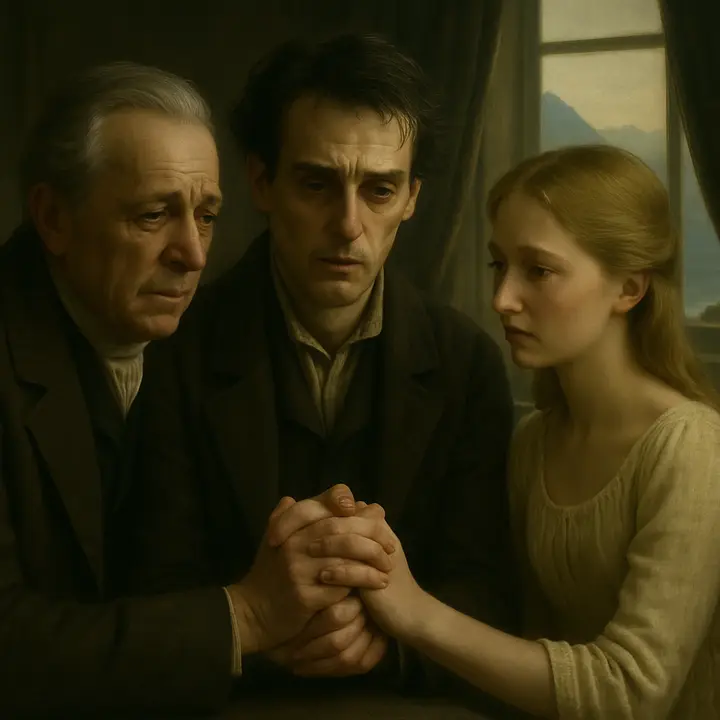
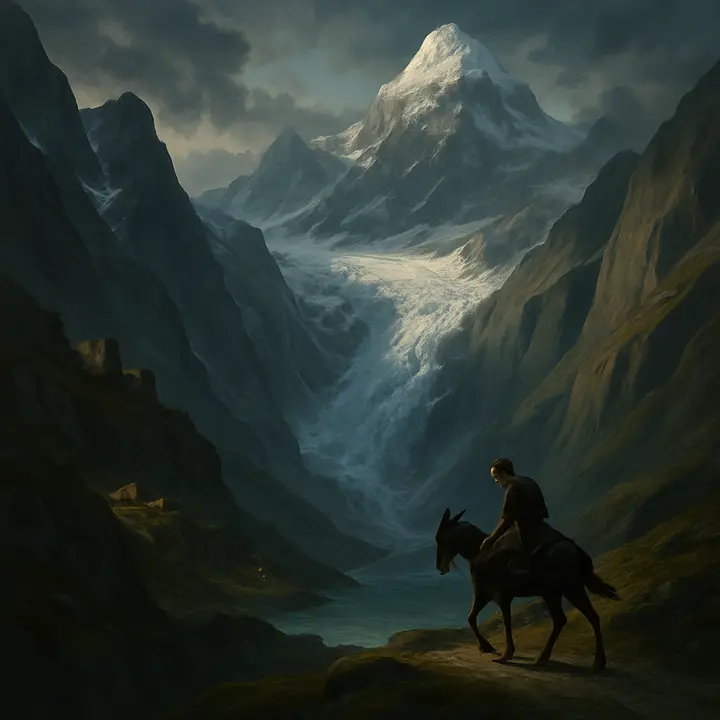
Victor describes family grief at home: Elizabeth is inconsolable and sees the world as full of monsters; his father and relatives are shaken. Victor wrestles with murderous hatred for the creature he created, imagining revenge and even contemplating suicide, but he restrains himself out of love and duty to Elizabeth and his remaining family. Seeking respite, he abruptly departs for the Alps—travelling to Chamounix—hoping that the majesty and permanence of the mountains will calm his tumult. The physical journey (horse, then mule) and the overwhelming presence of glaciers, Mont Blanc, and the roaring Arve momentarily lift his spirits and permit him some forgetful sleep at the chapter's end.
Key events
- Victor describes paralyzing remorse and sleeplessness after Justine's death.
- Alphonse attempts soothing moral counsel; Victor remains withdrawn.
- Victor's family mourns; Elizabeth expresses horror and loss of innocence.
- Victor contemplates suicide but restrains himself out of duty and love.
- He abruptly leaves for the Alps, travelling to the valley of Chamounix.
- The sublime Alpine landscape briefly eases his torment and brings sleep.
Chapter 9 in pictures
Analysis
This chapter deepens Victor's psychological portrait and links personal guilt to the novel's larger moral questions. Victor's introspection emphasizes the consequences of unchecked ambition: his creation's crimes return to punish him inwardly, transforming idealistic benevolence into self-condemnation. Themes of responsibility, alienation, and the harm of secrecy are foregrounded—Victor cannot confess and thus cannot be consoled. Nature functions as both mirror and balm: the Alps, glaciers, and Mont Blanc are cast in the Romantic mode as sublime forces that dwarf human anguish and momentarily restore equilibrium. The narrative technique remains first-person reflective, intensifying intimacy while also isolating Victor from other viewpoints, which increases dramatic irony (readers may suspect his role in the crimes even when other characters do not). Symbolically, water imagery (the lake, the Arve) recurs as a threshold between life and death and as a lure toward self-destruction; the mountains act as a counter-symbol of permanence and divine power. Foreshadowing appears in Victor's persistent fear that the creature will commit further crimes so long as anyone he loves remains; this sustained dread propels the novel's forward motion. The chapter thus links inner torment with outward landscape, advancing character development while maintaining narrative tension.
Important quotes
“I had been the author of unalterable evils, and I lived in daily fear lest the monster whom I had created should perpetrate some new wickedness.”
NarratorVictor admits his role in the chain of crimes and expresses perpetual dread that his creation will commit more acts of violence.
“The immense mountains and precipices that overhung me on every side, the sound of the river raging among the rocks, and the dashing of the waterfalls around spoke of a power mighty as Omnipotence—”
NarratorVictor finds temporary relief in the overwhelming sublimity of the Alpine landscape, which suggests a power greater than human concerns.
Characters in Chapter 9
All chapter summaries ›Characters ›
Read Frankenstein illustrated
Every scene in these notes comes from the Book2Life reader, where the full public-domain text is illustrated as you read, with character portraits and narration. Free in your browser and on iPhone.
