
Lady Macduff in Macbeth
Minor character
Macduff’s wife, a sharp-tongued, protective mother who manages the household in Fife and becomes a victim of political violence.
Who is Lady Macduff?
Lady Macduff appears at Macduff’s castle in Fife, running the household, exchanging witty, pointed banter with her young son, and confronting the fear and confusion caused by her husband’s sudden flight to England. She wants security and the ordinary protections of family life; she demands an explanation for Macduff’s departure and criticizes what she calls his madness in abandoning them. Ross arrives and tries to calm her with cautious explanations about dangerous times, and a messenger warns her to flee. She hesitates, confident that she and her child have done no harm and tied to the rhythms and responsibilities of domestic life. Before she can escape, murderers arrive seeking Macduff, and the scene ends with her child’s murder and her own offstage pursuit and implied death. Her brief, vivid presence gives a human, private face to the public brutality that has taken hold of Scotland and sets up Macduff’s subsequent grief and resolve.
In the book: We first meet Lady Macduff at her household in Fife, managing the home and speaking with Ross while worrying over her husband’s sudden departure. She’s witty, sharp-tongued, and protective of her child, giving us a grounded glimpse of family life far from the royal court and why Macduff’s choices hit close to home.
Personality
- Protective
- She fiercely defends and teases her son, reacting with immediate alarm when the messenger warns of danger.
- Sharp-tongued
- She bitterly reproaches Macduff for ‘fleeing’, calling his flight madness and accusing him of abandoning his family.
- Practical
- She focuses on everyday obligations and refuses to run immediately—arguing she has done nothing to deserve flight—when warned by the messenger.
- Witty
- Her intimate, playful repartee with her son mixes humor and shrewd observation even as she expresses real fear about their situation.
Character arc
Lady Macduff’s onstage life is short but pivotal. She first appears as the able, outspoken mistress of Macduff’s household, managing domestic affairs and publicly questioning her husband’s decision to leave for England. Her sharp language and confident care for her child establish her as the moral and emotional center of her home. When an emissary and then a messenger bring warnings about danger, she shows a mixture of practical concern and disbelief—rooted in the conviction that ordinary people should not be punished for political treachery. That belief is shattered almost instantly when murderers arrive: her son is killed in front of her, she cries out, and she is pursued offstage. She never returns to the stage; her death is reported later and becomes the catalyst for Macduff’s transformation from grieving exile to a man resolved to seek justice. Thus her arc moves quickly from domestic authority and maternal wit to vulnerable victimhood, and finally to a narrative force that propels Macduff and the play toward confrontation and revenge.
Relationships
- Macduff Her husband; she reproaches him for fleeing and is left vulnerable by his departure.
- Ross A messenger and noble who visits her at the castle and tries to calm her fears about dangerous times.
- First Murderer One of the killers who enters the castle and participates in the brutal murder of her child and servants.
- Servant A household figure present at the castle whose life and work are caught up in the attack that destroys her family.
- Macbeth The tyrant whose campaign of political violence reaches into her household; his regime’s brutality is the proximate cause of her death.
Quotes by Lady Macduff
“He had none: His flight was madness: when our actions do not, Our fears do make us traitors.”
Act 4, Scene 2Lady Macduff bitterly criticizes Macduff for fleeing, claiming fear, not reason, drives people to appear traitorous.
“Sirrah, your father's dead.”
Act 4, Scene 2Lady Macduff tells her son his father is gone, prompting their candid exchange about survival and loyalty before the attack.
Why Lady Macduff matters
Lady Macduff embodies the private, domestic cost of Macbeth’s public tyranny: her witty, maternal presence contrasts the court’s ambition and exposes how political decisions devastate ordinary families. Her murder dramatizes themes of innocence violated, the fragility of social order, and the personal stakes that convert private grief into political resolve—especially motivating Macduff’s quest for justice. In short, she humanizes the abstract consequences of power and amplifies the play’s moral urgency.
Chapters with Lady Macduff
More Macbeth characters
 Macbeth
 Banquo
 Macduff
 Malcolm
 Ross
Ross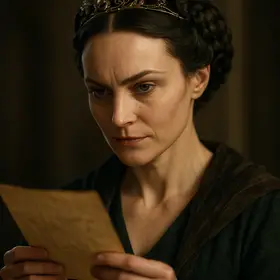 Lady Macbeth
 Lennox
 Duncan
All chapter summaries ›Characters ›
Read Macbeth illustrated
Every scene in these notes comes from the Book2Life reader, where the full public-domain text is illustrated as you read, with character portraits and narration. Free in your browser and on iPhone.
