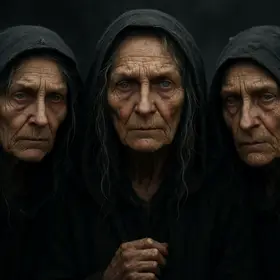
The Three Witches in Macbeth
Antagonist
Mysterious, malevolent sisters who prophesy and manipulate Macbeth, setting his ambition and downfall in motion.
Who is The Three Witches?
The Three Witches are a trio of supernatural figures who first appear on a blasted heath amid storm and lightning. They speak in riddles, perform cruel spells, and hail Macbeth with three salutations—Thane of Glamis, Thane of Cawdor, and “king hereafter”—planting the seed of royal ambition. Their ambiguous prophecies extend to Banquo, promising kingship to his descendants. The witches later meet Hecate, who chastises them for acting without her and instructs them to craft illusions to mislead Macbeth. In a cave they brew a charm and summon apparitions that both warn and deceive: they tell Macbeth to beware Macduff but also that no one born of woman will harm him and that he will not fall until Birnam Wood moves to Dunsinane. The witches’ revelations inflate Macbeth’s confidence and provoke his brutal choices, directly prompting Macbeth’s order to slaughter Macduff’s family and accelerating his slide into tyranny and violence. Throughout, they operate as catalysts of fate and confusion, advancing the plot through prophecy and manipulation.
In the book: We first meet them on a blasted heath in thunder and lightning, trading riddles and setting a time to greet Macbeth. They matter because they hail him with strange titles and plant the seed that his fortunes are about to leap.
Personality
- cryptic
- They greet Macbeth with three mysterious salutations on the heath that puzzle him and Banquo.
- manipulative
- Their apparitions and ambiguous warnings in the cave inflate Macbeth’s confidence and prompt his violent orders.
- malevolent
- They boast about curses and complete a ritual chant while plotting harms to sailors and others on the heath.
- unchanging
- They follow Hecate’s directions to craft illusions rather than show remorse, continuing to deceive Macbeth.
Character arc
From their first scene the witches function as external provokers of Macbeth’s ambitions: on the heath their greetings ignite his private turmoil by seeming to predict titles that soon come true. Their prophecies push Macbeth from puzzlement to secret planning; his later hallucinations and choices trace back to the seed they plant. After Hecate rebukes them for acting alone, the witches obey and conspire to embellish Macbeth’s fate with crafted illusions. In the cave they summon apparitions that offer mixed truth: literal warnings alongside deceptive assurances. These staged visions reassure Macbeth in dangerous ways and spur him to increasingly ruthless actions, including ordering the massacre of Macduff’s family. The witches themselves do not change morally or repent; instead, they move from distant provocateurs to direct manipulators, escalating their interventions until Macbeth is driven toward ruin. Their arc is therefore functional rather than developmental: they remain instruments of mischief and fate while intensifying their influence over the hero’s decisions.
Relationships
- Macbeth They provoke and manipulate his ambition by prophesying his rise and later showing illusions that embolden him.
- Banquo They foretell that Banquo will be ‘lesser and greater’ than Macbeth and that his descendants will be kings, unsettling him.
- Hecate Hecate scolds and directs them, instructing them to prepare illusions to mislead Macbeth further.
- Macduff An apparition they summon warns to ‘beware Macduff,’ a message that triggers Macbeth’s violent reprisal against Macduff’s household.
- Fleance Their prophecy that Banquo’s heirs will reign implies a future for Fleance and shapes Macbeth’s fear of Banquo’s line.
Why The Three Witches matters
The Three Witches embody the play’s exploration of fate, temptation, and the corrosive effect of equivocal knowledge. By speaking truth and half-truths, they blur the line between prophecy and provocation, forcing characters to act on ambiguous information. Their manipulation exposes how external suggestions can catalyze internal weakness—particularly Macbeth’s ambition—while raising questions about moral responsibility. As persistent, unrepentant agents of chaos, they reinforce themes of disorder and the supernatural’s role in human downfall.
Chapters with The Three Witches
More Macbeth characters
 Macbeth
 Banquo
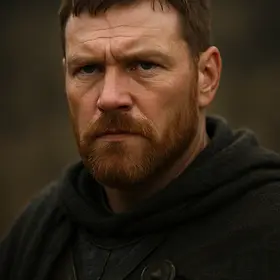 Macduff
 Malcolm
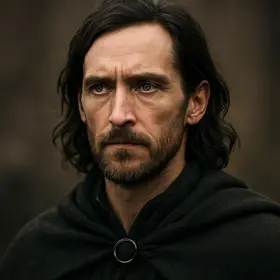 Ross
Ross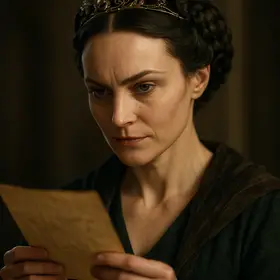 Lady Macbeth
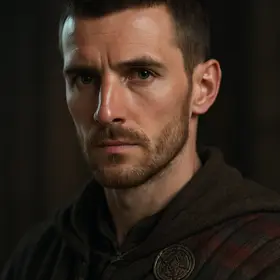 Lennox
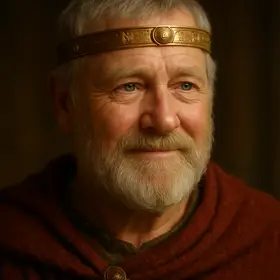 Duncan
All chapter summaries ›Characters ›
Read Macbeth illustrated
Every scene in these notes comes from the Book2Life reader, where the full public-domain text is illustrated as you read, with character portraits and narration. Free in your browser and on iPhone.
