
Tertius Lydgate in Middlemarch
Major character
A reforming young physician in Middlemarch whose professional zeal and personal choices entangle him in local politics, debt, and domestic strain.
Who is Tertius Lydgate?
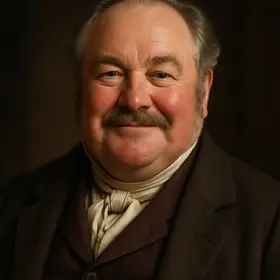
Tertius Lydgate arrives in Middlemarch as a promising, scientifically minded surgeon determined to modernize provincial medicine and run an independent, research-minded practice. He champions hospital reform, microscopic investigation, and a principled professional ethic, gaining both praise and suspicion from townspeople. Socially, he becomes attracted to Rosamond Vincy and marries her, hoping that domestic life will steady him; their match quickly reveals mismatched expectations about money, display, and propriety. Financial pressures, an underperforming practice, and tradesmen’s claims force Lydgate into humiliating compromises. He accepts a loan from Nicholas Bulstrode under fraught circumstances, which then becomes fodder for damaging rumor linking him to Bulstrode’s secrets after John Raffles’s death. Public suspicion, marital tension, and professional obstacles repeatedly test Lydgate’s integrity. He resists lodging a public accusation against Bulstrode and, when Dorothea Casaubon intervenes, accepts her practical help with a mixture of shame and gratitude. Throughout, Lydgate oscillates between principled ambition and weary resignation as he seeks to preserve his work and honor.
In the book: An idealistic young physician newly arrived in Middlemarch, Lydgate champions modern medical science and institutional reform. His ambition and principled theories bring him into friction with local customs and powerbrokers, while his personal choices tie his professional hopes to the town’s tangled social expectations, testing both his ethics and endurance.
Personality
- idealistic
- Declares plans for scientific reform and hospital improvement and takes the New Hospital post to modernize provincial medicine (Ch. 13, 44, 45).
- prideful
- Refuses to discuss private difficulties with Farebrother and bristles when neighbors speculate about his finances (Ch. 63).
- practical
- Applies decisive clinical measures for Fred Vincy’s severe illness, overruling local practitioner Wrench and instituting strict care (Ch. 26).
- morally troubled
- Feels anguish over accepting Bulstrode’s thousand-pound loan and later chooses not to denounce Bulstrode despite suspicion (Ch. 70–73).
- resolute (but weary)
- Contemplates leaving Middlemarch but ultimately steels himself to remain and bear calumny while trying to salvage his hospital work (Ch. 73, 76).
Character arc
Lydgate first appears as a confident, somewhat austere reformer whose vocational revelation in anatomy drives him to combine practice with original research. Early on he impresses and charms society (Ch. 10–17) and becomes closely involved with the Vincys, treating Fred and courting Rosamond (Ch. 26–31). Marriage initially promises steadiness, but domestic tastes and expenses clash with his austerely professional ideals; mounting household bills and an underperforming practice force him into humiliating financial choices (Ch. 36, 58, 64–66). Pressed by debt, he accepts a loan from Bulstrode under anxiety, an act that spawns damaging gossip after Raffles’s death and leaves his reputation imperiled (Ch. 69–71). Rather than publicly accusing Bulstrode, Lydgate endures the calumny, feeling betrayed yet refusing to seek vindication by exposing another’s possible guilt (Ch. 73). Dorothea’s intervention and financial support briefly restore hope and offer practical aid, but Lydgate’s energy is sapped; he moves from energetic reformer to a man who must compromise ambitions for a quieter, more constrained practice and a strained domestic life (Ch. 76–81, Finale).
Relationships
- Rosamond Vincy Wife whose taste for gentility and resistance to economies creates the central domestic strain in Lydgate’s life.
- Nicholas Bulstrode Banker and provider of a critical loan whose ambiguous aid later ties Lydgate to scandal and public suspicion.
- Dorothea Brooke Sympathetic ally who believes in his honor, offers financial and moral support, and works to preserve his hospital project.
- Camden Farebrother A steady, moderate friend and adviser whose counsel about local alliances and compromises Lydgate sometimes resists.
- Will Ladislaw Acquaintance and occasional tension-point in town gossip; both men share ties through Dorothea and through the wider social scandal.
- Mr. Vincy Father-in-law who disapproves of some marriage costs and whose family’s habits contribute to Lydgate’s financial strain.
Quotes by Tertius Lydgate
““I know little of either,” said Lydgate;”
Chapter 16Lydgate’s measured, modest reply during the chaplaincy discussion signals his professional seriousness and reluctance to defer to mere social preference.
““I shall not desist from voting with him on that account.””
Chapter 18Lydgate’s curt refusal to be browbeaten; he votes for Tyke while remaining uncertain and uneasy about the moral correctness of his choice.
“I will meet Mr. Wrench here, then, shall I?”
Chapter 26Lydgate offers to coordinate with the family and Mr. Wrench, signaling his readiness to assume responsibility for Fred's care.
“I have good hope, Mrs. Vincy,”
Chapter 27Lydgate’s calming professional reassurance that helps steady Mrs. Vincy and earns him the family’s trust.
“I believe that you are suffering from what is called fatty degeneration of the heart, a disease which was first divined and explored by Laennec, the man who gave us the stethoscope, not so very many years ago.”
Chapter 42Lydgate gives Casaubon a frank medical opinion, naming the disease and its uncertain prognosis, which crystallizes Casaubon’s confrontation with mortality.
“I don’t know whether your or Mr. Casaubon’s attention has been drawn to the needs of our New Hospital.”
Chapter 44Lydgate opens the subject, seeking Dorothea’s sympathy and support for the hospital and his reforming medical work.
Why Tertius Lydgate matters
Lydgate embodies the novel’s tension between idealistic reform and the constraining forces of provincial society: money, gossip, patronage, and marriage. His professional aspirations dramatize the ethical hopes of scientific progress, while his compromises—financial, moral, and domestic—show how social structures and private failings can blight reforming projects. Through Lydgate, the book explores themes of integrity, the social cost of innovation, and the intimate ways personal relationships shape public life. His decline from confident reformer to a man constrained by circumstance underscores Eliot’s interest in how character, chance, and community determine fate.
Chapters with Tertius Lydgate
- Chapter 10
- Chapter 11
- Chapter 12
- Chapter 13
- Chapter 14
- Chapter 15
- Chapter 16
- Chapter 17
- Chapter 18
- Chapter 26
- Chapter 27
- Chapter 29
- Chapter 30
- Chapter 31
- Chapter 36
- Chapter 40
- Chapter 42
- Chapter 44
- Book 5, Chapter 45
- Book 5, Chapter 46
- Chapter 47
- Chapter 48
- Chapter 50
- Chapter 51
- Chapter 56
- Chapter 58
- Chapter 59
- Chapter 63
- Chapter 64
- Chapter 65
- Chapter 66
- Chapter 67
- Chapter 68
- Chapter 69
- Chapter 70
- Chapter 71
- Chapter 72
- Chapter 73
- Chapter 75
- Chapter 76
- Chapter 77
- Chapter 78
- Chapter 79
- Chapter 80
- Chapter 81
- Chapter 82
- Chapter 85
- Finale
More Middlemarch characters
 Dorothea BrookeProtagonist
 Will LadislawMajor character
 Mr. BrookeMajor character
 Sir James ChettamMajor character
 Rosamond VincyMajor character
 Nicholas BulstrodeMajor character
 Mr. VincyMajor character
 Camden FarebrotherMajor character
All chapter summaries ›Characters ›
Read Middlemarch illustrated
Every scene in these notes comes from the Book2Life reader, where the full public-domain text is illustrated as you read, with character portraits and narration. Free in your browser and on iPhone.
