
Nicholas Bulstrode in Middlemarch
Major character
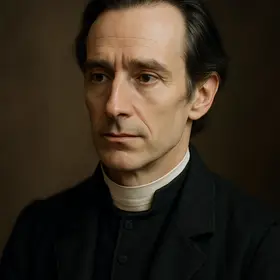
Wealthy evangelical banker of Middlemarch whose piety and patronage conceal a troubled, secret past that threatens his public authority.
Who is Nicholas Bulstrode?
Nicholas Bulstrode is a rich, religiously zealous banker whose money and moral standing give him decisive influence over Middlemarch institutions — the infirmary, the new Fever Hospital, local appointments, and private benefactions. He uses that authority to shape careers and charitable projects, presenting himself as a conscientious steward of public virtue. Simultaneously he carries a concealed history from London: an entanglement with shady partners and an illegitimate connection to a woman whose child links him indirectly to Will Ladislaw. When John Raffles, an insolent old acquaintance, appears and threatens exposure, Bulstrode panics and pays to keep him quiet. Raffles’s death at Stone Court and Bulstrode’s nocturnal presence with him spark town gossip that ties Bulstrode to possible wrongdoing and to the subsequent £1,000 loan he gives to Lydgate — a loan that further complicates public opinion. Haunted by fear of disclosure, Bulstrode oscillates between rigid self-justification in the name of providence and a tortured conscience that contemplates confession but largely maintains concealment.
In the book: Nicholas Bulstrode is Middlemarch’s wealthy banker and a prominent evangelical moralist whose money and piety give him outsized influence over the town’s institutions and people. His patronage shapes careers, charities, and local politics, and his insistence on propriety highlights the novel’s exploration of power, conscience, and community judgment—especially as questions about his integrity begin to shadow his authority.
Personality
- Evangelical
- He presides over religious charities, his wife returns from a missionary meeting, and his pious language frames his public projects (Ch. 16, Ch. 61).
- Powerful
- He determines hospital arrangements, influences the infirmary chaplaincy vote, and steers who will manage local institutions (Ch. 13, Ch. 18, Ch. 45).
- Secretive
- Raffles’s arrival revives memories of a discreditable London past that Bulstrode strives to hide and that drives him to pay Raffles off (Ch. 53, Ch. 61, Ch. 68).
- Guilt-ridden
- He alternately justifies past compromises as service to God and is tormented by the thought that his wife might one day call his acts 'Murder' (Ch. 61, Ch. 85).
- Controlling benefactor
- He finances the Fever Hospital under strict terms favoring his control and later advances Lydgate money, shaping both medical work and reputations (Ch. 45, Ch. 70).
Character arc
Bulstrode appears as an established moral authority whose wealth and religious zeal secure him deference and institutional power. Early chapters show him directing hospital policy, deciding local appointments, and rebuking what he sees as worldly folly (Ch. 13, 16, 45). The arrival of John Raffles forces Bulstrode to confront a discreditable London past: he pays Raffles to keep away, then wrestles with panic and the threat of exposure (Ch. 53, 61, 68). Raffles’s death at Stone Court — after Bulstrode nurses him and hesitates over medical aid — and Bulstrode’s subsequent loan to Lydgate become the pivot of public suspicion (Ch. 70, 71). Rumor and formal accusation at the sanitary board strip much of his unchallenged authority, and the town’s recriminations bring his private concealments into the moral arena (Ch. 71, 73). Though he contemplates confession and plans a quiet departure, Bulstrode does not fully disclose his past; instead he seeks to arrange practical reparation (the Stone Court scheme for Fred Vincy) and to retire from public life while remaining inwardly tormented (Ch. 85). His arc moves from secure benefactor to isolated, conscience-wracked figure who refuses complete transparency and whose secretive efforts to secure legacy and control only deepen suspicion.
Relationships
- Mrs. Bulstrode His devoted wife, whose missionary activity and comforting presence both sustain and deepen his sense of guilt; he fears her eventual judgment (Ch. 61, Ch. 85).
- Tertius Lydgate A reforming young doctor whom Bulstrode patronizes and later lends £1,000, a transaction that ties Lydgate to Bulstrode’s scandal (Ch. 13, Ch. 70, Ch. 71).
- Will Ladislaw Connected by a concealed family link and a rejected offer of money—Bulstrode offers compensation to make amends for past concealments, which Will refuses (Ch. 61).
- John Raffles An intrusive, blackmailing acquaintance from Bulstrode’s past whose threats precipitate payments, a violent confrontation, and eventual death at Stone Court (Ch. 53, Ch. 68, Ch. 70).
- Fred Vincy Indirect beneficiary of Bulstrode’s schemes: Bulstrode consents to plans placing Fred as tenant-manager at Stone Court to provide for the Vincy family (Ch. 68, Ch. 85).
- Caleb Garth A practical, trusted man Bulstrode consults about managing Stone Court and implementing the plan that will steady Fred Vincy under Garth’s oversight (Ch. 68, Ch. 85).
Quotes by Nicholas Bulstrode
“I did not indeed expect to see you in this remote country place.”
Chapter 53Bulstrode replies coldly to Raffles’ cheerful, overly familiar greeting, signalling his unease and attempt to set boundaries.
“I will forward you the other if you will mention an address.”
Chapter 53Bulstrode concedes to Raffles’ demand in part, offering to pay later on condition of an address—an act motivated by fear of exposure and desire for immediate removal.
“I am ready to narrow my own resources and the prospects of my family by binding myself to allow you five hundred pounds yearly during my life, and to leave you a proportional capital at my death—nay, to do still more, if more should be definitely necessary to any laudable project on your part.”
Chapter 61Bulstrode, seeking to atone, offers Will a formal, generous financial provision as restitution for the concealment of Will's mother.
“I recommend you to weigh the advice I have given.”
Chapter 67Bulstrode’s cold counsel that Lydgate should accept bankruptcy rather than incur further obligations, showing his refusal to help.
“Get up, sir, and do as I order you, without noise, or I will send for a policeman to take you off my premises, and you may carry your stories into every pothouse in the town, but you shall have no sixpence from me to pay your expenses there.”
Chapter 68Bulstrode’s stern, premeditated warning to Raffles at dawn, designed to force him away and prevent future threats to Bulstrode’s reputation.
“Garth once thought of undertaking the management of Stone Court in order to place your nephew Fred there.”
Chapter 85Bulstrode proposes a plan to provide for Fred Vincy by reinstating Garth as manager of Stone Court.
Why Nicholas Bulstrode matters
Bulstrode embodies the novel’s interrogation of public virtue versus private sin: his evangelical authority and charitable works complicate the moral calculus when concealed wrongdoing emerges. The town’s shifting judgment of him dramatizes how reputation, power, and secrecy shape communal life. Bulstrode’s refusal fully to confess, combined with his attempts at quiet reparation, raises questions about conscience, legal culpability, and the limits of philanthropic moralizing. His story forces other characters — Lydgate, Dorothea, Will — to reckon with how private pasts and public benefaction interlock in social judgment and professional integrity.
Chapters with Nicholas Bulstrode
- Chapter 10
- Chapter 12
- Chapter 13
- Chapter 14
- Chapter 16
- Chapter 18
- Chapter 26
- Chapter 27
- Chapter 29
- Chapter 31
- Chapter 36
- Chapter 38
- Chapter 40
- Chapter 41
- Chapter 44
- Book 5, Chapter 45
- Book 5, Chapter 46
- Chapter 51
- Chapter 53
- Chapter 58
- Chapter 61
- Chapter 63
- Chapter 67
- Chapter 68
- Chapter 70
- Chapter 71
- Chapter 73
- Chapter 74
- Chapter 75
- Chapter 77
- Chapter 79
- Chapter 81
- Chapter 82
- Chapter 83
- Chapter 85
More Middlemarch characters
 Dorothea BrookeProtagonist
 Tertius LydgateMajor character
 Will LadislawMajor character
 Mr. BrookeMajor character
 Sir James ChettamMajor character
 Rosamond VincyMajor character
 Mr. VincyMajor character
 Camden FarebrotherMajor character
All chapter summaries ›Characters ›
Read Middlemarch illustrated
Every scene in these notes comes from the Book2Life reader, where the full public-domain text is illustrated as you read, with character portraits and narration. Free in your browser and on iPhone.
