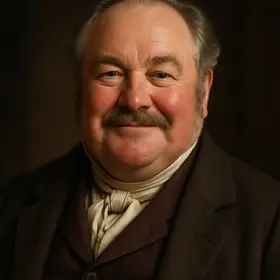
Mr. Vincy in Middlemarch
Major character
Prosperous Middlemarch manufacturer and paterfamilias whose genial, status‑minded ways shape family expectations and local dealings.
Who is Mr. Vincy?
Mr. Vincy is a comfortable, civic‑minded manufacturer and local man of business whose main concerns are family comfort, reputation, and practical solutions. He appears repeatedly pressing social and financial matters — confronting Mr. Bulstrode about a rumor that involves his son Fred, scolding Fred after the Featherstone will upsets family hopes, hosting convivial family parties, and approving or resisting expenditures tied to his children’s marriages. He treats family difficulties with a mixture of good humour, impatience, and a desire for practical fixes rather than moral examination. His interventions often reflect mercantile common sense: he wants debts settled, proper appearances maintained, and advantageous settlements secured, and he oscillates between indulgence toward his idle son and sharp reproach when expectations are disappointed. Though influential in town affairs and in domestic decisions (for instance, hesitating over providing funds for Rosamond’s marriage), he is not portrayed as the novel’s moral center but as a representative of the ambitious, comfort‑seeking middle class.
In the book: Mr. Vincy is a prosperous Middlemarch manufacturer and town leader whose genial, status‑conscious outlook embodies the mercantile middle class. As the indulgent father of Rosamond and Fred Vincy, his priorities—comfort, reputation, and practical success—shape family expectations and ripple into key relationships and choices that drive several plot threads, without placing him at the novel’s moral center.
Personality
- Genial
- He gives a warm family New Year’s party and reacts with jovial practicality when informed of Lydgate and Rosamond’s engagement (ch.63; ch.31).
- Status‑conscious
- He presses Bulstrode for a written denial of the rumor about Fred and worries about the social consequences of family debts and matches (ch.13; ch.12).
- Indulgent father
- He repeatedly defends and frets over Fred’s schemes, scolding him after the will but also trying to manage household expense and expectations (ch.36; ch.34).
- Practical
- When Fred declares he will work in a practical outdoor occupation, Mr. Vincy listens coldly but ultimately accepts the decision as a pragmatic resolution (ch.56).
- Reactive
- He returns from the Featherstone will reading in a sour mood and immediately scolds Fred and threatens to withhold funds for Rosamond’s marriage (ch.36).
Character arc
Mr. Vincy first appears as a prosperous, sociable manufacturer whose chief energies go into maintaining family comfort and social standing. Early episodes show him intervening to protect Fred from scandal—pressing Bulstrode for a written denial and attempting to secure financial fixes—while presiding over cheerful domestic scenes that display his convivial temperament (ch.11–14). The shock of Featherstone’s will exposes his anxieties: he returns from the reading sour and reproves Fred, even threatening to withhold funds for Rosamond’s marriage (ch.34–36). That moment sharpens the tension between indulgence and rebuke in his fathering. As Fred’s troubles deepen, Mr. Vincy oscillates between annoyance and reluctant accommodation; by the time Fred resolves to take up honest, practical work, Mr. Vincy listens coldly but allows the change (ch.24–26; ch.56). In later scenes he continues as a local figure of opinion and commerce—hosting society, managing household disputes, and feeling the sting of scandal when town gossip spreads—without undergoing a dramatic moral conversion. He remains essentially the same: a representative, pragmatic middle‑class paterfamilias whose decisions are guided by comfort, reputation, and social prudence rather than deep self‑examination.
Relationships
- Rosamond Vincy His daughter; he involves himself in the negotiations and proprieties around her intended marriage and reacts strongly to the family’s changed prospects (ch.31; ch.36).
- Fred Vincy His son; he alternates between indulgence and sharp reproach toward Fred over debts, schemes, and hopes of inheritance (ch.12; ch.34–36; ch.23–25).
- Mrs. Vincy His wife; she participates in domestic management and intercedes for their children while Mr. Vincy often speaks in the family’s practical voice (ch.11; ch.36).
- Tertius Lydgate Future son‑in‑law; Mr. Vincy engages with Lydgate socially and reacts to the couple’s plans and the later financial strains that touch the household (ch.31; ch.36; ch.58).
- Mr. Bulstrode A local banker and moral authority whose refusal to provide an affidavit brings Mr. Vincy into a blunt contest over values and reputation (ch.13).
- Mary Garth Connected through Fred’s affairs and family gossip; Mr. Vincy’s household frequently intersects with Mary’s practical interventions regarding Fred’s debts (ch.12; ch.24–25).
Quotes by Mr. Vincy
“I shall rejoice to furnish your zeal with fuller opportunities,” Mr. Bulstrode answered; “I mean, by confiding to you the superintendence of my new hospital, should a maturer knowledge favor that issue, for I am determined that so great an object shall not be shackled by our two physicians.”
Chapter 13Bulstrode offers Lydgate a significant role in the proposed new hospital, revealing his patronage and the importance he places on reform.
“I am not at all sure that I should be befriending your son by smoothing his way to the future possession of Featherstone’s property.”
Chapter 13Bulstrode refuses Vincy’s request for a letter exonerating Fred, framing his refusal in moral and spiritual terms rather than social expediency.
“I will reflect a little, Vincy. I will mention the subject to Harriet. I shall probably send you a letter.”
Chapter 13Bulstrode ends the confrontation without a direct answer, signaling deliberation and the involvement of his wife in final decisions.
“I should think it is," said Mr. Featherstone,”
Chapter 14Featherstone repeats his own approval of the gift, mixing condescension with self-satisfaction while handing Fred the money.
“You made a bad hand at swapping when you went to anybody but me, Vincy! Why, you never threw your leg across a finer horse than that chestnut, and you gave him for this brute.”
Chapter 23Bambridge disparages Fred’s old horse while flattering Fred’s riding, influencing Fred’s feelings about selling.
“You are exceedingly hospitable, my dear sir; and I owe you acknowledgments for exercising your hospitality towards a relative of mine.”
Chapter 34Casaubon speaks with formal politeness about Mr. Brooke's having brought Will Ladislaw, masking his inward discomfort about Ladislaw's presence.
Why Mr. Vincy matters
Mr. Vincy functions as a social type: the middling manufacturer whose energy is devoted to comfort, reputation, and pragmatic solutions. Through his scenes—family dinners, the reaction to Featherstone’s will, debates over affidavits, and responses to his children’s follies—Eliot shows how mercantile values orient domestic and civic life in Middlemarch. He dramatizes tensions between appearance and conscience, indulgence and sternness, and the limits of bourgeois benevolence; his choices advance plot threads about marriage, debt, and social standing while illuminating the novel’s concerns with the moral effects of ambition, respectability, and practical compromise.
Chapters with Mr. Vincy
- Chapter 10
- Chapter 11
- Chapter 12
- Chapter 13
- Chapter 14
- Chapter 16
- Book 2, Chapter 19
- Chapter 23
- Chapter 24
- Chapter 25
- Chapter 26
- Chapter 27
- Chapter 29
- Chapter 31
- Chapter 34
- Chapter 35
- Chapter 36
- Chapter 37
- Chapter 40
- Chapter 56
- Chapter 58
- Chapter 59
- Chapter 61
- Chapter 63
- Chapter 64
- Chapter 66
- Chapter 67
- Chapter 68
- Chapter 70
- Chapter 71
- Chapter 74
- Chapter 75
- Chapter 77
- Chapter 78
More Middlemarch characters
 Dorothea BrookeProtagonist
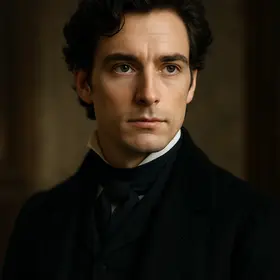 Tertius LydgateMajor character
 Will LadislawMajor character
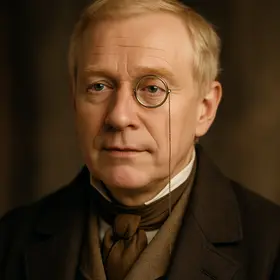 Mr. BrookeMajor character
 Sir James ChettamMajor character
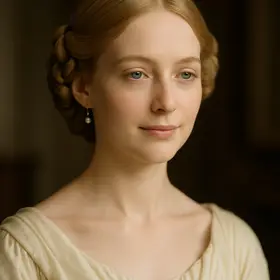 Rosamond VincyMajor character
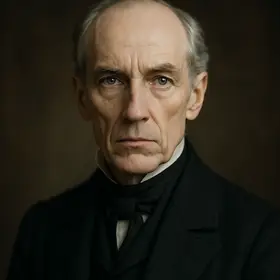 Nicholas BulstrodeMajor character
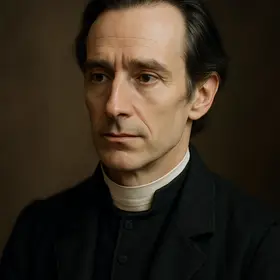 Camden FarebrotherMajor character
All chapter summaries ›Characters ›
Read Middlemarch illustrated
Every scene in these notes comes from the Book2Life reader, where the full public-domain text is illustrated as you read, with character portraits and narration. Free in your browser and on iPhone.
