Pride and Prejudice Chapter 5 Summary
The Lucas Visit
The Lucas family visit Longbourn to discuss the ball, praising Bingley and criticizing Darcy while family opinions and small talk reveal social values.
Summary
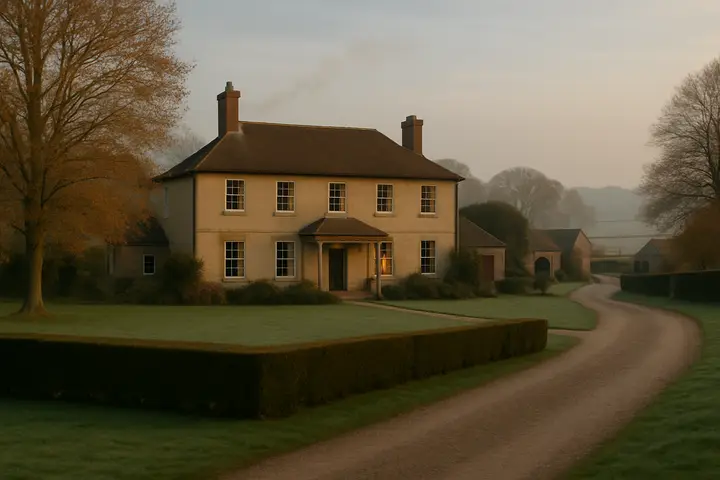
Sir William and Lady Lucas live a short walk from Longbourn at Lucas Lodge after Sir William leaves trade and receives a knighthood. Their eldest daughter, Charlotte Lucas, a sensible woman and Elizabeth Bennet’s intimate friend, comes with her family the morning after the assembly to share and hear impressions of the ball in Meryton.
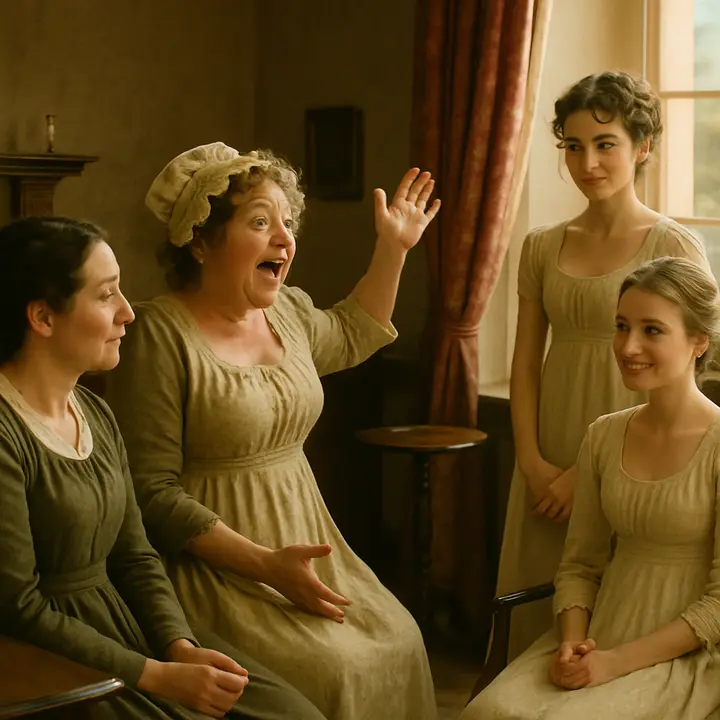
Mrs. Bennet, eager about prospects for her daughters, tells Charlotte she was Mr. Bingley’s first choice; the conversation turns to Mr. Bingley’s apparent regard for Jane Bennet and to Mr. Darcy’s coolness. Guests trade overheard remarks—Mr. Robinson’s praise of Jane, Miss Bingley’s defense of Darcy’s reserve, and gossip about Mrs. Long’s sitting beside Darcy—while Mary Bennet offers a moralizing distinction between pride and vanity. A young Lucas son jokes about foxhounds and wine, triggering Mrs. Bennet’s maternal scolding, and the visit ends with good-humored domestic bickering, leaving social standings and alliances lightly sketched.
Key events
- Background on Sir William and Lady Lucas and their move to Lucas Lodge
- Charlotte Lucas visits Longbourn to discuss the previous night's assembly
- Mrs. Bennet and Charlotte compare Mr. Bingley’s attention to Jane
- Conversation shifts to Mr. Darcy’s reserve and perceived pride
- Mary Bennet lectures on pride versus vanity
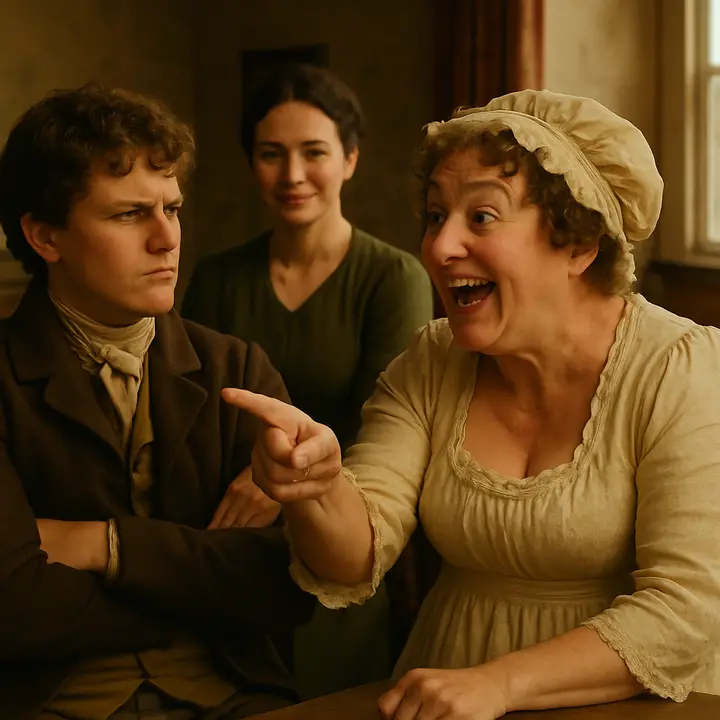
- Young Lucas’s joke about drinking leads to a playful argument with Mrs. Bennet
Chapter 5 in pictures
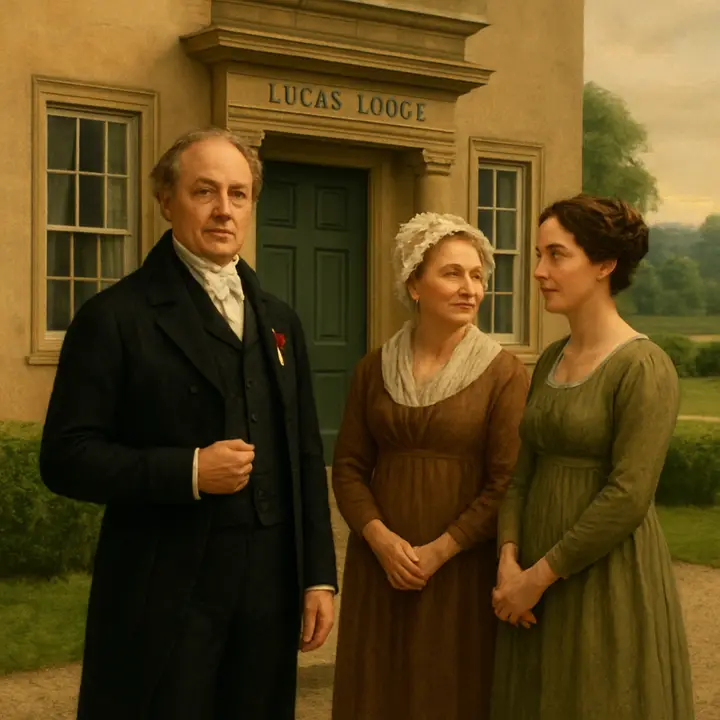
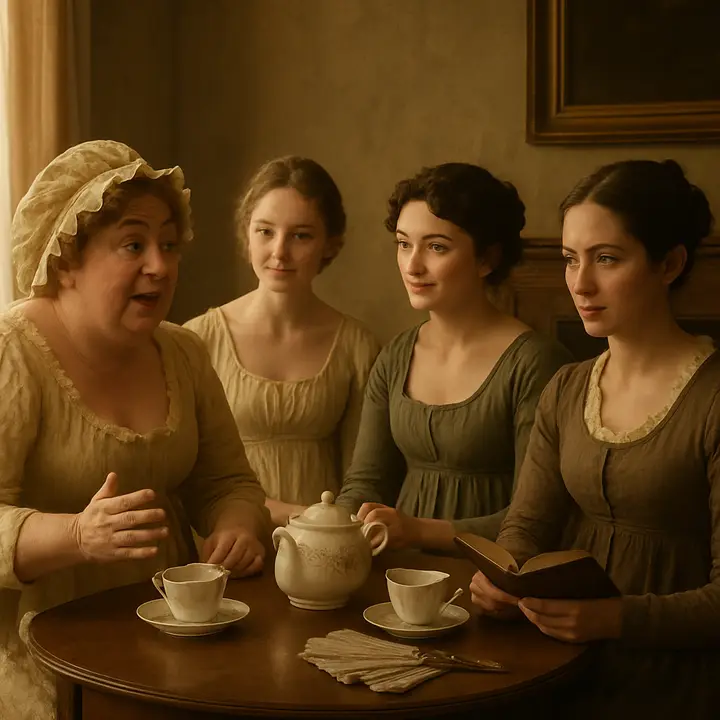
Analysis
This chapter performs several social and narrative functions: it expands the social world beyond Longbourn by introducing Lucas Lodge and its family, and it establishes the local network of gossip that frames character reputations. The exchange about Bingley and Darcy contrasts two models of male comportment—Bingley’s apparent openness and Darcy’s hauteur—while revealing how quickly reputations are formed and transmitted by casual overhearing. Mrs. Bennet’s matchmaking anxieties and Charlotte’s pragmatic friendliness show differing female responses to marriage prospects: Mrs. Bennet’s emotional investment versus Charlotte’s measured commentary. Mary Bennet’s didactic aside about pride and vanity is ironic—her abstract moralizing highlights her role as self-important and lacking social acuity, and it foregrounds pride as a thematic term the novel will examine. Narrative technique is conversational and omnisciently observant, allowing direct speech to disclose character through diction and reaction rather than explicit authorial judgment. The chapter also foreshadows social alignments: Bingley’s favour to Jane and Darcy’s coolness toward Elizabeth will shape future tensions. Small domestic details—the knighthood, leaving trade, talk of hack chaises and carriages, and the boy’s foxhounds remark—illustrate class anxieties and aspirations, reinforcing the novel’s focus on social mobility and the performative aspects of gentility.
Important quotes
“You began the evening well, Charlotte,”
Mrs. BennetMrs. Bennet opens the visit by congratulating Charlotte for being Mr. Bingley’s first choice, starting the talk about dance alliances.
“I believe, ma'am, I may safely promise you never to dance with him.”
Elizabeth BennetElizabeth rejects the idea of dancing with Mr. Darcy, showing her defiant pride and early dislike of his manner.
“Pride relates more to our opinion of ourselves; vanity to what we would have others think of us.”
Mary BennetMary offers a moralizing definition distinguishing pride and vanity, revealing her earnest, bookish manner and the novel’s thematic focus.
Characters in Chapter 5
All chapter summaries ›Characters ›
Read Pride and Prejudice illustrated
Every scene in these notes comes from the Book2Life reader, where the full public-domain text is illustrated as you read, with character portraits and narration. Free in your browser and on iPhone.
