
Mrs. Bennet in Pride and Prejudice
Major character
The anxious, marriage‑obsessed mother of five, constantly scheming to secure advantaged matches for her daughters.
Who is Mrs. Bennet?
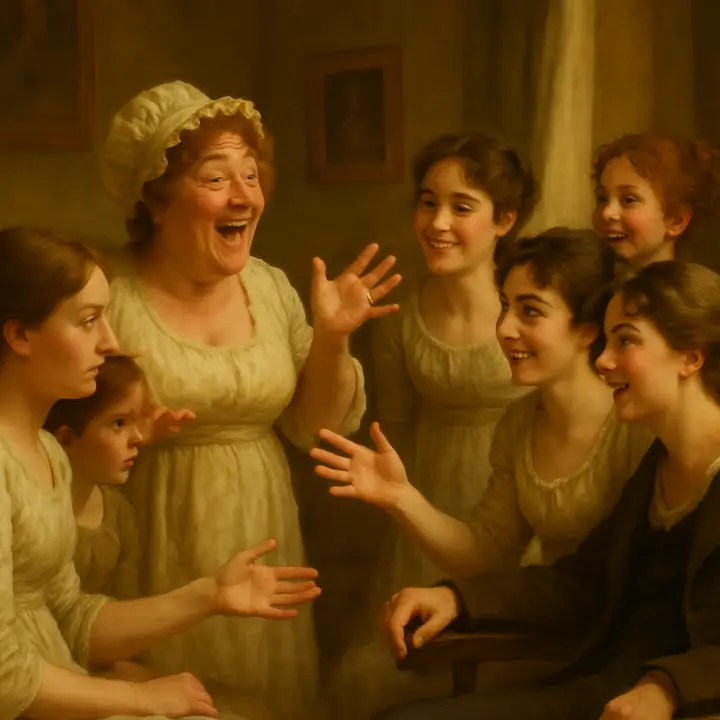
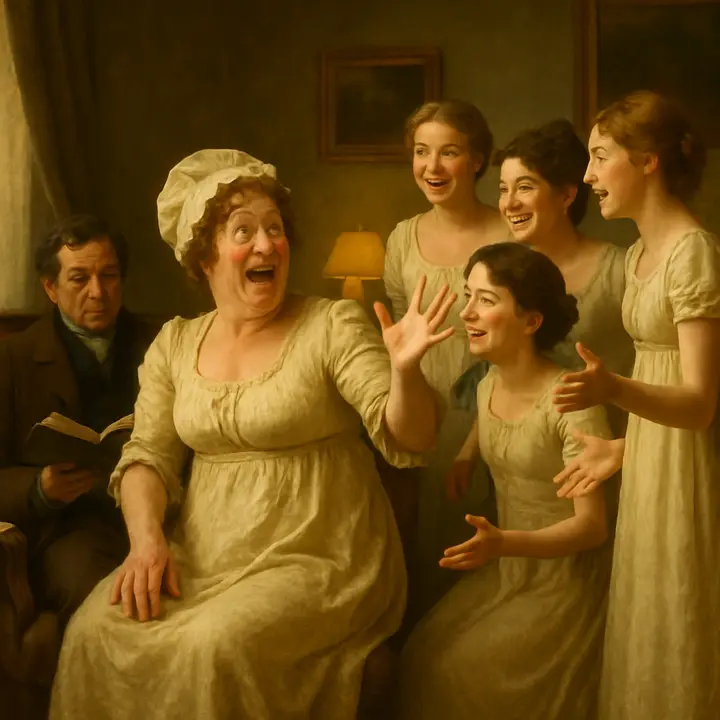
Mrs. Bennet is the excitable, talkative wife of Mr. Bennet and the mother of five daughters at Longbourn. From the first news of Mr. Bingley she presses her husband and daughters toward advantageous introductions and marriages, repeatedly urging social manoeuvres, planning carriages and visits, and loudly celebrating any prospect of a match. Her concerns are practical and immediate—money, status, and the entail on the Bennet estate shape her fears for her daughters’ futures. She propels key social encounters (pushing for Netherfield visits, urging Jane to stay when ill, embracing Mr. Collins’s attentions) and reacts with equal intensity to disasters (Lydia’s elopement) and triumphs (Jane’s and Elizabeth’s engagements). Though often tactless and foolish in manner, her behaviour crystallizes the real economic and social pressures facing women in her world and repeatedly forces other characters to act.
In the book: Mrs. Bennet is the excitable, marriage‑fixated mother of the five Bennet sisters, whose relentless efforts to secure advantageous matches provide much of the novel’s comedy and social commentary. Her anxieties about money, status, and the family estate’s entail sharpen the story’s stakes, often clashing with Mr. Bennet’s irony and Elizabeth’s judgment. Through her fussing, schemes, and unguarded talk, she propels key meetings and misunderstandings while embodying the pressure placed on women to marry well in Regency society.
Personality
- Marriage‑obsessed
- In Chapter 1 she urgently demands Mr. Bennet call on Mr. Bingley so one of their daughters might secure a rich husband.
- Tactless
- At the Netherfield ball (Chapter 18) her loud hopes for Jane’s engagement and Mr. Collins’s pompous moralizing make the family a subject of covert ridicule.
- Anxious
- When Lydia’s elopement is revealed (Chapter 46) she is frantic, alternately imploring Mr. Gardiner to compel a marriage and falling ill with distress.
- Socially ambitious
- She exults at the news of Bingley’s visits and later at Jane’s engagement (Chapters 53–55), immediately calculating household advantages and status.
- Persistent
- After Mr. Collins’s rejected proposal (Chapters 19–20) she repeatedly presses Elizabeth and then Mr. Bennet to change course and secure the match.
Character arc
Mrs. Bennet remains consistent in temperament from her first appearance to the last: anxious, talkative, and preoccupied with marriages and social standing. Early scenes show her frantic scheming to place a daughter with Mr. Bingley and her pleasure at any sign of a match; she loudly orchestrates visits and reacts with impatience when things do not move to her liking. Midway through the narrative her constant preoccupation produces both comic exposure—her family’s awkwardness at social events like the Netherfield ball—and crisis, as Lydia’s elopement throws the household into one of its worst embarrassments and she rapidly alternates between despair and hopeful plans for wedding preparations. By the novel’s end her emotional life remains much the same—she is still easily excited and shallow in judgment—but circumstance has rewarded her anxieties: two daughters are well married, and she basks in the social and material success this brings. Her essential habits do not change; the plot instead reshapes her fortunes, confirming her worldview and providing the domestic comforts she values.
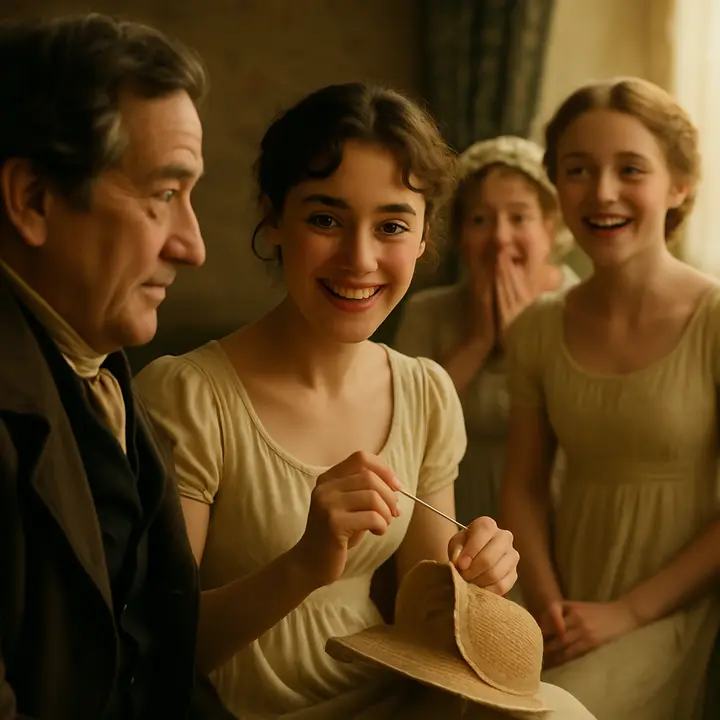
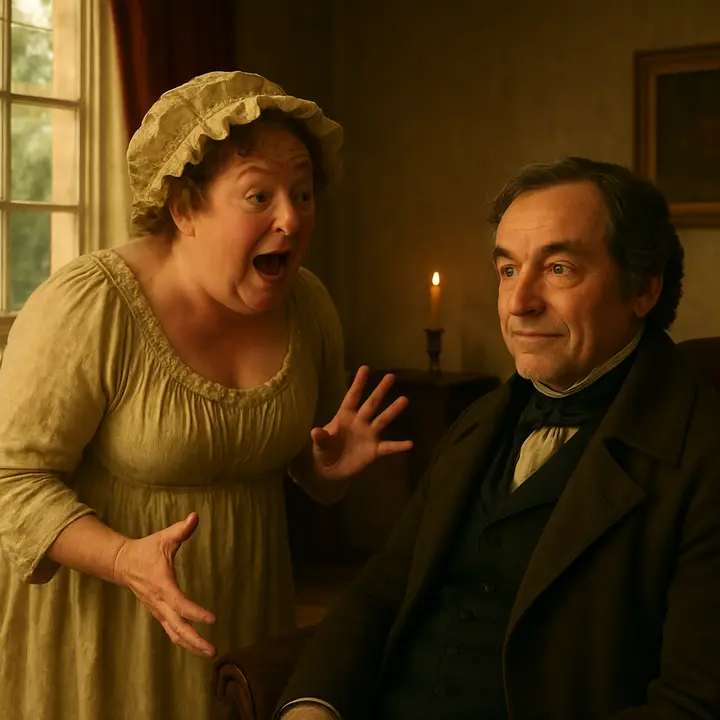
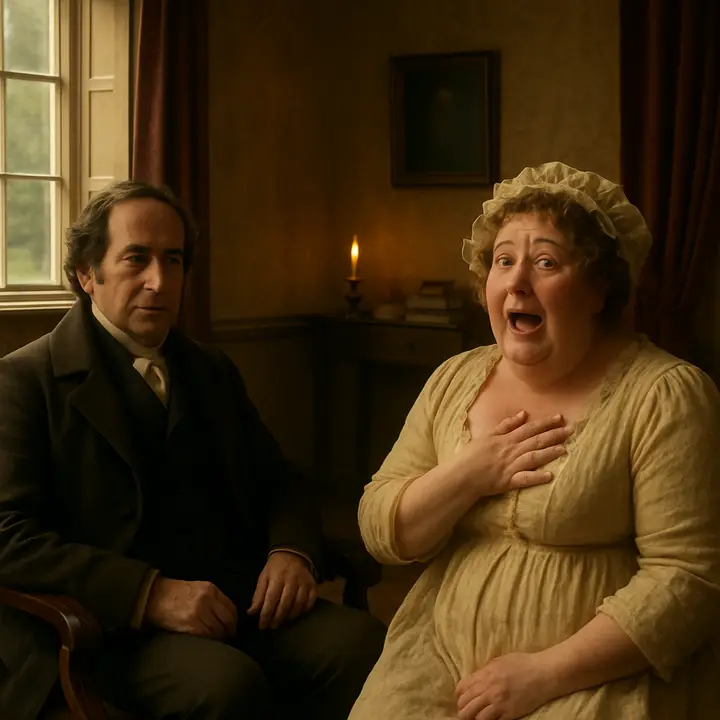
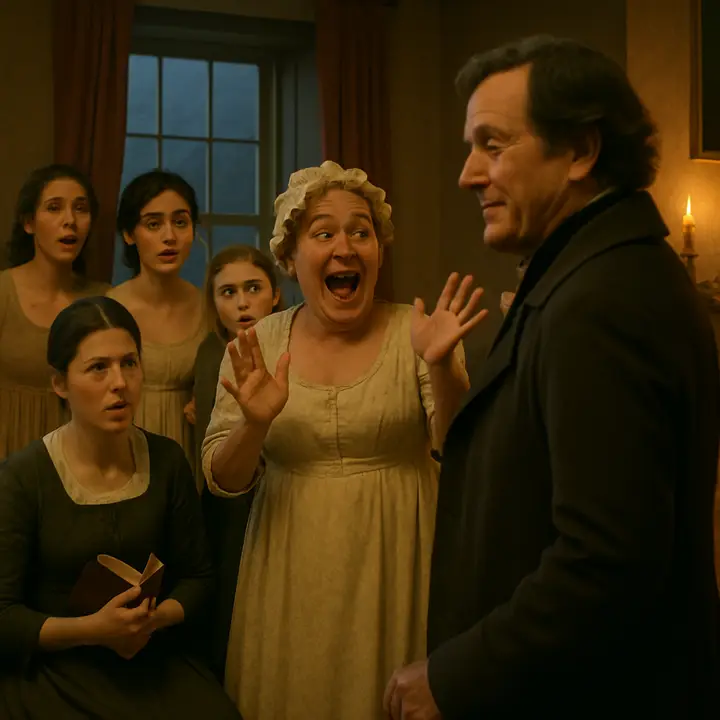
Mrs. Bennet in pictures
Relationships
- Mr. Bennet Her husband, whose ironic detachment and private amusement frequently clash with her nervous insistence on matches.
- Elizabeth Bennet Her second daughter, whom she frets over and sometimes criticises; she fails to understand Elizabeth’s refusals and independent judgment.
- Jane Bennet Her eldest daughter and object of Mrs. Bennet’s hopes for a match with Mr. Bingley; she lavishes attention on Jane’s prospects.
- Lydia Bennet Her youngest and most frivolous daughter, whose elopement plunges Mrs. Bennet into acute distress and frantic planning.
- Mr. Collins A pompous cousin and potential suitor whom she eagerly supports as a suitable match for one of her daughters.
- Mrs. Gardiner Her sister, whose sensible counsel and practical intervention (through Mr. Gardiner) help resolve family crises despite Mrs. Bennet’s loud anxieties.
Quotes by Mrs. Bennet
“When a woman has five grown-up daughters, she ought to give over thinking of her own beauty.”
Chapter 1Mrs. Bennet's exclamation reveals her preoccupation with her daughters' marriages and her pragmatic, social-minded attitude.
“You began the evening well, Charlotte,”
Chapter 5Mrs. Bennet opens the visit by congratulating Charlotte for being Mr. Bingley’s first choice, starting the talk about dance alliances.
“She is a great deal too ill to be moved. Mr. Jones says we must not think of moving her.”
Chapter 9Mrs. Bennet explains why Jane must remain at Netherfield and thanks Bingley for his hospitality.
“The country is a vast deal pleasanter, is not it, Mr. Bingley?”
Chapter 9Mrs. Bennet asserts her preference for country life during a conversation that exposes social tastes and irritates Darcy.
“I cannot bear to think that they should have all this estate. If it was not for the entail, I should not mind it.”
Chapter 23Mrs. Bennet’s panic about the entail reveals her fears about inheritance and her obsession with family status and security.
“He made her an offer in this very room, and she refused him.”
Chapter 25Mrs. Bennet reproaches Elizabeth for refusing Mr. Collins and laments the consequences for the family's marriage prospects and entail.
Why Mrs. Bennet matters
Mrs. Bennet embodies the social pressures on women in Regency England: marriage is primary currency for security, status, and household continuity. Her comic excesses expose the economic realities behind matrimonial schemes and reveal how family reputation and entail constrain private feelings. As a foil to characters like Elizabeth and Mr. Gardiner, she highlights alternative values—domestic ease, social climbing, and immediate comfort—and forces the plot into motion through her urgent matchmaking and panicked responses. Her lack of self‑insight produces humour but also indexes a serious social critique about limited options for women of her class.
Chapters with Mrs. Bennet
- Chapter 1
- Chapter 2
- Chapter 3
- Chapter 5
- Chapter 7
- Chapter 9
- Chapter 10
- Chapter 12
- Chapter 13
- Chapter 14
- Chapter 15
- Chapter 17
- Chapter 18
- Chapter 19
- Chapter 20
- Chapter 21
- Chapter 22
- Chapter 23
- Chapter 24
- Chapter 25
- Chapter 33
- Chapter 36
- Chapter 37
- Chapter 39
- Chapter 40
- Chapter 41
- Chapter 42
- Chapter 44
- Chapter 46
- Chapter 47
- Chapter 48
- Chapter 49
- Chapter 50
- Chapter 51
- Chapter 53
- Chapter 54
- Chapter 55
- Chapter 56
- Chapter 59
- Chapter 61
More Pride and Prejudice characters
 Elizabeth BennetProtagonist
 Jane BennetMajor character
 Mr. BingleyMajor character
 Mr. DarcyMajor character
 Mr. BennetMajor character
 Lydia BennetMinor character
 Mr. CollinsMajor character
 Mr. WickhamMajor character
All chapter summaries ›Characters ›
Read Pride and Prejudice illustrated
Every scene in these notes comes from the Book2Life reader, where the full public-domain text is illustrated as you read, with character portraits and narration. Free in your browser and on iPhone.
