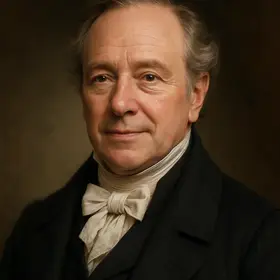
Sir William Lucas in Pride and Prejudice
Minor character
A genial, recently knighted former tradesman and neighbor who delights in society and celebrates his daughter Charlotte’s advantageous marriage.
Who is Sir William Lucas?
Sir William Lucas is a neighbor of the Bennet family who, having retired from trade and received a knighthood, enjoys social life, ceremony, and the comforts of local respectability. He visits Longbourn to discuss the arrival of Mr. Bingley, attends assemblies, and hosts and accompanies small parties; his presence repeatedly helps move introductions and polite conversation along. He takes pleasure in his daughter Charlotte’s engagement to Mr. Collins and proclaims the match a sensible, stabilizing success. Sir William is often ceremonious and slightly pompous in public company—evident at Rosings where he echoes Mr. Collins’s deference to Lady Catherine—but his tone is fundamentally good-humored. He acts as a social bridge between families (bringing news, escorting visitors, and joining visits to Rosings and Hunsford), and he provides a local model of genteel aspiration and contentment with an advantageous domestic settlement for his children.
In the book: A genial neighbor of the Bennet family, Sir William Lucas is a knighted former tradesman who enjoys society and formalities; he often helps facilitate introductions and cordiality within the local community. As the father of Charlotte Lucas, he serves as a social bridge among families in Meryton and provides context for class and ambition in the story without driving the central conflicts.
Personality
- genial
- He arrives at Longbourn cheerfully to announce Charlotte’s engagement and participates warmly in neighborhood talk about Mr. Bingley and the assembly.
- ceremonious
- At Rosings he echoes Mr. Collins’s obsequious praise of Lady Catherine and delights in the formal display of ranks and carriage visits.
- socially ambitious
- He is proud of Charlotte’s prudent match to Mr. Collins and celebrates the advancement it promises for his family.
- supportive father
- He escorts Charlotte and Maria when Elizabeth travels to Hunsford and rejoices in Charlotte’s secure appointment as a mistress of a respectable household.
- conventional
- He values decorum and polite society, repeatedly joining and approving the routines of assemblies, dinners, and visits central to Hertfordshire life.
Character arc
Across his appearances Sir William Lucas remains largely consistent rather than undergoing a dramatic transformation. He first appears as an approving neighbor, offering upbeat reports about Mr. Bingley and the local assembly; his tone is sociable and encouraging. When Charlotte becomes engaged to Mr. Collins, Sir William is delighted and takes visible pride in the match, immediately acting to announce and celebrate it with the Bennets. His short stay at Hunsford and the visit to Rosings show him echoing the deference and ceremony of county society—he is impressed by Lady Catherine and gratified by proximity to rank. Later, he appears again as a convivial host and attendee at Lucas Lodge when events involving Lady Catherine and Mr. Darcy create social disturbance, maintaining his cheerful civility even when his society is viewed as vulgar by others. By the end of the narrative he remains a steady, affable presence: proud of his daughter’s settled position and content in the role of local gentlemanly sociability, a figure who embodies social aspiration and stability rather than personal change.
Sir William Lucas in pictures


Relationships
- Charlotte Lucas Eldest daughter; he is proud of her prudent acceptance of Mr. Collins and celebrates her security in marriage.
- Lady Lucas Wife and companion in local social life; together they visit and host the Bennets and take pride in family standing.
- Maria Lucas Daughter who accompanies him on visits such as the journey to Hunsford, participating in the family's social activities.
- Elizabeth Bennet Neighbor and frequent conversational companion; he brings news and participates in the friendly social exchange around her family.
- Mr. Collins Son-in-law after his marriage to Charlotte; Sir William welcomes the match and echoes Collins’s deference when visiting Rosings.
- Lady Catherine de Bourgh Local aristocratic figure whom he and his party admire and flatter during their visit to Rosings.
Why Sir William Lucas matters
Sir William Lucas represents the social middleground between trade origins and gentility: a man content with a knighthood’s respectability who values ceremony, connections, and secure domestic arrangements. He helps dramatize themes of social aspiration, marriage as economic and social strategy, and the performance of civility. By celebrating Charlotte’s practical marriage and by his eager deference at Rosings, he contrasts with characters who resist social climbing or who judge by inward merit, thereby illuminating how rank, manners, and advantage operate in Hertfordshire society and influence individual choices.
Chapters with Sir William Lucas
More Pride and Prejudice characters
 Elizabeth BennetProtagonist
 Jane BennetMajor character
 Mr. BingleyMajor character
 Mr. DarcyMajor character
 Mrs. BennetMajor character
 Mr. BennetMajor character
 Lydia BennetMinor character
 Mr. CollinsMajor character
All chapter summaries ›Characters ›
Read Pride and Prejudice illustrated
Every scene in these notes comes from the Book2Life reader, where the full public-domain text is illustrated as you read, with character portraits and narration. Free in your browser and on iPhone.
