
Countess Ellen Olenska in The Age of Innocence
Major character
A recently returned American countess whose frankness and troubled marriage unsettle New York society and captivate Newland Archer.
Who is Countess Ellen Olenska?
Countess Ellen Olenska is Mrs. Manson Mingott’s granddaughter, newly returned from an unhappy European marriage and living under her grandmother’s protection. She wants personal autonomy and a life free from hypocritical social constraints, and she contemplates separation from Count Olenski while navigating family pressure and public scandal. Ellen acts with a mixture of impulsive candor and guarded reserve: she shocks New York with her dress and manners at the opera, accepts the van der Luydens’ social management, writes abrupt notes asking Newland to join her, and alternates between seeking counsel and asserting her independence. She forms intense, private confidences with Newland—admitting she stayed because of him, discussing the practical impossibility of escape, and at one point kissing him—yet she ultimately yields to family expectations enough to accept Mrs. Mingott’s shelter and to plan a departure for Europe. Throughout, she balances a yearning for authenticity with pragmatic decisions about reputation, loyalty, and safety.
In the book: We first meet Ellen as the Countess Olenska, newly back in New York after leaving a miserable European marriage. She’s May Welland’s cousin and immediately unsettles the city’s rigid social codes with her frank warmth, bohemian tastes, and refusal to pretend—so Newland Archer gets drawn in to advise her and smooth things over.
Personality
- Forthright
- She greets Newland at the Mingott box with a frank, foreign-flavoured remark that unsettles him (II: The Mingott Box).
- Restless
- She suddenly 'runs away' to the van der Luydens and writes Newland a terse note—'I have run away'—prompting his immediate trip (XIV).
- Vulnerable
- At Skuytercliff she walks upset in a vivid red cloak and confides to Newland in the little Patroon's house before Beaufort appears and breaks the moment (XV).
- Principled
- She refuses the Count’s emissary’s terms and, when urged, explains that she will not be compelled to return unless certain conditions are met (Book 2: A Chance Meeting; Rivière's Appeal).
- Ambiguous
- She alternately invites intimacy—kissing Newland in a carriage—and insists on returning to family control, keeping her true intentions uncertain (Book 2, Chapter 29; Chapter 33).
Character arc
Ellen first appears as a striking, independent figure newly escaped from a miserable marriage, openly flouting New York’s codes and unsettling onlookers at the opera. Early on she seeks refuge and tentative reintegration—accepting Mrs. Mingott’s protection, responding to the van der Luydens’ invitation, and soliciting Newland’s counsel about divorce—while also testing impulses toward intimacy with men like Beaufort and, most precariously, Newland Archer. Her middle acts show oscillation: moments of impulsive flight (running away, sudden invitations to meet), honest confessions to Newland (admitting she stayed because of him), and practical refusals of coercion (declining the Count’s terms). Ultimately she chooses to submit to family arrangements enough to plan a European departure; she participates in a ceremonious farewell dinner and departs under the sheltering authority of her kin. Thus her trajectory moves from rebellious autonomy toward a constrained retreat that preserves personal dignity but sacrifices the radical independence she initially sought, leaving tensions between desire and duty unresolved.
Relationships
- Mrs. Manson Mingott Grandmother and protector who shelters Ellen, defends her in society, and offers financial support.
- Newland Archer Confidant and emotional focal point; they share intimate conversations, mutual influence, and a charged, unconsummated attraction.
- Count Olenski Estranged husband whose presence and potential legal claims create the central dilemma of Ellen's desire for separation.
- Julius Beaufort A worldly suitor and social companion whose pursuit disturbs Ellen and complicates her public reputation.
- Mr. van der Luyden Representative of established New York order who, with his wife, intervenes to manage Ellen’s social rehabilitation.
- M. Rivière An emissary linked to the Count who ultimately sympathizes with Ellen and appeals to Newland to resist forcing her return.
Quotes by Countess Ellen Olenska
“We did use to play together, didn't we?”
IIEllen greets Archer with a memory that momentarily lightens the mood but also jars him by invoking an informal intimacy in public.
“"I want you to talk to me about May,"”
VIIIThe Countess directes the conversation toward May, initiating a personal exchange with Archer that reveals her curiosity and warmth.
“I want to be free; I want to wipe out all the past.”
XII.The Countess tells Archer bluntly that she desires to cast off her former life and start anew, prompting his warning about social consequences.
“You know painters, then? You live in their milieu?”
XII.She asks Archer about his acquaintance with artists, revealing her interest in the artistic world he admires and distinguishing her tastes from New York society.
“"Do you think," she asked, glancing toward the stage, "he will send her a bunch of yellow roses tomorrow morning?"”
XIIIEllen's casual question unexpectedly reveals she recognizes the anonymous roses Archer sent, creating a moment of intimate connection.
“"I have done what you wished—what you advised," she said abruptly.”
XIIIEllen acknowledges following Archer's counsel to abandon the idea of seeking a divorce, marking a significant resolution in their private exchange.
Why Countess Ellen Olenska matters
Ellen embodies the novel’s clash between individual freedom and social constraint. Her presence exposes the town’s hypocrisies—its appetite for scandal, its punitive conformity, and the gendered limits on female autonomy. Through her choices and hesitations, the narrative probes whether authenticity can survive within a reputation-driven community and whether personal desire can be reconciled with familial duty. Ellen’s moral firmness coupled with pragmatic retreat dramatizes the cost of integrity in a society that demands performance over truth, making her central to the book’s exploration of sacrifice, social pressure, and the loss of possibility.
Chapters with Countess Ellen Olenska
More The Age of Innocence characters
 Newland ArcherProtagonist
 May WellandMajor character
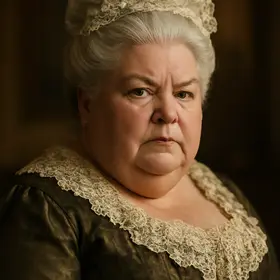 Mrs. Manson MingottMajor character
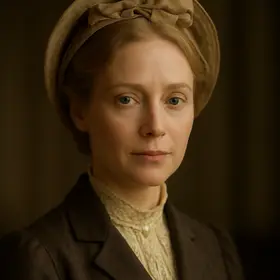 Mrs. WellandMajor character
 Julius BeaufortMajor character
 Lawrence LeffertsMinor character
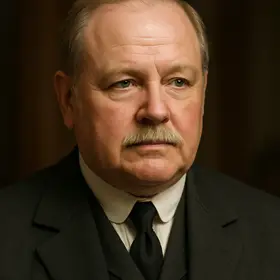 Mr. WellandMinor character
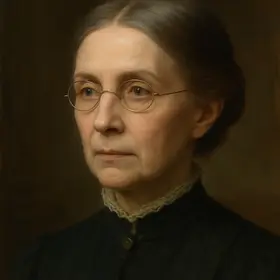 Mrs. ArcherMajor character
All chapter summaries ›Characters ›
Read The Age of Innocence illustrated
Every scene in these notes comes from the Book2Life reader, where the full public-domain text is illustrated as you read, with character portraits and narration. Free in your browser and on iPhone.
Read The Age of Innocence free
