
Newland Archer in The Age of Innocence
Protagonist
A well-born New York lawyer torn between duty to his social world and an awakening passion for Countess Ellen Olenska.
Who is Newland Archer?
Newland Archer is a young, tasteful lawyer engaged to May Welland and comfortably embedded in Old New York society. Early on he takes pride in the predictable, decorous future marriage he imagines with May, but the arrival of Countess Ellen Olenska disturbs his certainties. Intrigued and later emotionally moved by Ellen, Archer alternates between defending her against gossip, advising her about divorce, and seeking intimate, private encounters—visiting her rooms, sending roses, and meeting her at museums, on excursions, and in Boston. He negotiates family expectations and legal pressures (Letterblair, the Mingotts, the van der Luydens) while trying to protect Ellen and temper scandal. Despite several moments of near-confession and an impulsive vision of running away, Archer ultimately marries May in a highly ritualized society wedding. After marriage he experiences a deep interior estrangement, intermittent secret meetings with Ellen, and a final, thwarted yearning in Paris when he hesitates to follow her. Throughout, he oscillates between action and restraint, caught between social duty and an unconsummated longing.
In the book: We first meet Newland Archer at the opera, a well-born young lawyer who moves easily through New York’s most proper drawing rooms. He’s recently engaged to May Welland and prides himself on good taste, but the sudden arrival of May’s cousin, the scandal-shadowed Countess Ellen Olenska, puts his beliefs—and his poise—curiously on alert.
Personality
- Conventional
- He performs social rituals dutifully—betrothal visits, the wedding at Grace Church, and attendance at van der Luyden dinners—while priding himself on good taste.
- Romantic
- He repeatedly imagines an alternative life with Ellen—sending yellow roses, planning private excursions, and picturing leaving society behind in a carriage on Fifth Avenue.
- Ambivalent
- He both defends Ellen against gossip (at dinner with Sillerton Jackson) and counsels her to abandon divorce because of New York's moral code, showing divided loyalties.
- Introspective
- Alone in his library or at the opera he constantly reflects on marriage, the 'blankness' of May, and his own compromises after reading Ellen's letters or seeing her in a box.
- Impulsive
- He makes sudden journeys—telegraphs to Skuytercliff, sails to St. Augustine, hastens to Boston—and at one moment leaps from a carriage and walks away after Ellen's kiss.
Character arc
Newland first appears as a comfortably confident, socially adept young lawyer who expects an orderly life with May Welland. Ellen Olenska’s arrival unsettles him: curiosity becomes protection (he defends her at the Archer dinner and persuades others to be prudent), then friendship, and finally a passionate attachment that repeatedly challenges his sense of propriety. He offers practical counsel about divorce, sends roses, and risks impulsive trips to be near her; in Boston and on the ferry to Jersey City their intimacy intensifies to a near-break with his engagement. Yet family ties, ritual expectations, and his own hesitations prevent decisive rupture. He marries May, performs the conventional duties of husband and guest in society, and experiences a growing inner distance and regret. Secret meetings with Ellen continue, but he refuses or fails to convert longing into a lasting break. In Paris, faced with the opportunity to join Ellen, he hesitates and withdraws, leaving him changed chiefly in his interior resignation: he moves from active possibility to a lifetime of what might have been.
Relationships
- May Welland His fiancée and then wife; she embodies the conventional, domestic future he accepts and later feels alienated within.
- Countess Ellen Olenska The woman who unsettles his life—confidante, object of pity and love, and the focal point of his ethical and emotional conflicts.
- Mrs. Manson Mingott Matriarch whose protection of Ellen draws Newland into the family’s affairs and whom he visits to discuss Ellen's situation.
- Mr. Letterblair Senior partner who involves Archer in the legal and social question of Ellen’s proposed divorce, pressing Archer's professional judgment.
- Julius Beaufort A worldly, socially linked man whose presence with Ellen provokes Archer’s jealousy and distrust.
- M. Rivière An intellectually stimulating outsider whose Parisian talk and later plea about Ellen contrasts with Archer’s conventional circle and stirs his doubts.
Quotes by Newland Archer
“The worst of it is that I want to kiss you and I can't.”
IIIArcher confesses his impatience and the tension between public decorum and private desire in the conservatory.
“Of course you know already—about May and me," he said, answering her look with a shy laugh.”
IV.Archer tells Countess Olenska the engagement news directly, showing his awkwardness and the intimacy of their prior acquaintance.
“Women ought to be free—as free as we are," he declared, making a discovery of which he was too irritated to measure the terrific consequences.”
5Newland bursts out in defense of Olenska and criticizes social hypocrisy, revealing his sympathy and restlessness with conventional judgment.
“"Women should be free—as free as we are,"”
Chapter 6This line crystallises Newland's liberal sentiment and the gender double standard he is beginning to question.
“"Hang Ellen Olenska!"”
Chapter 6A frustrated exclamation that shows Newland's impatience with how the Countess's case complicates his hopes for an uncomplicated engagement.
“"I'm so sorry," he said impulsively; "but you are among friends here, you know."”
VIIIArcher's sympathetic response to the Countess's awkward reminder about cultural differences, showing his desire to reassure her.
Why Newland Archer matters
Newland embodies the novel’s central conflict between social obligation and individual desire. His tastes, manners, and law-abiding instincts represent the stabilizing codes of Old New York, while his attraction to Ellen exposes the costs of those codes: emotional repression, self-betrayal, and the sacrifices that uphold social order. Through his interior struggle—defending propriety while yearning for freedom—the book interrogates whether personal authenticity can survive in a world of ritualized innocence and whether moral courage is possible without violating the ties that define one’s identity.
Chapters with Newland Archer
More The Age of Innocence characters
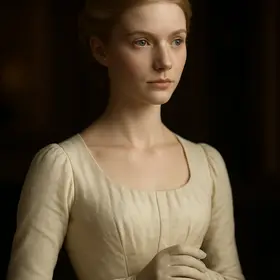 May WellandMajor character
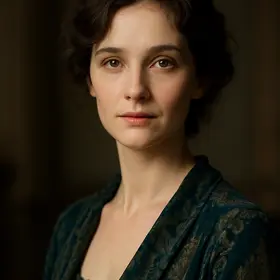 Countess Ellen OlenskaMajor character
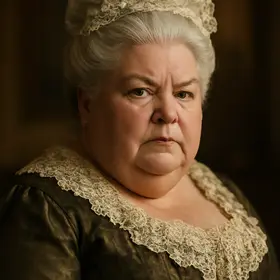 Mrs. Manson MingottMajor character
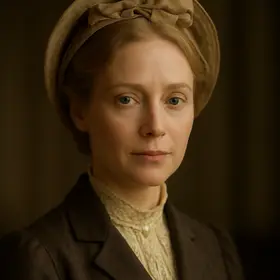 Mrs. WellandMajor character
 Julius BeaufortMajor character
 Lawrence LeffertsMinor character
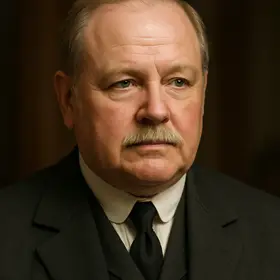 Mr. WellandMinor character
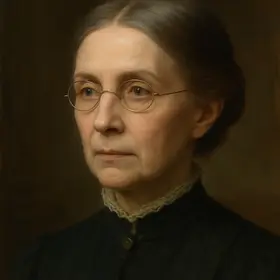 Mrs. ArcherMajor character
All chapter summaries ›Characters ›
Read The Age of Innocence illustrated
Every scene in these notes comes from the Book2Life reader, where the full public-domain text is illustrated as you read, with character portraits and narration. Free in your browser and on iPhone.
Read The Age of Innocence free
