
Lawrence Lefferts in The Age of Innocence
Minor character
A fastidious social arbiter who polices New York manners and voices whispered judgments about breaches of propriety.
Who is Lawrence Lefferts?
Lawrence “Larry” Lefferts is introduced at the opera as one of the city’s arbiters of form, sitting among the best seats and reacting with audible disapproval when Countess Olenska appears. He functions mostly as a social censor: he notices and comments on breaches of etiquette, spreads or voices gossip, and helps shape the room’s consensus about what is permissible. Lefferts surfaces repeatedly in public gatherings — the opera, the theatre, van der Luyden events, and the Western Union office — always alert to appearances and quick to register scandal. He is implicated by Newland as a figure who stirs and amplifies social trouble, and his brusque, often comic interventions (as when he mentions Mrs. Mingott’s stroke and rumours about Beaufort at Western Union) remind the reader how public opinion is manufactured in this society. Lefferts rarely acts on his own beyond speaking and signaling disapproval; his power is social: a raised eyebrow, a whispered remark, an amused observation that helps set the tone for others.
In the book: We first meet Lawrence “Larry” Lefferts at the opera among New York’s best seats, already acting like the city’s authority on “form.” He matters because he polices manners and whispers judgments—especially about Countess Olenska—shaping how the room decides what’s acceptable and what isn’t.
Personality
- Fastidious
- At the opera he reacts with evident disapproval when the Countess Olenska appears in a décolleté dress, policing taste from his box.
- Gossipy
- He exchanges low-toned comments about the Mingott box on Opera Night and later mentions rumours about Beaufort at the Western Union office.
- Judgmental
- His surprise and whispered criticism at the Countess’s presence at Mrs. Mingott’s box mark him as ready to judge social breaches.
- Conventional
- He aligns with the prevailing concern for propriety at van der Luyden events and reacts predictably to disturbances of social form.
Character arc
Lefferts remains essentially unchanged through his appearances: he first appears at the opera as a ready critic of the Countess’s breach of taste and continues to function chiefly as a voice of social censure. When Newland later accuses him of stirring up trouble to mask other indiscretions, Lefferts does not visibly reform or repent; he continues to sit in prominent boxes, comment on scandal, and be noticed when society’s attention tilts toward impropriety. His interventions at the theatre and in public places — noting Beaufort’s company with the Countess, speaking of Mingott’s stroke and Beaufort’s collapse at Western Union — keep him positioned as a reporter and moral commentator rather than an active instigator. The narrative uses him consistently as a stable presence of opinion and etiquette: his role is to register and reflect the tribe’s displeasure or curiosity rather than to undergo personal transformation, leaving him a steady instrument of public judgment from first to last.
Relationships
- Newland Archer Frequently observed by and interacting with Newland; Newland notices Lefferts’s reactions and at one point accuses him of stirring trouble.
- Countess Ellen Olenska Lefferts publicly reacts to and judges the Countess’s appearances, marking her as a breach of the social order he upholds.
- Mr. Sillerton Jackson Often shares the boxes and social commentary with Jackson, appearing together at the opera and other gatherings.
- Julius Beaufort Is present in the same theatrical boxes as Beaufort and reacts to Beaufort’s associations with the Countess.
- Mrs. Manson Mingott His remarks and observations take place in contexts that center on Mrs. Mingott’s household and its social ripples.
- May Welland Lefferts’s disapproval of breaches of taste frames moments when May appears in society, reinforcing the standard of propriety surrounding her.
Quotes by Lawrence Lefferts
“It's an unlikely name for a New York telegraph office; at least in this quarter,”
Book 2, Chapter 28Lefferts remarks on the foreignness of Olenska's name while Archer is at the telegraph office, signaling social othering and the casualness of gossip.
Why Lawrence Lefferts matters
Lefferts represents the social machinery that enforces and amplifies New York’s codes of propriety. By voicing and embodying whispered judgments, he helps make private scandals public and shapes the community’s responses to deviation. His constancy and lack of inward change underline how the city’s moral order is sustained less by law than by recurring, performative commentary. In this way Lefferts helps dramatize the novel’s themes of social surveillance, the power of appearance, and the pressure of communal opinion on individual desire.
Chapters with Lawrence Lefferts
More The Age of Innocence characters
 Newland ArcherProtagonist
 May WellandMajor character
 Countess Ellen OlenskaMajor character
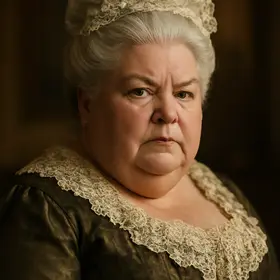 Mrs. Manson MingottMajor character
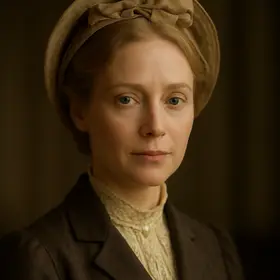 Mrs. WellandMajor character
 Julius BeaufortMajor character
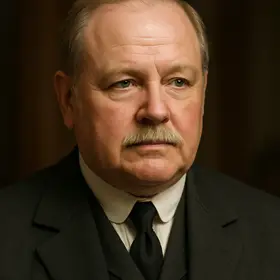 Mr. WellandMinor character
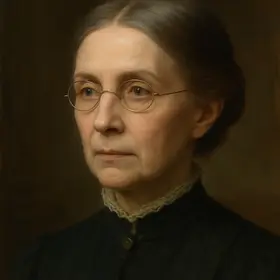 Mrs. ArcherMajor character
All chapter summaries ›Characters ›
Read The Age of Innocence illustrated
Every scene in these notes comes from the Book2Life reader, where the full public-domain text is illustrated as you read, with character portraits and narration. Free in your browser and on iPhone.
Read The Age of Innocence free
