
May Welland in The Age of Innocence
Major character
A polished, seemingly innocent young woman from the Welland family who becomes Newland Archer’s fiancée and then wife.
Who is May Welland?
May Welland is introduced as Newland Archer’s fresh-faced fiancée, the embodiment of her family’s social ideals: propriety, calm, and reassuring conventionality. She appears at public events (the opera, Beaufort’s ball) as the picture of youthful domestic promise and participates in the rituals that bind New York society—betrothal visits, formal dinners, and the wedding at Grace Church. May shows an instinct for courtesy toward relatives (urging Archer to tell Ellen of the engagement), an easy acceptance of household arrangements, and an ability to manage social niceties (helping with the telegram to fetch Ellen). She also displays a surprising moral imagination in private—on the St. Augustine walk she raises, calmly and courageously, the possibility that Archer might have a prior attachment—then generously accepts his pledge. After marriage she remains composed and attentive, revealing at the farewell dinner that she is expecting a child, and continues to perform the reassuring domestic role that anchors Archer even as his inner life grows conflicted.
In the book: We meet May as Newland Archer’s fresh-faced fiancée, a polished young woman from an old New York family who embodies everything proper and reassuring in their tight social world. She matters because her engagement anchors Newland to the expectations of their set just as a more complicated relative arrives and unsettles the room.
Personality
- Composed
- She receives the engagement announcement and later reads Ellen’s letter with calm, steady behavior at the van der Luyden opera night.
- Conventional
- She insists on social propriety—refusing elopement as 'vulgar' during the Park walk and participating in the formal betrothal rituals.
- Generous
- In St. Augustine she imagines and offers to yield any prior pledge, showing willingness to sacrifice for Archer’s peace of mind.
- Observant
- May perceives tensions around Ellen and quietly tells Archer she has had a 'real talk' with her cousin, then later reveals Ellen’s plans to go to Europe.
- Socially skilled
- She organizes and participates in the Welland household’s handling of Ellen’s arrival and writes the telegram to fetch her at Mrs. Mingott’s request.
Character arc
May first appears as the radiant and reassuring fiancée whose polished innocence seems to stabilize Newland’s social life. Early on she is the public emblem of a predictable, proper future—delighting in lilies-of-the-valley, taking part in betrothal visits, and smoothly navigating society’s rituals. In private moments she surprises Archer with moral courage and a rare imaginative sympathy: in St. Augustine she calmly confronts the possibility of his divided loyalty and offers him the right to his past without bitterness. After their wedding she embodies the settled domestic routines Archer both cherishes and resents; she performs her role with composure and graciousness at the Mingott and van der Luyden entertainments and at Ellen’s farewell dinner. Though she briefly shows an interior depth—knowing enough to speak with Ellen and later revealing her pregnancy—she ultimately remains the social constant rather than a catalyst for radical change. By the end of the chapters she has not been transformed into a less conventional figure; instead, she consolidates her position as the anchor of Newland’s social world even as his inner life shifts away from that stability.
Relationships
- Newland Archer Her fiancé and then husband; she is devoted, calmly candid, and the domestic center of his social life.
- Mrs. Welland Her mother; they share household and social responsibilities and Mrs. Welland praises May’s composure.
- Mrs. Manson Mingott A powerful family relation whose salon and protections shape May’s social milieu and who involves May in family decisions about Ellen.
- Countess Ellen Olenska Her cousin; May treats Ellen with courteous acceptance, speaks privately with her, and later relays Ellen’s decisions to Newland.
- Mrs. Archer Her mother-in-law by marriage; Mrs. Archer and May interact within the rituals and expectations of New York society.
- Julius Beaufort An object of household gossip and scandal around which May must help navigate social responses alongside her family.
Quotes by May Welland
“"You see I did as you asked me to," she said.”
IIIMay reassures Archer that she followed his wishes about the engagement announcement, showing her sympathetic, dutiful character.
“You mustn't think that a girl knows as little as her parents imagine.”
XVI.May asserts her awareness and explains why she has noticed signs that led her to question Archer about another attachment.
“If that is it—is there some one else?”
XVI.May directly confronts Archer with the fear underlying her earlier, more general remarks, forcing an unanticipated emotional reckoning.
“Granny's telegram successful. Papa and Mamma agree marriage after Easter. Am telegraphing Newland. Am too happy for words and love you dearly. Your grateful May.”
Chapter 18The telegram abruptly fixes May and Newland's wedding after Easter, collapsing Archer's private hopes into public obligation.
“"But none ever can happen now, can it, Newland, as long as we two are together?"”
Book 2, Chapter 19May's radiant assurance to Newland in the brougham expresses her naive optimism and the blissful unity she believes marriage secures.
“"It's just our luck beginning—the wonderful luck we're always going to have together!"”
Book 2, Chapter 19May's parting exclamation as they drive off toward the van der Luydens' house underscores her cheerful, untroubled faith in their future.
Why May Welland matters
May represents the social code of 'innocence'—trained, genteel, and stabilizing—against which the novel measures desire, individuality, and social constraint. As the reassuring center of Newland’s public life, she makes visible how civility and propriety can both protect and confine. Her composed sacrifices and willingness to maintain appearances highlight the moral economy of their circle: personal feeling is subordinated to family reputation and ritual. Through May the book explores how social roles are sustained by small acts of discretion and how the apparent simplicity of 'niceness' contains complex moral power over intimate lives.
Chapters with May Welland
More The Age of Innocence characters
 Newland ArcherProtagonist
 Countess Ellen OlenskaMajor character
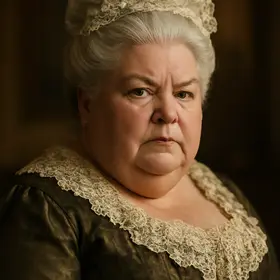 Mrs. Manson MingottMajor character
 Mrs. WellandMajor character
 Julius BeaufortMajor character
 Lawrence LeffertsMinor character
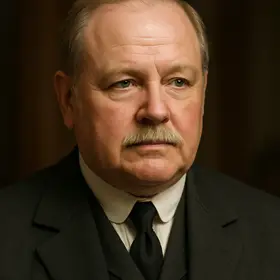 Mr. WellandMinor character
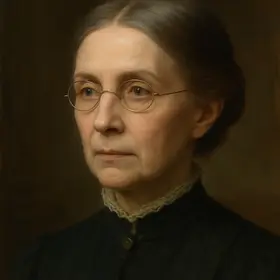 Mrs. ArcherMajor character
All chapter summaries ›Characters ›
Read The Age of Innocence illustrated
Every scene in these notes comes from the Book2Life reader, where the full public-domain text is illustrated as you read, with character portraits and narration. Free in your browser and on iPhone.
Read The Age of Innocence free
