
Lord de Winter in Twenty Years After
Major character
An English peer and Royalist envoy who aids the Stuart cause and connects the musketeers to English politics.
Who is Lord de Winter?
Lord de Winter is an English nobleman acting as a loyal envoy and intermediary for King Charles I and Queen Henrietta Maria. He arrives in France carrying a letter from Naseby that warns of the king’s peril and volunteers to seek allies. De Winter comforts and advises the queen, offers tangible tokens and funds to catalyze action, and recruits former comrades (notably Athos and Aramis) to attempt an English mission. In Paris and Boulogne he moves with prudence, arranging clandestine departures and coordinating logistics for the voyage to England. De Winter also bears a painful personal connection to past intrigues: he recognizes and is confronted by Mordaunt, the presumed son of Milady, who accuses him of complicity in his mother’s death. De Winter endures that charge with restrained dignity yet cannot avoid the violent reckoning—he leads a cavalry action to shield the king and is murdered by Mordaunt in the course of the escape attempt. Across these events he functions as the bridge between the French musketeers and the English royal cause, motivated by duty, loyalty, and a private stake in the Milady affair.
In the book: Lord de Winter is an English peer and the former brother-in-law of Milady de Winter, appearing as a staunch Royalist connected to the English Civil War plotline. He serves as an important ally and contact for the musketeers abroad, tying their French adventures to English politics. Defined by loyalty, prudence, and a personal stake in past intrigues, he helps propel the international dimensions of the story without dominating its central arc.
Personality
- Loyal
- He carries Charles I’s letter to the queen, volunteers to find allies, and later fights to protect the king at Newcastle.
- Prudent
- He arranges clandestine plans for Athos and Aramis to leave France and selects a trusted inn and discreet routes at Boulogne.
- Resolute
- Despite omens and threats, he leads his regiment into the fray to cover the king’s flight at dawn near Newcastle.
- Burdened
- He is visibly shaken and collapses into a chair after the violent confrontation with his nephew Mordaunt in his hotel room.
- Diplomatic
- He calmly negotiates with the queen and marshals favors—offering the diamond cross and the order of St. Michael—to secure help.
Character arc
Lord de Winter enters the narrative as a composed, duty-bound envoy who brings urgent news from Naseby and pledges to find support for the king. Early on he acts as a catalyst: comforting the queen, proposing old comrades as potential rescuers, and organizing covert travel that reunites the musketeers with the English cause. Personal history intrudes when Mordaunt—Milady’s son—appears and openly accuses him; De Winter answers with calm lists of the woman’s crimes but is palpably shaken by the confrontation. He continues to discharge his duties, escorting and coordinating the mission to England and taking part in the king’s defense. His final development is tragic and direct: leading men in a desperate charge to enable the king’s flight, he is recognized and mortally shot by Mordaunt. Thus his trajectory moves from deliberate diplomat and facilitator to frontline defender who pays with his life, his private burden (the Milady legacy) culminating in the personal vengeance that causes his death.
Relationships
- Charles I De Winter is a faithful envoy and military supporter sent by Charles and charged with seeking aid and protecting the king.
- Henrietta Maria He acts as the queen’s confidant and intermediary, bringing the king’s letter and arranging efforts to secure her husband’s safety.
- Athos An ally and recruit: De Winter locates Athos in Paris and persuades him to join the mission to England.
- Mordaunt His nephew by blood and the avenger of Milady, Mordaunt confronts De Winter over his mother’s fate and ultimately kills him.
- Aramis A cooperating comrade who travels and fights alongside De Winter during the effort to defend and rescue the king.
- D'Artagnan A necessary contact in France and part of the wider musketeer network De Winter uses to coordinate travel and support.
Quotes by Lord de Winter
“I once spoke to you of four men.”
Chapter 39De Winter suggests that four devoted men from his past might rescue the king, giving the queen renewed hope.
“I am not your uncle, I know you not.”
Chapter 40De Winter denies kinship and orders Mordaunt away, attempting to end the harassment.
“My God, I thank Thee that he knows me only.”
Chapter 40After Mordaunt departs, De Winter collapses, relieved only that the young man does not yet know the whole truth about him.
“He is avenged!"”
Chapter 56Winter utters these words as Mordaunt fatally shoots him, signaling the personal revenge that cuts the escape short.
Why Lord de Winter matters
Lord de Winter embodies the international stakes that link the musketeers’ personal loyalties to larger political conflicts: the English Civil War and the fragility of monarchical refuge. His presence turns private remembrance of Milady into a public danger and ties personal vendetta to the fate of kings. Through De Winter the novel explores themes of duty versus self-preservation, the moral cost of past deeds, and how private histories can have lethal public consequences. His death underscores the novel’s recurring idea that past sins and unresolved relationships can erupt into violence even amid high political drama.
Chapters with Lord de Winter
More Twenty Years After characters
 PorthosMajor character
 AthosMajor character
 AramisMajor character
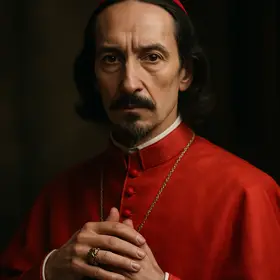 Cardinal MazarinAntagonist
 GrimaudMajor character
 MordauntAntagonist
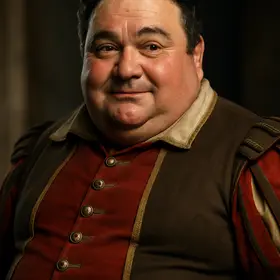 MousquetonMinor character
 PlanchetMajor character
All chapter summaries ›Characters ›
Read Twenty Years After illustrated
Every scene in these notes comes from the Book2Life reader, where the full public-domain text is illustrated as you read, with character portraits and narration. Free in your browser and on iPhone.
