Prince de Condé in Twenty Years After
Major character
A powerful prince whose movements and presence shape military and political maneuvering during the Fronde.
Who is Prince de Condé?
Prince de Condé appears as a commanding, mobile presence whose decisions and presumed whereabouts drive troop movements and fuel political rumor. When armies alter course because "the prince has moved," his military authority directly affects younger nobles and captains on campaign. In Parisian political chaos his return becomes a subject of rumor—Madame de Longueville is said to have revealed it—and that rumor contributes to talk among captains and sheriffs about seizing the king to shield him from hostile advisors. Most concretely, Anne of Austria meets with the prince through the night as she plots to carry off the king and strike at Paris, signaling that Condé is a key ally or instrument in the crown’s desperate countermoves. Even when not on stage, his name shapes the choices and anxieties of other characters (soldiers, Raoul de Bragelonne, court factions), marking him as a pivot between military force and royal strategy.
Personality
- Commanding
- In Chapter 30 the troop alters course after learning "the prince has moved," showing that his movements direct military deployments.
- Influential
- In Chapter 49 rumor of the prince's return unsettles captains and sheriffs and prompts discussion of seizing the king to protect him from advisers.
- Elusive
- Characters repeatedly react to his presumed presence—Raoul has gone to meet him and later is noted as not having returned (Chapter 77), emphasizing his intermittent visibility.
- Trusted by the crown
- Anne of Austria meets with the prince through the night to plan carrying off the king (Chapter 49), indicating the queen places serious confidence in him.
- Catalytic
- His rumored return becomes political fuel in Paris, contributing to plots and countermoves between Frondeurs and the crown (Chapter 49).
Character arc
Prince de Condé functions less as a gradually changing personality and more as a shifting locus of action and expectation. Early in his appearances his mere movement redirects columns and puts junior nobles and their tutors on altered routes (Chapter 30), presenting him as an active military commander whose decisions have immediate tactical consequences. As unrest in Paris escalates, his name returns as a political lever: rumors of his return (Chapter 49) stoke debate among captains and sheriffs about drastic protections for the king and feed Anne of Austria’s desperate plans. By the time other characters search for missing friends and question loyalties (Chapter 77), Condé remains intermittently present—someone others go to see, someone whose presence can alter plans—but he does not undergo a dramatized personal transformation within the chapter notes. Instead his arc is functional: from mover of troops to linchpin in royal countermoves, remaining a powerful, sometimes unseen force whose choices and reputation shape the story’s events rather than being reshaped by them.
Relationships
- Anne of Austria She meets with the prince through the night to plot carrying off the king, indicating close tactical cooperation.
- Raoul de Bragelonne Raoul departs to meet the Prince and other characters later worry about Raoul's absence after that meeting.
- Madame de Longueville Rumor credits her with revealing the prince's return, making her a conduit of information about him.
- Broussel Broussel's popular triumphs form the political backdrop that makes the prince's return and possible seizure of the king subjects of urgent debate.
- Captains and sheriffs They discuss seizing the king to protect him from hostile advisers upon news of the prince's return, showing their dependence on his authority.
- Duke of Beaufort As one of the leading nobles involved in the same unrestful politics, Beaufort occupies the same sphere of factional maneuvering as Condé (presence implied through shared political context).
Why Prince de Condé matters
Prince de Condé embodies the intersection of military power and dynastic survival during the Fronde. His movements reconfigure armies and his rumored presence reshapes political calculation in Paris; by becoming the object of rumor and the queen’s confidences he highlights themes of authority, loyalty, and the reliance of monarchy on aristocratic force. Condé’s role shows how individual nobles can be both protectors of the crown and independent power centers whose agency complicates the relationship between popular unrest and royal command.
Chapters with Prince de Condé
More Twenty Years After characters
 PorthosMajor character
 AthosMajor character
 AramisMajor character
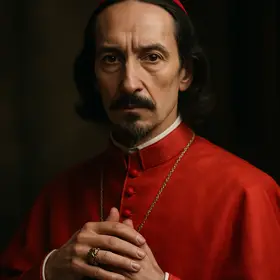 Cardinal MazarinAntagonist
 GrimaudMajor character
 MordauntAntagonist
 MousquetonMinor character
 PlanchetMajor character
All chapter summaries ›Characters ›
Read Twenty Years After illustrated
Every scene in these notes comes from the Book2Life reader, where the full public-domain text is illustrated as you read, with character portraits and narration. Free in your browser and on iPhone.
