
Topsy in Uncle Tom's Cabin
Major character
A newly purchased, sharp, mischievous Black child whom Miss Ophelia is tasked to reform in the St. Clare household.
Who is Topsy?
Topsy arrives at the St. Clare house filthy, braids in disarray, and immediately disrupts household order with pranks, petty thefts, and brazen lies. Augustine St. Clare offers her to his cousin Miss Ophelia to educate; Ophelia reluctantly accepts and subjects Topsy to a regimen of cleaning, clothes, catechism, sewing, and reading. Topsy proves quick to learn certain tasks and reading when it suits her, yet remains evasive, defiant about sewing, and tempting to others with her antics. Her back reveals the physical evidence of prior abuse, which complicates Ophelia’s attempts to reform her. Little Eva’s consistent tenderness and a private, earnest conversation about Jesus break through Topsy’s cultivated defenses: Topsy weeps and promises to try to be better. After Eva’s death Ophelia softens further, makes Topsy her legal ward, and later takes her north; chapter notes report that Topsy eventually becomes a Christian and later a missionary in Africa.
In the book: Topsy is a newly purchased enslaved girl brought into the St. Clare household in New Orleans for Miss Ophelia to “train up.” She’s sharp, cheeky, and restless from the moment she appears—pulling pranks, fibbing without blinking, and instantly stirring the adults, which makes you pay attention to her every move.
Personality
- mischievous
- On arrival she pulls pranks, steals trinkets, and stages tumbling performances that both amuse and exasperate the household (Vol. 2, Ch. 20).
- evasive
- She habitually answers questions with grotesque lies and claims her wickedness is innate when Ophelia tries discipline (Vol. 2, Ch. 20; Ch. 25).
- quick learner
- When she chooses, Topsy learns reading and household tasks rapidly under Ophelia’s instruction (Vol. 2, Ch. 20).
- wounded
- Ophelia discovers welts and callouses on Topsy’s back, marking past abuse and explaining some of her restlessness (Vol. 2, Ch. 20).
- receptive to love
- After Little Eva speaks kindly and earnestly to her about Jesus, Topsy breaks down, weeps, and promises to try to be good (Vol. 2, Ch. 25).
Character arc
Topsy opens as an unruly, defensive product of previous mistreatment — brazen, mischievous, and convinced that her wickedness is innate. Miss Ophelia’s attempts at moral and domestic instruction meet resistance and comic sabotage, while Augustine treats her as an amusing puzzle rather than strictly culpable. The turning point arrives through Little Eva’s patient, affectionate evangelism: Eva’s private conversation and tears pierce Topsy’s performative hardness, producing genuine sorrow and a vow to improve. Eva’s subsequent death intensifies the household’s commitments: Ophelia softens, legally claims Topsy as her ward, and resolves to continue educating her. By the end of the notes, Topsy carries forward that transformation—taken north to Vermont by Miss Ophelia, she adopts Christianity and, according to the closing summary, later serves as a missionary in Africa. Thus Topsy’s arc moves from defensive survival tactics shaped by abuse toward moral awakening and a life reoriented by care, instruction, and faith.
Relationships
- Miss Ophelia Ophelia is Topsy’s reluctant educator turned legal guardian, who cleans, clothes, and instructs her and later softens toward her.
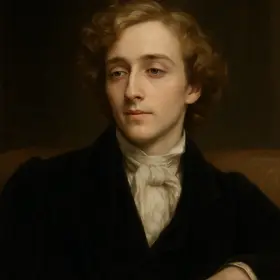
- Augustine St. Clare St. Clare presents Topsy to Ophelia and treats her with a mix of amusement and philosophical curiosity, indulging her antics.
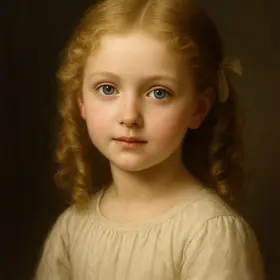
- Little Eva Eva becomes Topsy’s primary moral and emotional influence; her loving talk about Jesus prompts Topsy’s first heartfelt repentance.
- Uncle Tom Tom shares affectionate domestic moments with household children and participates in the household grief that affects Topsy after Eva’s death.
- Marie St. Clare Marie registers social disapproval and criticizes household management, providing a contrast to those who show patience toward Topsy.
Quotes by Topsy
“Never was born!”
Volume 2, Chapter 20Topsy responds to Miss Ophelia’s questions about her origins with a grotesque, evasive claim that unsettles Ophelia and signals Topsy's damaged, dispossessed past.
“I was raised by a speculator, with lots of others. Old Aunt Sue used to take car on us.”
Volume 2, Chapter 20Topsy gives a brief account of being bought and raised for market, directly pointing to the trafficking and abuse underlying her condition.
“If I could be skinned, and come white, I’d try then.”
Volume 2, Chapter 25Topsy expresses her internalized belief that only becoming white could make her worthy or capable of goodness, revealing racial self-rejection.
Why Topsy matters
Topsy embodies the book’s argument that character is formed by nurture rather than fixed innate wickedness: her mischievousness and lies are shown as responses to abuse and neglect. Her transformation through Eva’s tenderness and Ophelia’s labor illustrates the novel’s faith in Christian love, moral education, and domestic reform as antidotes to cruelty and slavery. Topsy also functions as a mirror for Ophelia’s conscience—forcing the white, pious woman to move from abstract charity to concrete, legal responsibility—and thus contributes to the novel’s critique of passive sympathy and its promotion of active, personal conversion.
Chapters with Topsy
More Uncle Tom's Cabin characters
 Uncle TomProtagonist
 Augustine St. ClareMajor character
 EmmelineMinor character
 Eliza HarrisMajor character
 Little EvaMajor character
 CassyMajor character
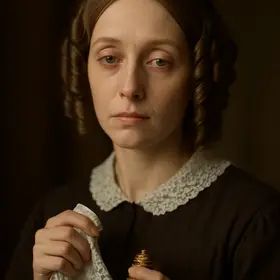 Marie St. ClareMajor character
 Mr. ShelbyMajor character
All chapter summaries ›Characters ›
Read Uncle Tom's Cabin illustrated
Every scene in these notes comes from the Book2Life reader, where the full public-domain text is illustrated as you read, with character portraits and narration. Free in your browser and on iPhone.
