Miss Ophelia in Uncle Tom's Cabin
Major character
A straitlaced New England spinster who joins the St. Clare household, outspoken about slavery and devoted in domestic care.
Who is Miss Ophelia?
Miss Ophelia arrives at the St. Clare household as a moral and practical Northerner who repeatedly presses the family about abuses she hears in domestic gossip. She confronts Augustine St. Clare with horror over the alleged whipping of Prue and argues for intervention, sparking wide-ranging debates about the origins and nature of slavery. Within the house she keeps busy with household work considered peculiar by others, and she assumes primary nursing duties during Little Eva’s fatal decline, staying at Eva’s bedside and working alongside Uncle Tom to comfort the child. After the St. Clare household’s crises and Eva’s death, Miss Ophelia continues in the family orbit and later takes responsibility for Topsy’s relocation to Vermont, bringing the child north where she is instructed and eventually becomes a Christian and missionary. Throughout the episodes in which she appears, Miss Ophelia speaks and acts from a moral certainty rooted in New England manners, combining indignation at reported cruelty with consistent, hands-on caregiving in the domestic sphere.
Personality
- Moralistic
- She expresses sustained moral outrage when Dinah and servants circulate the story that Prue was whipped and pressed St. Clare to intervene.
- Practical
- She performs industrious household work and assumes the nurse’s duties during Little Eva’s final illness.
- Judgmental
- She debates Augustine St. Clare sharply about the causes and remedies of slavery, voicing horror at reported abuses.
- Devoted caregiver
- She stays at Eva’s bedside in the midnight crisis and helps tend the child alongside Uncle Tom.
- Determined
- She brings Topsy to Vermont after events at the St. Clare household, taking responsibility for her future instruction.
Character arc
Miss Ophelia first appears as a morally certain New England woman appalled by stories of cruelty circulated in the St. Clare household; she presses Augustine to act and engages him in long debate about slavery’s causes and remedies. Though St. Clare answers with weary pragmatism and acknowledges limits to private benevolence, Ophelia does not relent in her denunciations. Her abstract indignation is balanced by concrete domestic work: she continues industrious household duties that others find peculiar and ultimately becomes intimately involved in the household’s emotional center by nursing Little Eva in her final days. The experience of tending Eva, witnessing her piety and death, and working closely with Uncle Tom tempers Ophelia’s detached moralizing with patient caregiving. Later, she translates conviction into concrete responsibility by bringing Topsy north to Vermont for instruction and religious formation. Across these episodes she remains morally firm but moves from reproach and debate to sustained, hands-on care and guardianship, channeling her moral energy into personal responsibility rather than systemic reform within the novel’s events.
Relationships
- Augustine St. Clare She debates him sharply about slavery and presses him to intervene when she learns of alleged abuses.
- Little Eva She assumes the nurse’s duties, tends Eva at her bedside, and shares in the household’s grief when Eva dies.
- Uncle Tom She works alongside Tom caring for Eva, participating in the intimate domestic ministry at the child’s deathbed.
- Topsy She brings Topsy to Vermont after the St. Clare household events and takes responsibility for her instruction.
- Prue She reacts with horror to rumors that Prue was whipped and left to die, pressing for action on her behalf.
- Marie St. Clare She shares the household sphere with Marie, whose sensibilities contrast with Ophelia’s New England strictness.
Why Miss Ophelia matters
Miss Ophelia represents a Northern, moralistic conscience whose instincts are to condemn reported cruelty and take personal responsibility. She dramatizes the novel’s tension between denunciation and domestic care: she voices moral outrage at systemic abuse but also channels her convictions into hands-on nursing and guardianship. Through her interactions with St. Clare and her care for Eva and Topsy, the book explores how individual piety and reformist zeal operate within—yet often fall short of—addressing structural injustice. Ophelia’s combination of judgment and devotion underscores themes about the limits of private benevolence and the moral work that transpires in everyday domestic acts.
Chapters with Miss Ophelia
More Uncle Tom's Cabin characters
 Uncle TomProtagonist
 Augustine St. ClareMajor character
 EmmelineMinor character
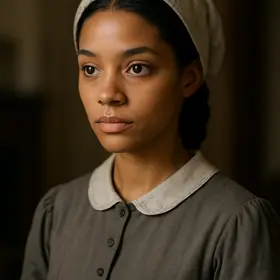 Eliza HarrisMajor character
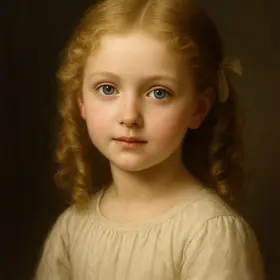 Little EvaMajor character
 CassyMajor character
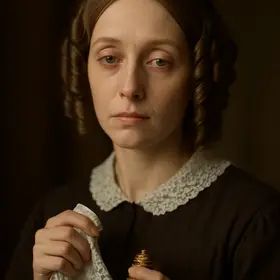 Marie St. ClareMajor character
 Mr. ShelbyMajor character
All chapter summaries ›Characters ›
Read Uncle Tom's Cabin illustrated
Every scene in these notes comes from the Book2Life reader, where the full public-domain text is illustrated as you read, with character portraits and narration. Free in your browser and on iPhone.
