
Ophelia St. Clare in Uncle Tom's Cabin
Major character
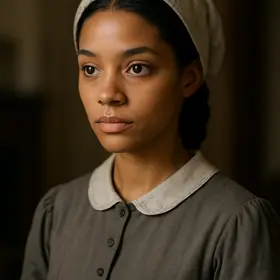
A stern, practical New England cousin who comes south to impose order and moral duty on the indulgent St. Clare household.
Who is Ophelia St. Clare?
Miss Ophelia St. Clare arrives from Vermont to manage Augustine St. Clare’s New Orleans household, bringing strict New England discipline, punctuality, and piety to a lax, indulgent domestic world. She inspects closets and the kitchen, clashes with Dinah and other servants over housekeeping methods, and steadily reorganizes the household’s material life. Confronted with the realities of slavery and abused people like Topsy and Prue, Ophelia wrestles with conscience and prejudice: she is initially horrified by Topsy’s appearance and resistant to close sentimental involvement, but accepts responsibility for the child and begins formal instruction in reading, catechism, and sewing. After Little Eva’s influence and death, Ophelia softens, takes legal steps to make Topsy her ward, and tries to intercede for Uncle Tom by corresponding with Mrs. Shelby. She remains a corrective, duty-driven presence whose practical interventions support the household even as larger forces—Marie’s cruelty and St. Clare’s death—undermine her efforts on behalf of enslaved people.
In the book: When we first meet her, she’s Augustine St. Clare’s cousin from Vermont, arriving in New Orleans to whip his easygoing household into order. She’s practical, pious, and exacting—very much the no-frills Northern aunt—so she instantly stands out in the languid St. Clare home and becomes a steady, corrective presence.
Personality
- Practical
- She thoroughly inspects closets, drawers, and the kitchen and systematically sorts, cleans, and organizes the household (Ch. 18).
- Conscientious
- She takes charge to protect Eva and to maintain order, acting from a sense of duty when she agrees to manage the household (Ch. 15).
- Pious
- She returns from a Methodist meeting with Little Eva and is involved in discussions about teaching catechism to Topsy (Ch. 25).
- Exacting
- Her stern disapproval of the servants’ improvisatory habits provokes resistance from Dinah and others (Ch. 18).
- Softening/Open-minded
- After Eva’s influence and death she grows gentler toward Topsy and insists on making the child legally her ward (Ch. 28).
Character arc
Ophelia enters the St. Clare house as a rigorous Northern reformer: rigid, orderly, and morally earnest. Early chapters emphasize her inspections, corrections, and clashes with staff—she imposes New England habits on a Southern household and resists sentimental indulgence. When presented with Topsy, Ophelia’s initial horror and reluctance give way to a sense of duty; she cleans and clothes the child and establishes a regime of catechism, reading, and sewing, revealing a willingness to act on her principles. Little Eva’s tender influence moderates Ophelia’s rigidity: Eva’s compassion embarrasses her prejudices and models a gentler pedagogy. After Eva’s death, Ophelia further softens, taking practical steps to protect Topsy legally and attempting to advocate for Uncle Tom by writing to Mrs. Shelby. Yet her change is measured—rooted in duty and reform rather than full emotional conversion: she remains a disciplinarian who now couples strictness with increased personal responsibility for the vulnerable she manages.
Relationships
- Augustine St. Clare Cousin who invited her south and whose indulgent household she is charged to correct and manage.
- Little Eva Child whose gentle piety weakens Ophelia’s prejudices and models compassionate pedagogy that transforms Ophelia’s approach.
- Topsy A formerly neglected child Ophelia initially recoils from but ultimately takes in, instructs, and makes her legal ward.
- Marie St. Clare Sister-in-law whose self-centeredness and opposition frustrate Ophelia’s attempts to protect servants and secure Tom’s freedom.
- Uncle Tom A devout, trusted servant for whom Ophelia tries to intercede—writing to Mrs. Shelby to seek help when his manumission is threatened.
- Dinah Head cook whose improvisatory habits clash with Ophelia’s systematic reforms, producing resistance in the kitchen.
Why Ophelia St. Clare matters
Ophelia embodies Northern moral earnestness and the reforming impulse: she demonstrates how practical duty and piety confront the disorder and human cost of slavery. Her interactions with Topsy and Little Eva dramatize competing approaches—discipline versus compassion—to social change. Ophelia’s measured softening after Eva’s example shows that conscience and duty can lead to protective action, yet her reliance on legal and orderly remedies highlights limitations when institutional power and personal loss overwhelm individual reform efforts. She therefore helps the novel explore moral responsibility, cultural prejudice, and the tensions between reforming intentions and the harsh realities of slavery.
Chapters with Ophelia St. Clare
More Uncle Tom's Cabin characters
 Uncle TomProtagonist
 Augustine St. ClareMajor character
 EmmelineMinor character
 Eliza HarrisMajor character
 Little EvaMajor character
 CassyMajor character
 Marie St. ClareMajor character
 Mr. ShelbyMajor character
All chapter summaries ›Characters ›
Read Uncle Tom's Cabin illustrated
Every scene in these notes comes from the Book2Life reader, where the full public-domain text is illustrated as you read, with character portraits and narration. Free in your browser and on iPhone.
