
Moth in A Midsummer Night's Dream
Minor character
A gentle fairy attendant of Queen Titania who helps pamper Bottom and joins the fairy train in blessing the households.
Who is Moth?
Moth is one of Titania’s small fairy attendants who appears whenever the fairy court is on stage. In Act 3, after Titania is enchanted to love Bottom, Moth is ordered alongside Peaseblossom, Cobweb, and Mustardseed to wait on him—fetching comforts and attending his every whim as Titania lavishes him with affection. In Act 4 Moth remains among the fairies who tend Bottom while Oberon and Puck move to undo the enchantments; the fairy attendants continue their dutiful service as the larger fairy business of restoring natural order unfolds. In Act 5 Moth is part of the fairy train that enters the palace to bless the bridal couples and the households, contributing to the play’s final benediction. Though Moth speaks no long speeches and performs no independent action, the sprite’s presence adds a light, whimsical texture to the enchanted scenes and helps stage the contrast between mortal folly and fairy care.
In the book: Moth is one of Titania’s fairy attendants, a gentle helper who, with fellow sprites, serves the enchanted court and later humors the weaver Bottom, adding whimsy and light comic texture to the play’s exploration of magic, mischief, and transformation.
Personality
- Obedient
- When Titania commands her fairies to wait on Bottom in Act 3, Moth immediately takes part in attending to Bottom’s needs.
- Gentle
- Moth shares the tender task of pampering the bewitched Bottom while Titania lavishes him with affection in Act 3 and Act 4.
- Attentive
- Along with the other sprites, Moth fetches jewels and waits on Bottom as Titania instructs, showing careful service in the wood.
- Whimsical
- Moth’s small role among the fairy attendants amplifies the play’s playful, magical mood when the fairies humor Bottom’s comic demands.
Character arc
Moth’s role is steady rather than transformative: the sprite appears first as one of Titania’s obedient attendants in Act 3, promptly answering the queen’s extravagant orders to wait on Bottom when Titania is encharmed. Throughout Act 4 Moth continues this service, present while Oberon and Puck move to reverse the magic; the fairy’s commitment to tending the queen’s chosen favorite remains constant even as the larger fairy politics and antidotes are enacted. By Act 5 Moth shifts from a private attendant role into part of the public, ceremonial fairy train that blesses the palace and the newly reconciled marriages. Moth does not undergo a personal moral or psychological change—rather, the character’s arc is one of consistent function: from intimate service in the wood to participation in the final communal benediction. This steady presence underscores the continuity of the fairy realm’s care and its role in restoring harmony by the play’s end.
Relationships
- Titania Moth is one of Titania’s fairy attendants who takes orders directly from the queen and carries out her commands.
- Nick Bottom Moth helps attend and pamper Bottom while Titania, under enchantment, dotes on him in the wood.
- Peaseblossom Peaseblossom is a fellow fairy attendant who shares the task of waiting on Bottom with Moth.
- Cobweb Cobweb is another sprite in Titania’s service who appears alongside Moth during the fairy scenes.
- Mustardseed Mustardseed is one of the small fairies who, with Moth, ministers to Bottom and later joins the blessing at the palace.
- Oberon Oberon is the fairy king whose actions to reverse the enchantments affect the circumstances under which Moth serves.
Why Moth matters
Moth, though a minor figure, helps dramatize the play’s interplay of enchantment and comedy: the sprite’s attentive service makes Titania’s enchanted infatuation tangible and heightens the absurdity of Bottom’s pampering. By moving from intimate care in the wood to participating in the public blessing, Moth embodies the fairies’ role in healing and restoring social order, underscoring themes of transformation, the porous boundary between dream and waking, and the gentle, restorative power of the supernatural world.
Chapters with Moth
More A Midsummer Night's Dream characters
 DemetriusMajor character
 HelenaMajor character
 HermiaMajor character
 LysanderMajor character
 PuckMajor character
 OberonMajor character
 Peter QuinceMajor character
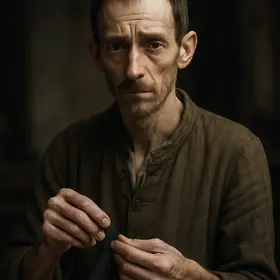 Robin StarvelingMinor character
All chapter summaries ›Characters ›
Read A Midsummer Night's Dream illustrated
Every scene in these notes comes from the Book2Life reader, where the full public-domain text is illustrated as you read, with character portraits and narration. Free in your browser and on iPhone.
Read A Midsummer Night's Dream free
