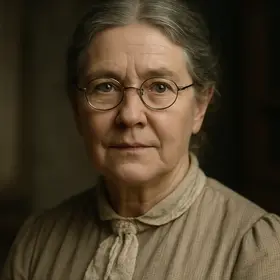
Aunt Polly in Adventures of Huckleberry Finn
Minor character
Tom Sawyer’s aunt and guardian, a figure of domestic respectability who briefly intersects with Huck’s river adventures.
Who is Aunt Polly?
Aunt Polly is Tom Sawyer’s aunt and guardian who appears at key moments that anchor the novel back in the domestic world of St. Petersburg. She takes part in the land-search for the missing boys, standing among town figures like Judge Thatcher, and later figures in the book’s epilogue when Tom is cared for and Jim is publicly acknowledged and rewarded. Her aims are conventional: to protect and tend her family, to restore order after the boys’ risky exploits, and to confirm identities and reputations within the town. In the story she functions as a touchstone of home and propriety—present when the community gathers to look for the boys, and present again when the household rejoices over Tom’s recovery and Jim’s liberation and reward. Though her onstage time is short, she represents the social world Huck continually moves away from and occasionally returns to.
In the book: Aunt Polly is Tom Sawyer’s aunt and guardian who briefly intersects with Huck’s story, embodying the voice of home, propriety, and small‑town respectability. Her presence helps anchor the narrative to St. Petersburg’s domestic world and provides a touchstone for recognizing and confirming identities, highlighting the contrast between societal expectations and Huck’s more freewheeling life.
Personality
- Domestic
- She attends the ferry search party looking for the boys and later helps celebrate and nurse Tom in the epilogue, showing her caregiving role.
- Respectable
- She stands among town figures such as Judge Thatcher during the search, embodying the small‑town propriety of St. Petersburg.
- Conservative
- Her primary concern is restoring order and family reputation after Tom and Huck’s adventures, as seen in the epilogue’s return to domestic routine.
- Confirming
- She helps reestablish settled identities at the story’s end when Tom is tended and Jim is publicly rewarded and acknowledged.
Character arc
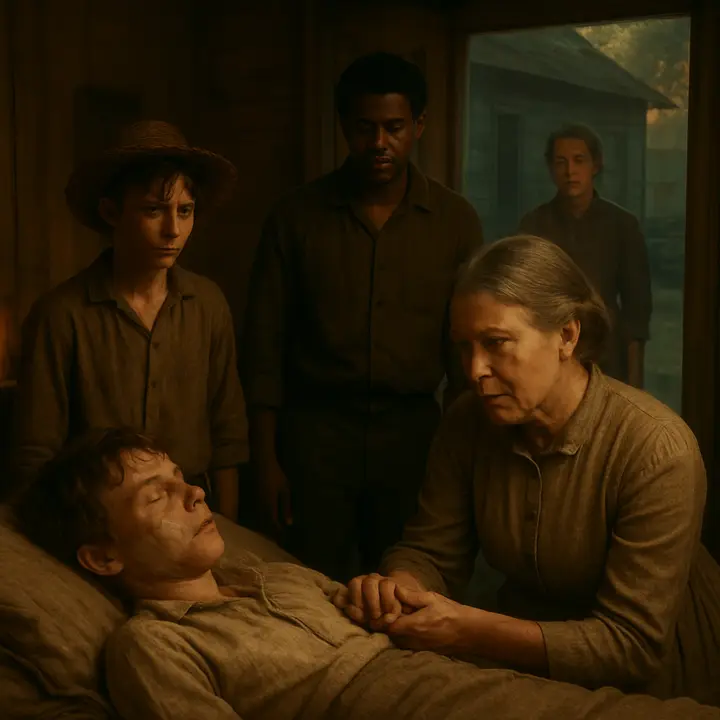
Aunt Polly’s presence is brief and mostly static: she appears first as part of the town search for the missing boys, a visible link to St. Petersburg’s settled community and family structures. She does not undergo a personal transformation; rather, her role is to mark transitions in others’ lives. By the epilogue she reappears in the restored domestic scene—helping to nurse Tom after his ordeal and joining in the public recognition and financial reward given to Jim. In that final sequence she helps close the story’s loose ends: the household is reconstituted, debts and identities are settled, and the community reinscribes its moral order. Aunt Polly thus functions less as a changing character and more as a steady emblem of home, propriety, and the social network Huck resists leaving behind as he decides to "light out for the Territory."
Aunt Polly in pictures

Relationships
- Tom Sawyer His aunt and guardian who cares for and tends him after his adventures.
- Huckleberry Finn A figure from Huck’s hometown world representing the family and respectability Huck finds confining.
- Jim Part of the household scene that celebrates and rewards Jim in the epilogue for his role in nursing Tom.
- Judge Thatcher One of the respectable townspeople present during the search for the missing boys, sharing the public civic role with her.
- Aunt Sally Another maternal figure in the closing domestic circle implicated in the plan to "civilize" Huck and restore household order.
Why Aunt Polly matters
Aunt Polly represents the domestic, respectable world that anchors the novel’s wanderings. Her steady presence at the search and in the epilogue signals the reassertion of family, social order, and small‑town moral expectations. By participating in the household recovery and in Jim’s public acknowledgement, she helps re‑establish a reconciled community while also highlighting the gap between Huck’s desire for freedom and the comforts—and constraints—of home. Her role underscores the novel’s tension between societal norms and individual liberty.
Chapters with Aunt Polly
More Adventures of Huckleberry Finn characters
 Huckleberry FinnProtagonist
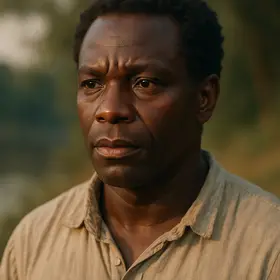 JimMajor character
 Tom SawyerMajor character
 The DukeMajor character
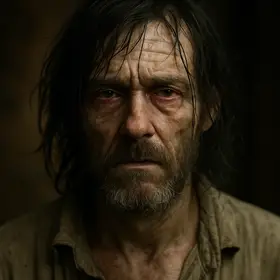 Pap FinnAntagonist
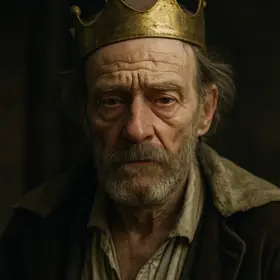 The KingAntagonist
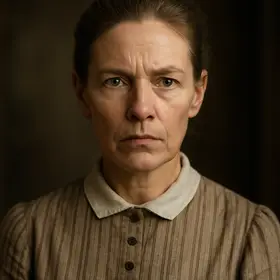 Aunt SallyMajor character
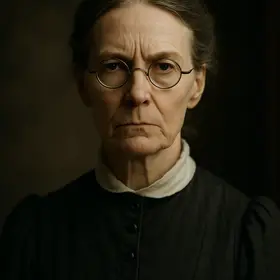 Miss WatsonMajor character
All chapter summaries ›Characters ›
Read Adventures of Huckleberry Finn illustrated
Every scene in these notes comes from the Book2Life reader, where the full public-domain text is illustrated as you read, with character portraits and narration. Free in your browser and on iPhone.
Read Adventures of Huckleberry Finn free
