
Ginés de Pasamonte in Don Quixote
Major character
A boastful ex‑galley slave who Don Quixote frees, later steals Sancho’s ass and reinvents himself as the showman "Master Pedro."
Who is Ginés de Pasamonte?
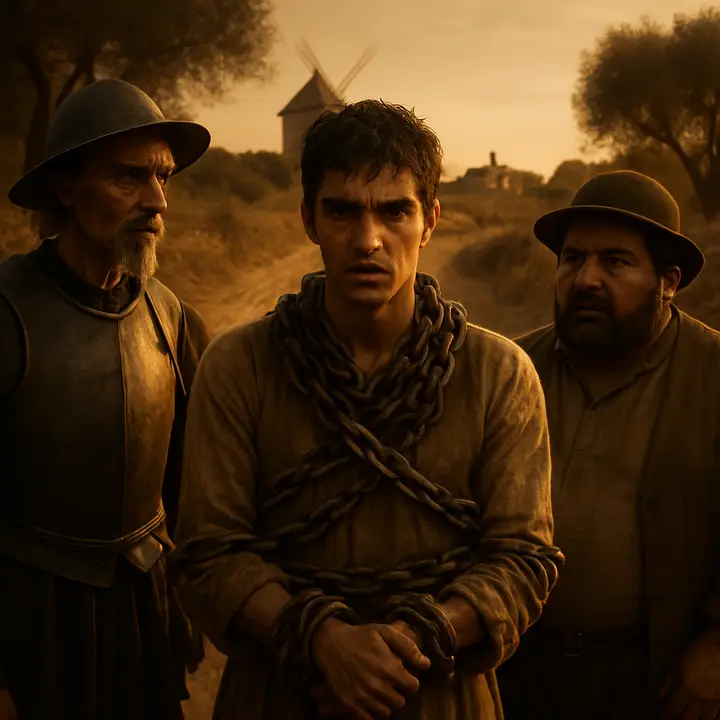
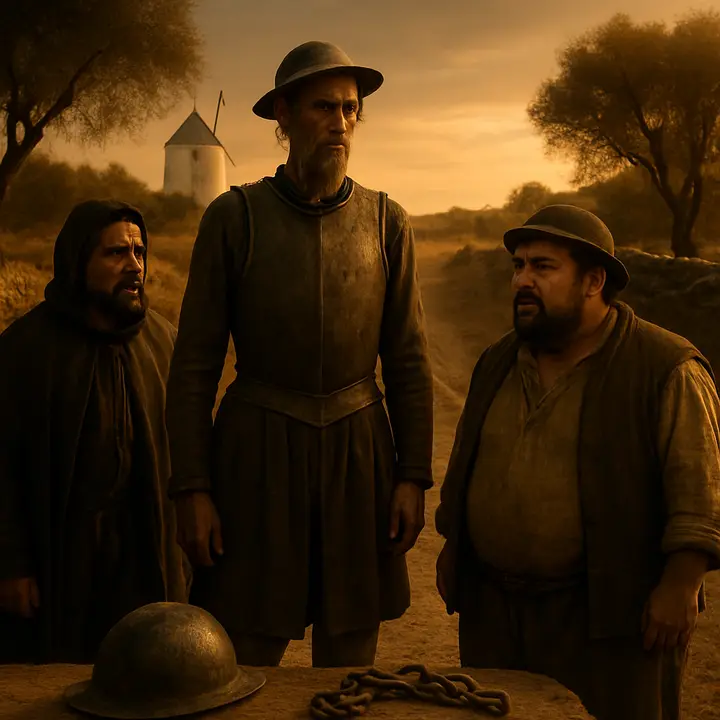
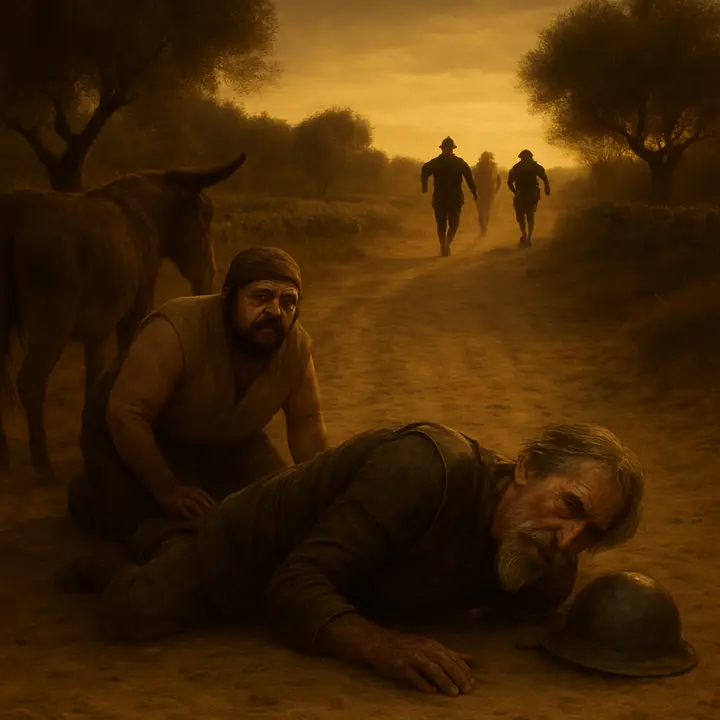
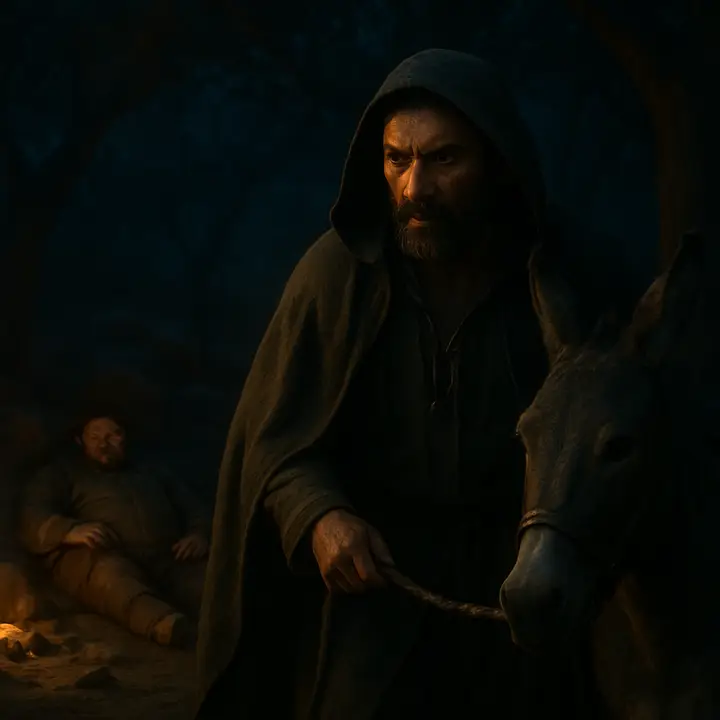
Ginés de Pasamonte first appears as one of the chained galley-slaves Don Quixote and Sancho meet; he boasts of his life and even claims to be writing his memoirs. When Don Quixote frees the chain of slaves, Ginés arms himself and flees, mocking Don Quixote and taking part in the subsequent humiliation of the knight and his squire. Ginés resurfaces in the Sierra Morena where, ungrateful and opportunistic, he steals Sancho Panza’s ass in the night, leaving Sancho to lament the loss. Later narrative commentary reveals that Ginés has adopted a new identity—Master Pedro—theatrical showman who travels with a divining ape and makes a living by performing and flattering audiences. Across the chapters in which he appears, Ginés functions as a disruptive, self‑interested figure whose actions have concrete consequences for Don Quixote and Sancho and whose reinvention underscores themes of disguise, authorship, and social performance.
Personality
- Boastful
- In the chain of galley-slaves he proclaims he is writing a memoir, announcing his supposed literary importance to Don Quixote and Sancho.
- Ungrateful
- After Don Quixote frees the slaves, Ginés insults his liberator and joins the others in pelting Don Quixote with stones.
- Opportunistic
- He steals Sancho’s ass during the night in the Sierra Morena, taking advantage of Sancho’s sleep to enrich himself or escape.
- Resourceful
- Later he reappears reinvented as Master Pedro, running a profitable show with a divining ape and tailoring performances to local gossip.
Character arc
Ginés first appears as a notorious galley-slave who brags openly—claiming to be an author—and resists gratitude when Don Quixote liberates the chain of prisoners. His initial actions are violent and ungracious: he arms himself during the freeing, scatters the guards, and joins the other freed men in humiliating Don Quixote. He next shows his predatory side in the Sierra Morena by stealing Sancho’s ass, demonstrating that freedom has not reformed him. By the time the chronicle reports his later activities, Ginés has adapted to a new role: he becomes Master Pedro, a traveling showman who uses performance, an ape, and cunning to make money and influence audiences. Throughout these episodes he changes not by moral reform but by social reinvention—moving from convict to itinerant entertainer—preserving his self‑interest and performative talents while avoiding responsibility for his earlier misdeeds.
Ginés de Pasamonte in pictures
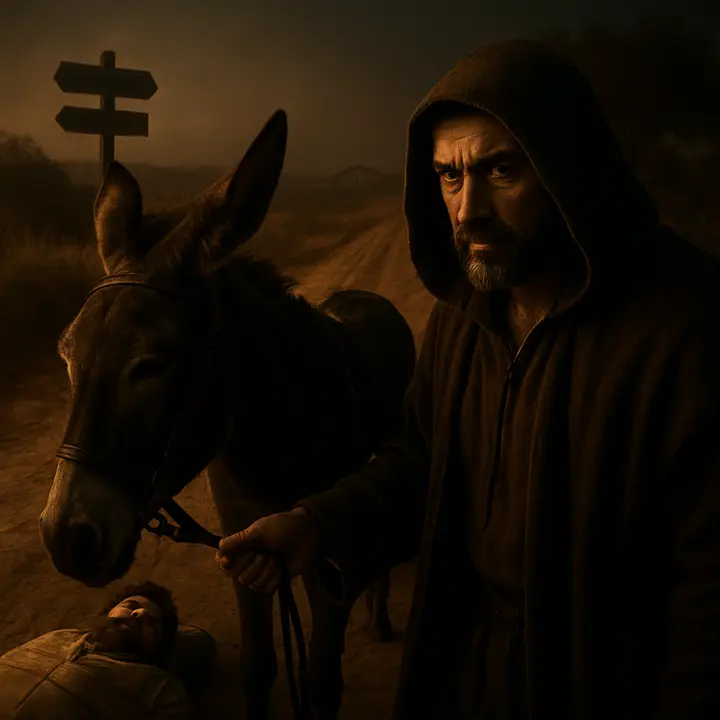
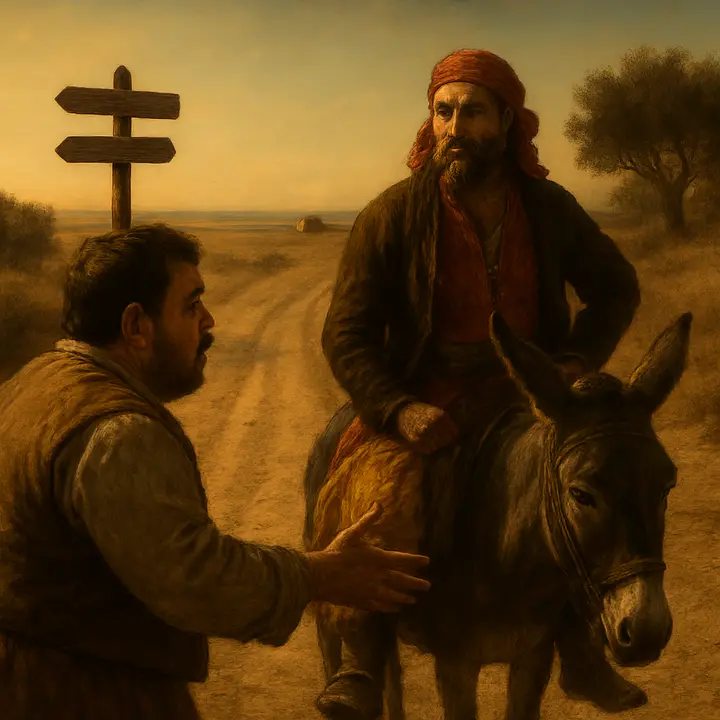
Relationships
- Don Quixote Ginés is a freed galley-slave whom Don Quixote liberates; he responds with insult and participates in the knight’s public humiliation.
- Sancho Panza Ginés steals Sancho’s ass in the Sierra Morena, directly harming Sancho and causing him distress and practical loss.
- The commissary / guards Ginés overpowers the guards during the escape—taking a musket from the commissary and scattering them.
- Cide Hamete Benengeli Cide Hamete reports on Ginés’s later reinvention as Master Pedro, making Ginés a subject of the chronicle’s commentary on performance and authorship.
- The Holy Brotherhood Ginés’s flight and association with escaped convicts place him at odds with the Holy Brotherhood, whose pursuit motivates Don Quixote and Sancho’s retreat.
Quotes by Ginés de Pasamonte
“I am Gines de Pasamonte, whose life is written by these fingers.”
Chapter 22Ginés boasts of his own memoir and literary self-fashioning, revealing arrogance and self-regard even while a prisoner.
Why Ginés de Pasamonte matters
Ginés embodies several of the novel’s recurrent concerns: the slipperiness of identity, the gap between words and deeds, and the ambiguous value of literary self‑representation. His claim to be writing memoirs and his later reinvention as Master Pedro satirize authorship and theatricality; his ingratitude and theft expose the limits of chivalric idealism and the fragile efficacy of Don Quixote’s good deeds. By causing practical harm to Sancho and humiliation to Don Quixote, Ginés also tests the protagonists’ ideals against social reality, showing how self‑interest and performance can undermine noble intentions.
Chapters with Ginés de Pasamonte
More Don Quixote characters
 Don QuixoteProtagonist
 Sancho PanzaMajor character
 Dulcinea del TobosoMinor character
- RRocinanteMajor character
 The DukeMajor character
- DDappleMinor character
 The BarberMajor character
 Cide Hamete BenengeliNarrator
All chapter summaries ›Characters ›
Read Don Quixote illustrated
Every scene in these notes comes from the Book2Life reader, where the full public-domain text is illustrated as you read, with character portraits and narration. Free in your browser and on iPhone.
