Frankenstein Chapter 21 Summary
Imprisonment and Release
Victor is arrested for Henry Clerval's murder, falls ill, is cared for in prison, is visited by his father, and is eventually freed.
Summary
Victor is brought before a magistrate and hears witness testimony about finding a young man's body on the shore; several witnesses identify the boat they saw as the one in which Victor landed. On hearing the detail of fingers marking the neck, Victor remembers William's murder and collapses in agitation. Mr. Kirwin orders that Victor be taken to see the corpse; Victor recognizes the body as Henry Clerval’s, throws himself upon it, and is overwhelmed by convulsions and fever.
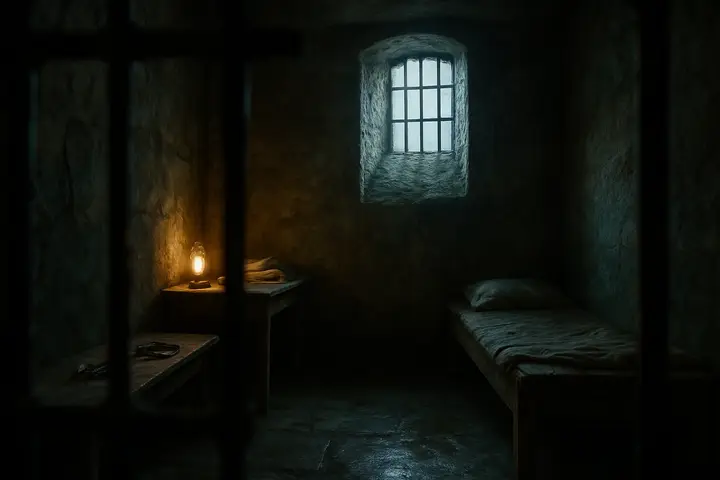
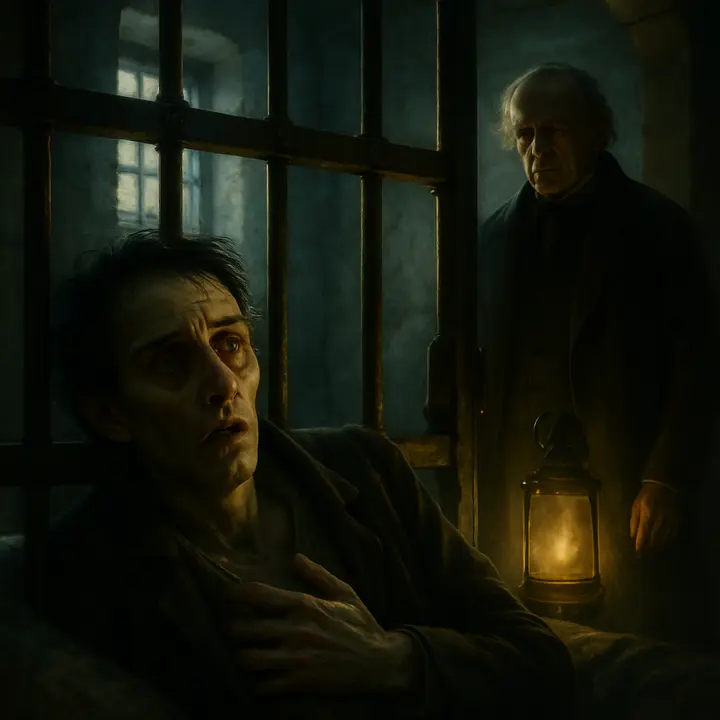
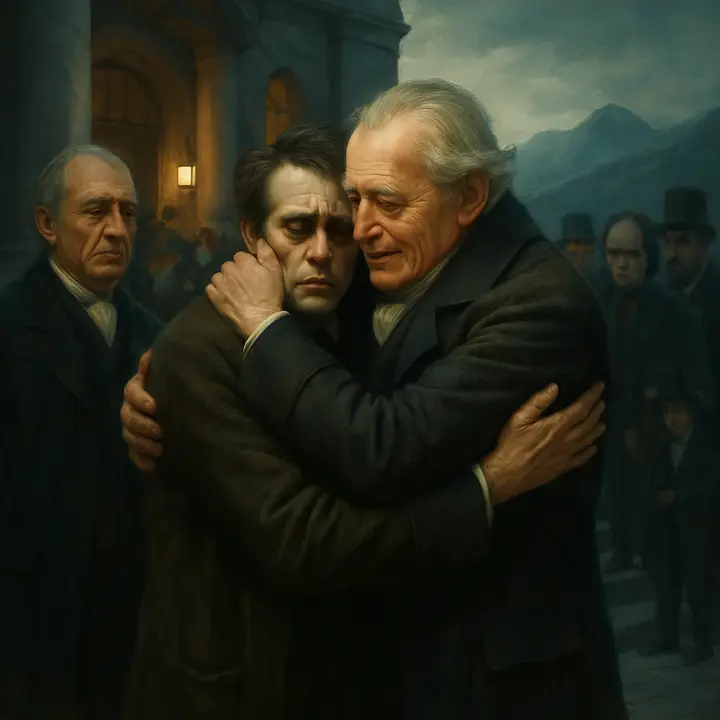
Victor lies near death for two months in a prison cell, raving that he is the murderer of William, Justine, and Clerval, sometimes begging others to destroy the fiend, sometimes imagining the monster’s fingers at his throat. A kindly magistrate, Mr. Kirwin, provides a physician and nurse and later informs Victor that letters were sent to Geneva; Victor’s father arrives and greatly comforts him. Though physically recovering, Victor remains morose and obsessed with revenge: he decides to return to Geneva to protect his family and to seek the creature. The grand jury, having evidence Victor was on the Orkney Islands when Clerval’s body was found, refuses to indict him; he is released and sails for the continent in a state of despair and feverish dream.
Key events
- Witnesses describe finding a young man's strangled body on the shore and report seeing a lone boat matching Victor’s
- Victor is taken to view the corpse and recognizes Henry Clerval, collapsing in convulsions
- Victor endures a two-month fever and imprisonment, raving he is the murderer and longing for death
- Mr. Kirwin secures care, notifies Victor's family, and Victor's father arrives to comfort him
- Grand jury rejects bill; Victor is released and prepares to return to Geneva, determined to find the creature
Chapter 21 in pictures
Analysis
This chapter moves the novel from private horror to public consequence: Victor’s secret guilt produces visible effects that lead others to suspect and imprison him. It advances the theme of responsibility—Victor’s creation indirectly causes harm that lands Victor in legal peril—and it deepens his psychological torment by showing physical collapse and long-term feverish delirium. The courtroom and prison scenes contrast civic order and its procedures (witnesses, magistrate, grand jury) with Victor’s inner chaos, emphasizing the inadequacy of law to grasp the novel’s metaphysical crime. Mr. Kirwin acts as a humane foil to the harsher elements of the legal system, and the visit of Victor’s father introduces familial ties as a potential solace and obligation, pressing Victor toward action despite his despair. Symbolically, the coffin and the recurring image of hands/fingers (the mark on the victim’s neck, Victor imagining the monster’s grasp) reinforce themes of touch, responsibility, and suffocation—both moral and literal. Structurally, the chapter belatedly reunites Victor with his home world (family, homeland) while keeping him alienated; his release is not liberation but a change of setting for the ongoing conflict. The narrative voice remains Victor’s, so psychological interiority dominates; legal testimony and external events are filtered through his memory and emotion, cultivating sympathy even as he is implicated. The chapter foreshadows further confrontation by making Victor’s vow to follow and destroy the creature explicit, while also showing his weakened, haunted state that complicates any straightforward pursuit.
Important quotes
“It appeared to be a handsome young man, about five and twenty years of age. He had apparently been strangled, for there was no sign of any violence except the black mark of fingers on his neck.”
NarratorWitness testimony describing the corpse found on the shore that prompts Victor’s agitation when the finger-marks are mentioned.
“Have my murderous machinations deprived you also, my dearest Henry, of life? Two I have already destroyed; other victims await their destiny; but you, Clerval, my friend, my benefactor—”
Victor FrankensteinVictor recognizes Clerval's body and, in grief and guilt, declares himself the cause of multiple deaths.
“You travelled to seek happiness, but a fatality seems to pursue you.”
Alphonse FrankensteinVictor’s father comforts him in prison, reflecting on the tragic pattern that has followed Victor since his travels and experiments.
Characters in Chapter 21
- Victor Frankenstein
- Henry Clerval
- Mr. Kirwin
- Daniel Nugent
- The magistrate
- The old woman (nurse)
- The physician
- Turnkeys
- Alphonse Frankenstein
- Elizabeth Lavenza
- Ernest Frankenstein
- William Frankenstein
- Justine Moritz
- The Creature
All chapter summaries ›Characters ›
Read Frankenstein illustrated
Every scene in these notes comes from the Book2Life reader, where the full public-domain text is illustrated as you read, with character portraits and narration. Free in your browser and on iPhone.
