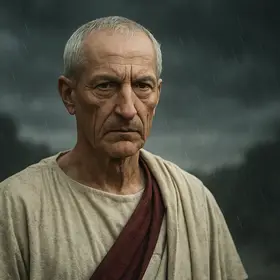
Cicero in Julius Caesar
Minor character
An elder senator and respected voice of measured judgment who responds calmly to omens and the political tumult around Caesar.
Who is Cicero?
Cicero appears as an elderly, respected senator who walks calmly through Rome’s public life and reacts to strange signs with skeptical restraint. In the public procession he speaks—reported to have spoken in Greek—marking him as a learned, dignified presence among Caesar’s retinue. When a violent storm and a string of uncanny portents terrify others, Cicero warns that people interpret omens to suit their own fears, offering a tempering, rational perspective. He departs from the street after delivering that measured take, leaving conspirators to interpret the phenomena as political signs. Later in the play he is reported among the victims of the post-assassination proscriptions; Messala and Brutus learn that Cicero is dead when they compare lists of the murdered senators. Cicero’s brief, composed appearances and his subsequent death underscore his position as a traditional republican voice overtaken by the escalating political violence.
In the book: When we first meet Cicero, he’s an elder senator strolling through a violent storm, unruffled and sharp-tongued. He’s the kind of respected old hand whose measured words make people pause, reminding others not to read every omen the same way they do.
Personality
- Measured
- In the storm he responds soberly to Casca’s recitation of portents, warning that people interpret signs to suit themselves.
- Elderly
- He appears as an elder senator in the public procession and is described as a respected old hand among Caesar’s train.
- Learned
- Casca reports that Cicero spoke in Greek during the events around Caesar’s public honors.
- Calm
- When others are shaken by the thunder, lightning, and strange sights, Cicero remains unruffled and offers rational commentary.
Character arc
Cicero’s role is small but pointed: he first appears as a steady, traditional figure in Rome’s public life, offering a cool, skeptical reading of portents when panic and superstition surround the city. In Act 1 he serves as a measure against the conspirators’ politicized readings of omens—his warning that people fit signs to their fears implicitly challenges Cassius’s opportunistic use of the storm to argue for rebellion. After these early scenes he withdraws from the stage action; he does not participate in plotting nor in the assassination itself. By Act 4 his fate is conveyed indirectly when Messala and Brutus learn that Cicero is listed among those killed in the proscriptions. Thus Cicero moves from present, vocal exemplar of republican calm to absent, reported victim of the violent purge—his disappearance marking the eclipse of the temperate senatorial voice in the wake of factional bloodletting.
Relationships
- Julius Caesar A fellow senator who includes Cicero in his public procession; Cicero stands among Caesar’s train as honors are announced.
- Casca Casca reports Cicero’s actions to others (noting he spoke in Greek) and meets him during the storm scene.
- Cassius Cassius uses the same storm events to argue for rebellion, offering an opportunistic counterpoint to Cicero’s sober interpretation.
- Brutus Cicero shares the public space with Brutus early on; later Brutus learns of Cicero’s death while reviewing proscription lists.
- Soothsayer They occupy the same public moments—Cicero is present when the Soothsayer warns Caesar to ‘Beware the Ides of March.’
- Mark Antony Antony is part of Caesar’s train alongside Cicero during the public procession where Cicero is first seen.
Quotes by Cicero
“But men may construe things after their fashion, Clean from the purpose of the things themselves.”
Act 1, Scene 3Cicero warns that people interpret omens to fit their own beliefs, a warning later undercut by Cassius’s manipulation of signs.
Why Cicero matters
Cicero represents restrained reason and traditional senatorial authority in the face of superstition and political agitation. His skeptical reading of omens counters Cassius’s manipulation of the same signs, highlighting a theme of competing interpretations of public events: whether occurrences are read as natural curiosities or as warrants for violent action. His later death in the proscriptions signifies how moderate, institutional voices are eliminated as factional violence escalates, underlining the play’s concerns about the fragility of republican order when persuasion gives way to murder and retribution.
Chapters with Cicero
More Julius Caesar characters
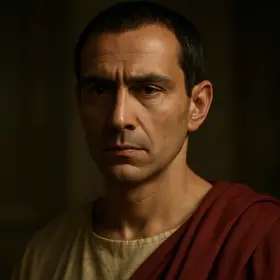 BrutusProtagonist
 CassiusAntagonist
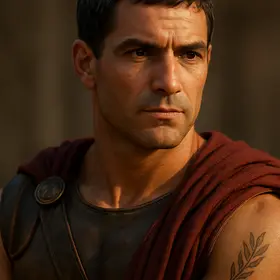 Mark AntonyAntagonist
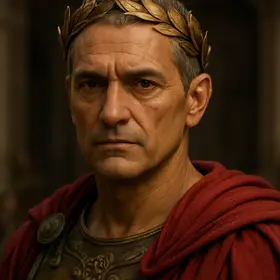 Julius CaesarProtagonist
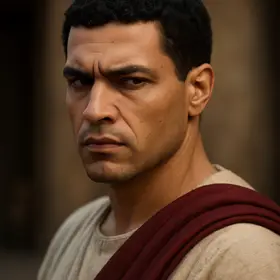 CascaMajor character
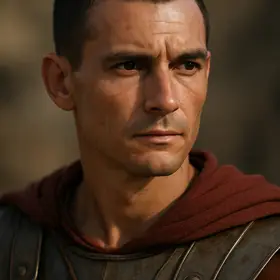 LuciliusMajor character
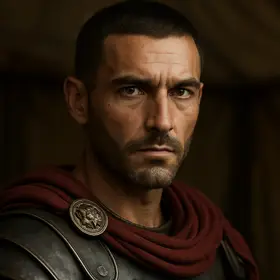 TitiniusMajor character
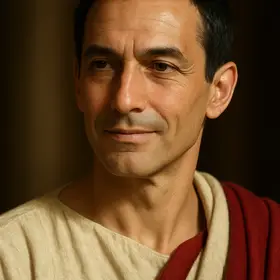 Decius BrutusMajor character
All chapter summaries ›Characters ›
Read Julius Caesar illustrated
Every scene in these notes comes from the Book2Life reader, where the full public-domain text is illustrated as you read, with character portraits and narration. Free in your browser and on iPhone.
