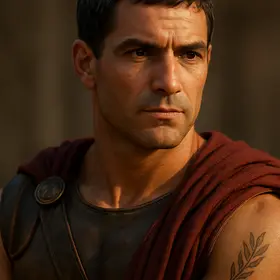
Mark Antony in Julius Caesar
Antagonist
Caesar’s loyal, charismatic lieutenant who turns mourner into political agitator and leader after the assassination.
Who is Mark Antony?
Mark Antony is Caesar’s confident right hand and a popular, good‑humored officer who moves easily among soldiers and citizens. Early, he is seen at Caesar’s side during public games and attends to Caesar’s wishes, even offering the crown three times. After Caesar’s murder, Antony first secures permission from Brutus to speak at the funeral and then uses his rhetorical skill to inflame the crowd, reveal Caesar’s wounds, and read (or hint at) Caesar’s will to turn public opinion against the conspirators. He mourns passionately over Caesar’s body, prophesies civil strife, and instructs a servant to fetch Octavius, setting in motion the next political alliance. Antony then teams with Octavius (and Lepidus) as a military leader; he quarrels with Octavius over deployment but unites with him against Brutus and Cassius. Across the play he shifts from loyal attendant to strategist and commander whose actions catalyze the civil conflict that follows the assassination.
In the book: When we first meet him, Mark Antony is Caesar’s confident right hand—good‑humored, competitive in sport, and attentive to Caesar’s wishes. He moves easily among soldiers and citizens alike, the kind of charismatic officer people naturally follow.
Personality
- Loyal
- He stands beside Caesar in the public procession, repeatedly offering him the crown and later mourns over Caesar’s corpse, vowing to fetch Octavius to avenge him.
- Charismatic
- He moves easily among soldiers and citizens and gains control of the crowd through his funeral oration, turning popular feeling against the conspirators.
- Rhetorically shrewd
- He gains Brutus’s permission to speak, repeatedly calls Brutus ‘an honourable man’ while showing Caesar’s mantle and wounds to undermine the conspirators.
- Strategic
- After the assassination he instructs a servant to fetch Octavius and later forms a military partnership with Octavius and Lepidus to confront Brutus and Cassius.
- Public‑minded showmanship
- He stages emotional displays—mourning over the body, displaying wounds, and reading the will—to manipulate public sympathy and spur action.
Character arc
Antony first appears as Caesar’s affable, competitive right hand, attentive to Caesar’s wishes and comfortable in public spectacle. The assassination transforms him: he moves quickly from dismayed mourner to a cunning political actor. By securing the right to speak at Caesar’s funeral and staging a powerful oration, he turns popular outrage into a force for revenge and political change. He then pivots from orator to organizer: he hurries to bring Octavius to Rome and joins Octavius and Lepidus as a compact of power. On the battlefield at Philippi he is a commander, arguing deployment with Octavius but ultimately unified against the conspirators. In the end he validates the outcome—he honors Brutus’s body and calls him the noblest Roman, closing his trajectory as both avenger and a pragmatic statesman who helps convert personal loyalty into political authority.
Relationships
- Julius Caesar Close ally and loyal lieutenant who mourns Caesar deeply and seeks to avenge his murder.
- Brutus Opponent after the assassination: he negotiates permission to speak with Brutus, then publicly undermines him yet later calls him 'noblest' in death.
- Octavius Caesar Political and military partner: Antony fetches Octavius and joins him as co‑commander despite occasional quarrels over strategy.
- Lepidus Co‑ally in the post‑assassination power bloc whom Antony visits with Octavius to coordinate action.
- Trebonius Conspirator who deliberately draws Antony away from Caesar at the Capitol, enabling the assassination to proceed.
- Servant Person Antony instructs to hurry and fetch Octavius to inform him of the assassination and bring him to Rome.
Quotes by Mark Antony
“Friends, Romans, countrymen, lend me your ears; I come to bury Caesar, not to praise him.”
Act 3, Scene 2Antony opens his funeral oration, appearing conciliatory while preparing to challenge Brutus’s justification for Caesar’s death.
“The noble Brutus Hath told you Caesar was ambitious. If it were so, it was a grievous fault, And grievously hath Caesar answer'd it.”
Act 3, Scene 2Antony repeats Brutus’s charge of ambition but frames Caesar’s actions as insufficient evidence of tyranny, planting doubt in the crowd’s mind.
“This was the most unkindest cut of all;”
Act 3, Scene 2Antony points to Brutus’s stab as the ultimate betrayal, transforming private betrayal into public outrage against the conspirators.
“This was the noblest Roman of them all.”
Act 5, Scene 5Antony eulogizes Brutus, distinguishing him morally from the other conspirators and framing Brutus' motives as honorable.
Why Mark Antony matters
Antony embodies the play’s exploration of rhetoric, public persuasion, and the volatile relationship between private loyalty and public power. His funeral oration demonstrates how language and performance can reshape facts and mobilize a populace, turning a political justification into mob violence. Antony’s shift from grieving friend to shrewd political leader also shows how personal bonds become instruments of factional struggle; his alliance with Octavius transforms private revenge into state formation. Through Antony, the play examines the ethics of persuasion, the fragility of republican order, and how emotional spectacle can precipitate civil war.
Chapters with Mark Antony
More Julius Caesar characters
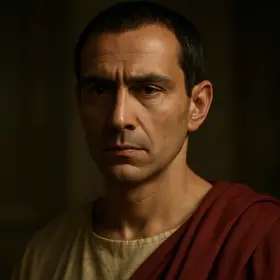 BrutusProtagonist
 CassiusAntagonist
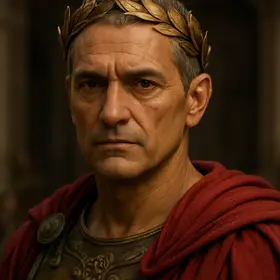 Julius CaesarProtagonist
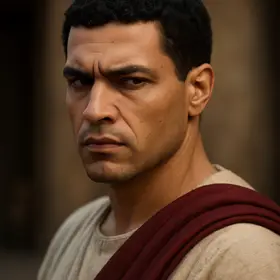 CascaMajor character
 LuciliusMajor character
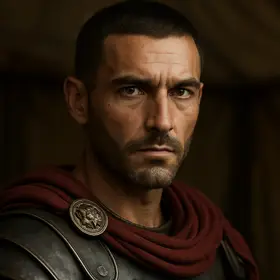 TitiniusMajor character
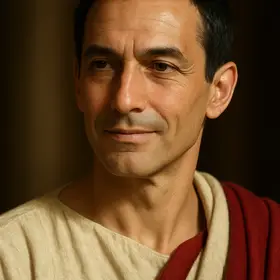 Decius BrutusMajor character
 Octavius CaesarMajor character
All chapter summaries ›Characters ›
Read Julius Caesar illustrated
Every scene in these notes comes from the Book2Life reader, where the full public-domain text is illustrated as you read, with character portraits and narration. Free in your browser and on iPhone.
